

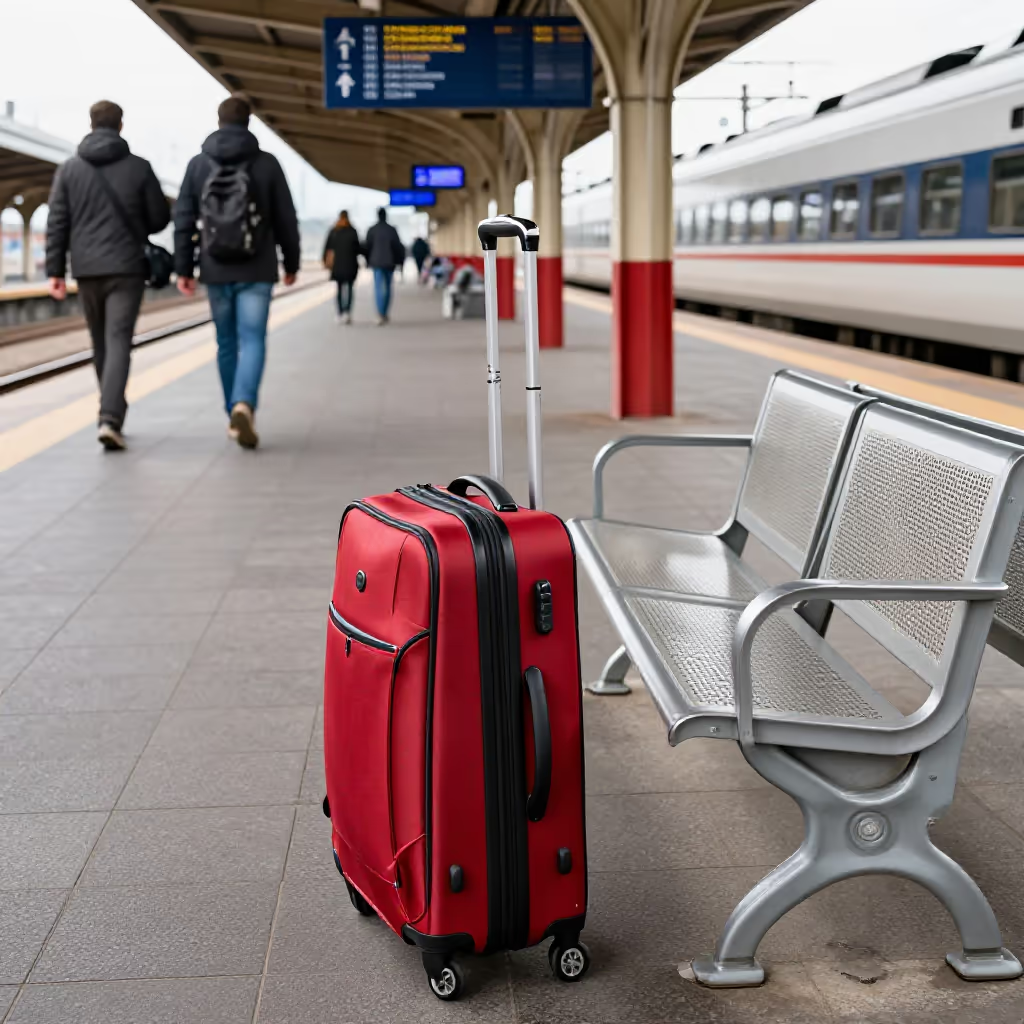
sich befinden
to be located
To be in a specific place or in a specific situation.
EXAMPLE
Das Brandenburger Tor befindet sich im Zentrum von Berlin.
The Brandenburg Gate is located in the center of Berlin.
to be located / to decide
Loading your saved state.
to be located
To be in a specific place or in a specific situation.
Das Brandenburger Tor befindet sich im Zentrum von Berlin.
The Brandenburg Gate is located in the center of Berlin.
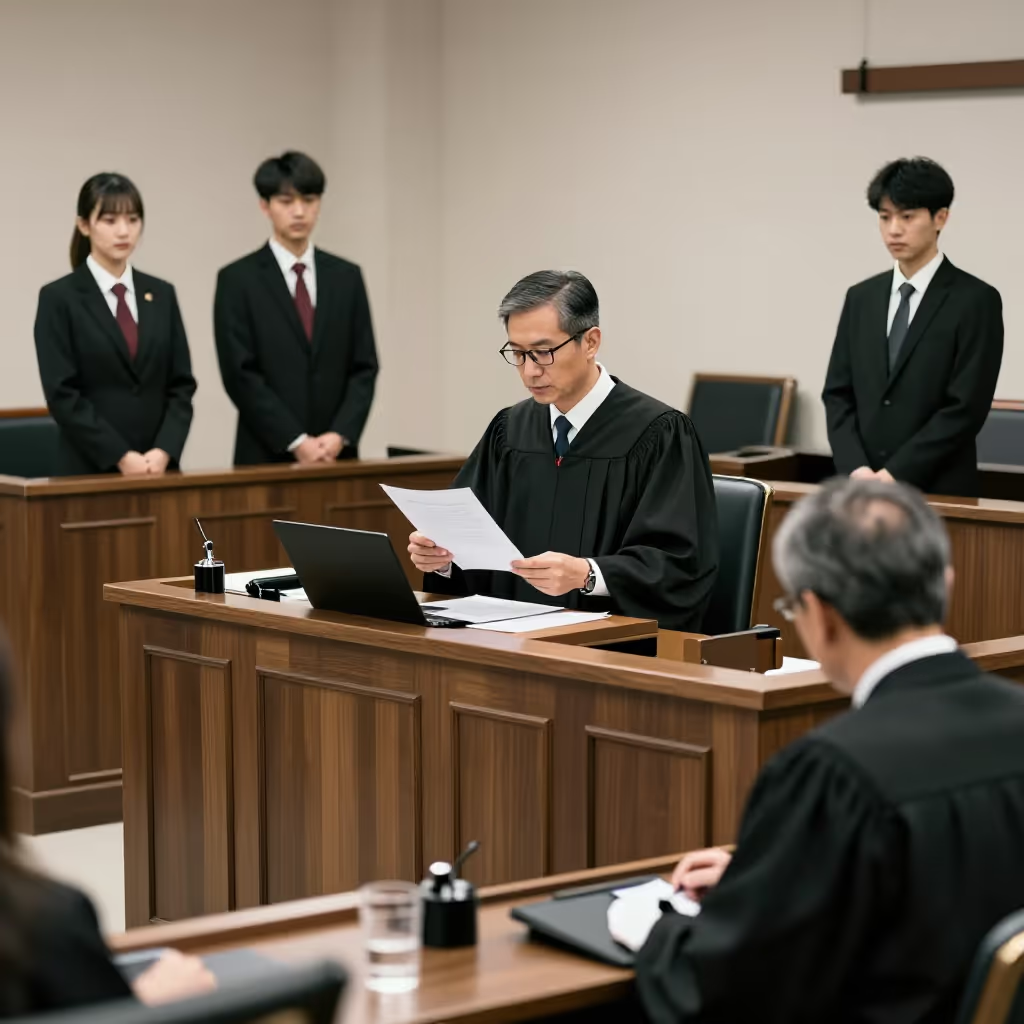
to decide on
To make a formal decision or judgment about something or someone. Often used in legal or official contexts.
Eine Expertenkommission wird über die Vergabe der Forschungsgelder befinden.
A committee of experts will decide on the allocation of the research funds.

to deem
To evaluate or judge something as good, bad, or in another way after examination.
Der Kritiker hat den neuen Film für sehenswert befunden.
The critic deemed the new film worth seeing.
'Befinden' (to be located/to decide) is an inseparable verb with the prefix 'be-'. The prefix remains firmly attached to the verb 'finden' (to find) in all sentence forms and is not placed at the end of the sentence.
Er befindet sich gerade auf einer Geschäftsreise.
He is currently on a business trip.
The grammatical structure reveals the meaning: 'sich befinden' (to be located) is reflexive and means 'to be in a place'. 'Befinden über' (+ accusative) means 'to decide'. 'Etwas für ... befinden' means 'to evaluate/deem'.
Das Hotel befindet sich direkt am Strand.
The hotel is located right on the beach.
In the meaning 'to be in a place', 'sich befinden' (to be located) is always reflexive. The reflexive pronoun ('sich', 'mich', 'dich', etc.) is a fixed part of the verb and must always be included.
Ich befinde mich gerade im Zug nach Hamburg.
I am currently on the train to Hamburg.
The expression 'sich befinden' (to be located) is often used in written language or in formal contexts, for example in travel guides, official descriptions, or news reports.
Das Museum befindet sich in einem historischen Gebäude aus dem 18. Jahrhundert.
The museum is located in a historic building from the 18th century.
The expressions 'befinden über' (to decide on) and 'etwas für gut/schlecht befinden' (to deem something good/bad) belong to formal language. They are found especially in legal, administrative, or academic texts.
Ein Gremium aus Experten wird über die Anträge befinden.
A panel of experts will decide on the applications.
to be
Sein and sich befinden can both indicate the same location. Sein is the neutral, everyday choice; sich befinden usually sounds more formal and must be used with a reflexive pronoun. That is why sich befinden is often more suitable for signs or official information.

Der Informationsschalter befindet sich im Erdgeschoss.
The information desk is located on the ground floor.
Der Informationsschalter ist im Erdgeschoss.
The information desk is on the ground floor.