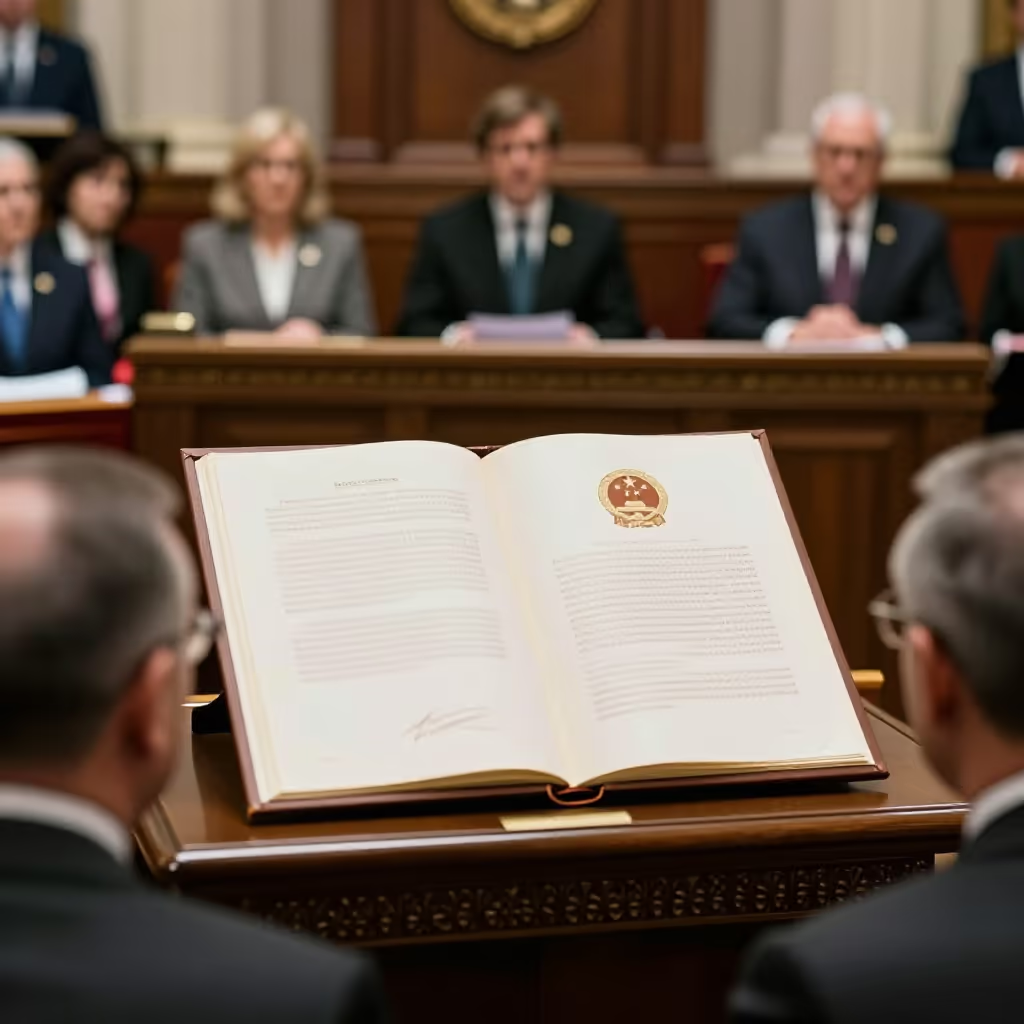
The legal and political fundamental law of a state, which defines the form of government, the rights and duties of citizens, and the organization of state authority.
example
Die Meinungsfreiheit ist in der Verfassung garantiert.
Freedom of expression is guaranteed in the constitution.

Usage tips
Word structure
'Die Verfassung' (constitution/condition) is derived from the verb 'verfassen' (to write or compose a text). This explains its meaning as the written fundamental law of a state.
EXAMPLE
Der Autor verfasste den Roman in nur sechs Monaten.
The author wrote the novel in only six months.
Context clues
The two main meanings can be distinguished well from context. In a political and legal context (state, law, citizens), it means 'constitution'. In a personal context (physical, mental, feeling), it means 'condition' or 'state'.
EXAMPLE
Das Recht auf freie Meinungsäußerung steht in der Verfassung.
The right to freedom of expression is in the constitution.
Typical use
In the meaning 'Zustand' (condition/state), 'Verfassung' is almost always used with the preposition 'in' and an adjective. Typical phrases are 'in guter/schlechter Verfassung sein' (to be in good/bad condition) or 'nicht in der Verfassung sein, etwas zu tun' (not to be in a state to do something).
EXAMPLE
Er war in so schlechter Verfassung, dass er nicht arbeiten konnte.
He was in such poor condition that he couldn't work.
Register: formal
The meaning 'act of writing' is very rare today and is considered outdated or extremely formal. It is found almost only in very elevated written language.
EXAMPLE
Die Verfassung eines so komplexen Dokuments erfordert viel Zeit.
The composition of such a complex document requires a lot of time.
Compare with
near_synonym · confusable
Verfassung vs Form
form / shape
'die Form' and 'die Verfassung' can both describe a person's physical or mental state. 'in Form sein' (to be in shape) sounds especially natural when someone is fit and able to perform well, often in sports or everyday life. 'in guter oder schlechter Verfassung sein' (to be in good or bad condition) describes the general state and can also fit after illness, stress, or an accident. The words are easy to confuse because both say something about how someone is feeling or doing. 'Form' sounds more like performance and fitness, while 'Verfassung' sounds more like a person's overall condition.
Verfassung
Nach der langen Zugfahrt war sie in schlechter Verfassung.
After the long train ride, she was in bad shape.
Form
Nach drei Wochen Training ist Max wieder in guter Form.
After three weeks of training, Max is in good shape again.