


besorgen
to get
To obtain, buy, or fetch something for someone or for a specific purpose.
EXAMPLE
Könntest du auf dem Rückweg bitte noch Milch besorgen?
Could you please get some milk on the way back?
to get / to take care of
Loading your saved state.
to get
To obtain, buy, or fetch something for someone or for a specific purpose.
Könntest du auf dem Rückweg bitte noch Milch besorgen?
Could you please get some milk on the way back?
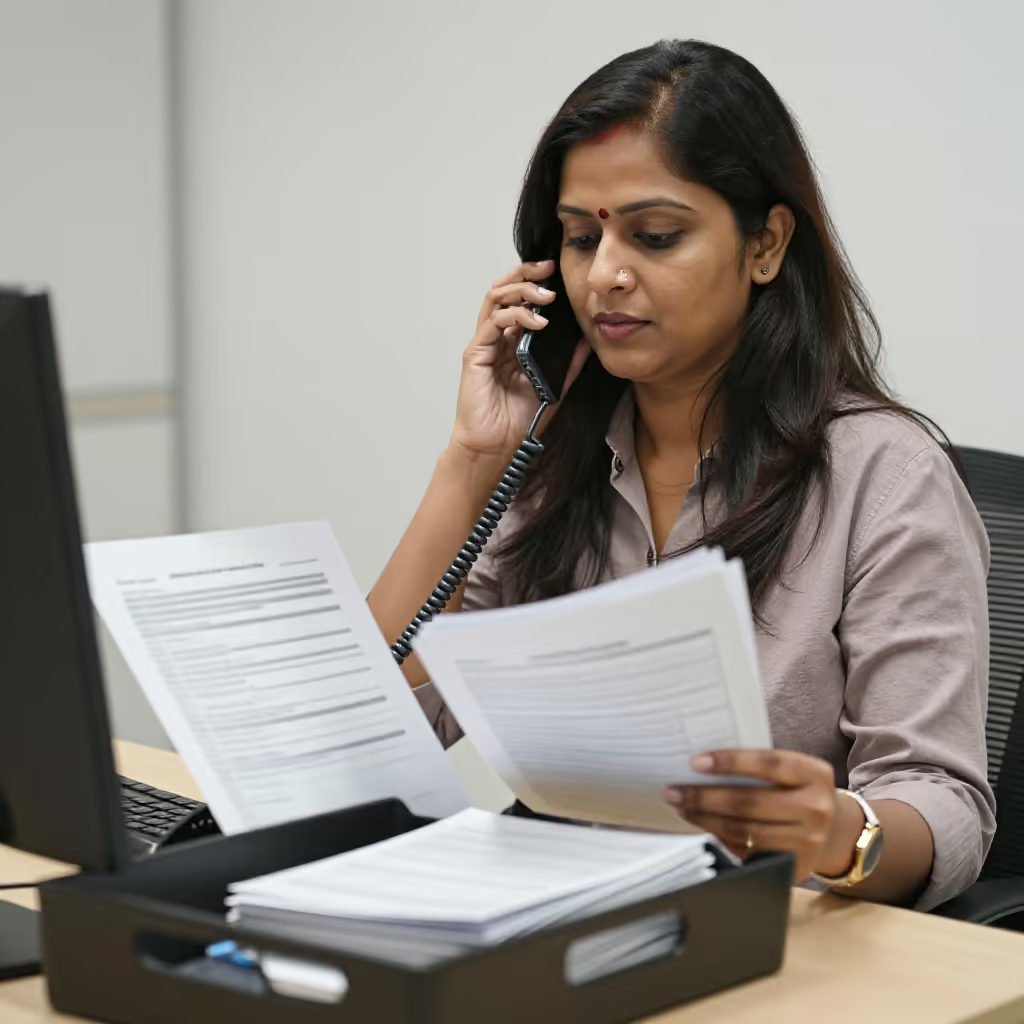
to take care of
To complete a task or matter or take care of it.
Ich muss noch die Tickets für das Konzert besorgen.
I still have to take care of the tickets for the concert.

to get oneself something
To obtain something for oneself, often with a slightly informal or negative connotation, e.g. to catch an illness.
Wo hast du dir denn diese schlimme Erkältung besorgt?
Where on earth did you get yourself that awful cold?

to bring on
To cause or bring about something negative.
Seine unüberlegten Äußerungen haben ihm eine Menge Ärger besorgt.
His thoughtless remarks brought him a lot of trouble.

to give it to someone
A colloquial expression that can refer to sexual acts or also to giving someone a beating in a conflict.
Im Streit hat er gedroht, es ihm so richtig zu besorgen.
During the argument, he threatened to really give it to him.

to worry
To worry someone or fill them with concern. This meaning is rather formal or outdated.
Die Nachricht vom nahenden Sturm besorgte die Küstenbewohner sehr.
The news of the approaching storm greatly worried the coastal residents.
'Besorgen' is an inseparable verb. The prefix 'be-' remains firmly attached to the verb 'sorgen' in all sentence forms and tenses and is never placed at the end of the sentence.
Ich besorge die Getränke für die Party.
I'll get the drinks for the party.
'Besorgen' is very often used with a person in the dative to express for whom something is obtained or taken care of. The structure is then: subject + besorgt + [person in the dative] + [thing in the accusative].
Kannst du mir bitte einen Kaffee besorgen?
Can you please get me a coffee?
In the meaning of 'beschaffen' (to obtain), the verb is often used for everyday errands. Typical objects are: groceries, drinks, medication, a gift, or tickets.
Ich gehe zur Apotheke, um die Medikamente für Oma zu besorgen.
I'm going to the pharmacy to get Grandma's medication.
The reflexive form 'sich etwas besorgen' (to get oneself something) is often used informally and for negative things that one gets. It is typically combined with illnesses: 'sich eine Erkältung besorgen' (to catch/get a cold).
Zieh eine Jacke an, sonst besorgst du dir noch eine Lungenentzündung!
Put on a jacket, or you'll get yourself pneumonia!
The idiom 'es jemandem besorgen' is strongly colloquial and has a very direct, often aggressive or sexual meaning. The person the action is directed at is in the dative.
Er hat seinem Gegner gedroht: „Warte nur, dir werde ich es besorgen!“
He threatened his opponent: 'Just you wait, I'll give it to you!'
The meaning 'beunruhigen' (to worry/concern) is outdated or belongs to a very formal, written context. In normal usage, it is hardly used actively anymore, but you should be able to understand it.
Die wirtschaftliche Lage des Landes besorgte die Experten.
The country's economic situation worried the experts.
to fetch / get
Holen and besorgen can both mean bringing or getting something. Holen emphasizes going to a known place and transporting something from there. Besorgen focuses more strongly on obtaining or buying something, especially when it still has to be found or purchased.
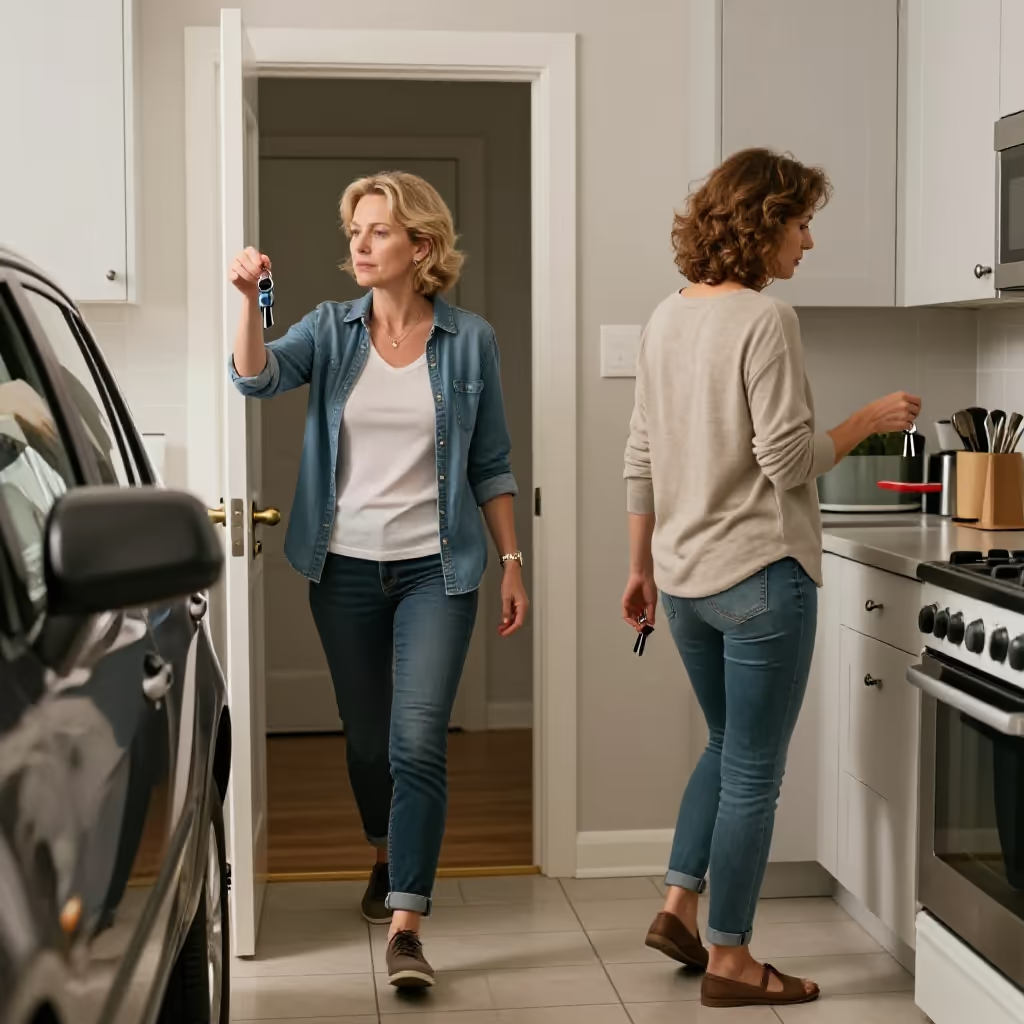
Ich besorge heute Nachmittag eine Torte für die Feier.
I’m getting a cake for the party this afternoon.
Ich hole die bereits bestellte Torte heute Nachmittag beim Bäcker.
I’m picking up the cake I already ordered from the bakery this afternoon.