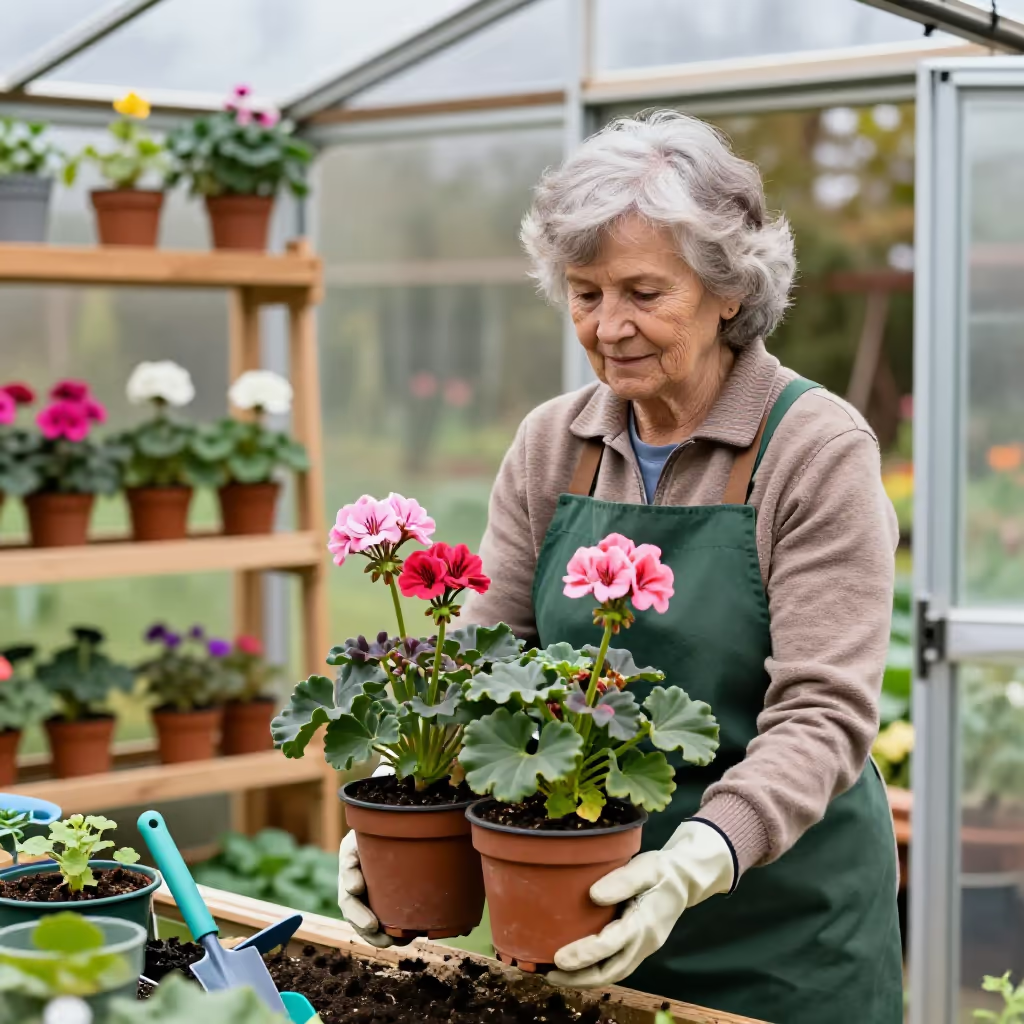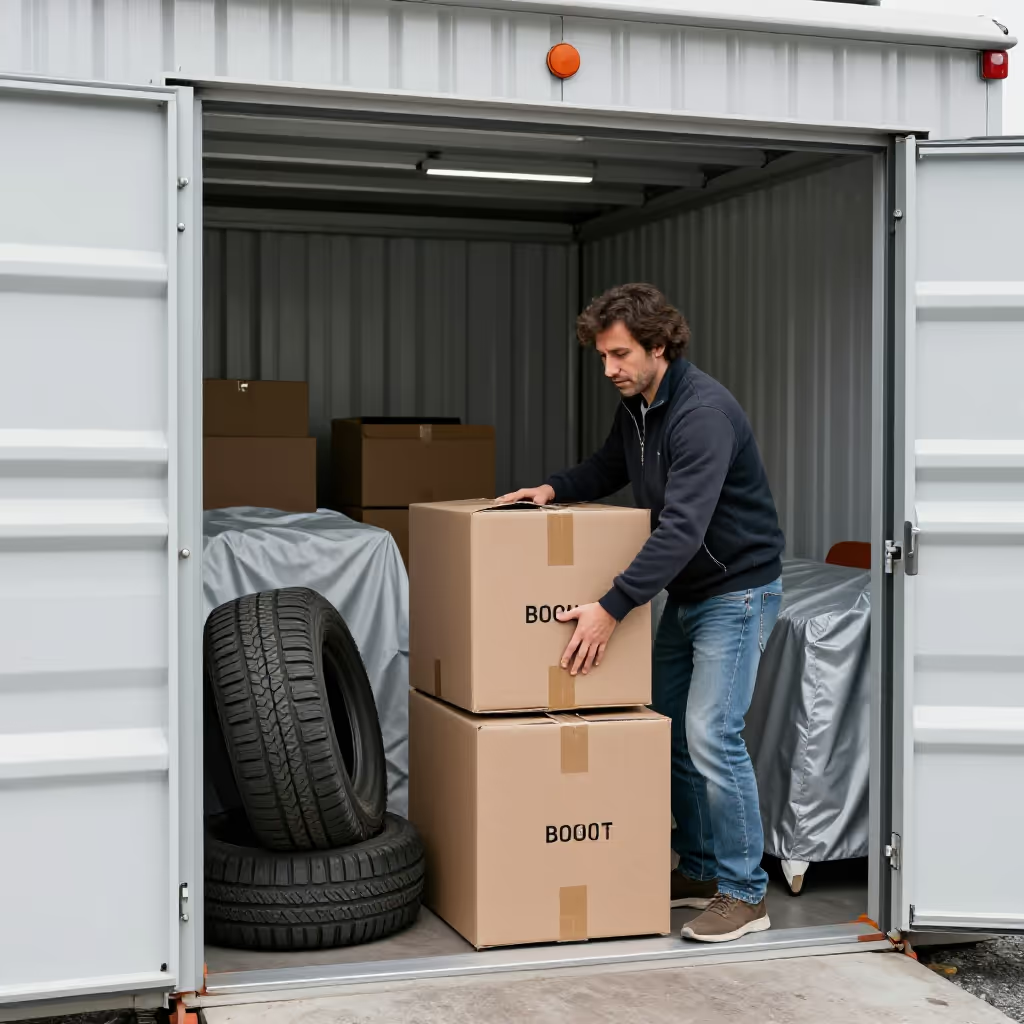
To keep objects, goods, or supplies in a safe place in order to preserve or secure them for later use.
example
Wir müssen die Gartenmöbel über den Winter im Keller einlagern.
We have to store the garden furniture in the basement over the winter.
Usage tips
Separable verb
'Einlagern' (to store) is a separable verb. The prefix 'ein-' separates from the verb in main clauses and comes at the end of the sentence.
EXAMPLE
Im Herbst lagern wir die Äpfel aus dem Garten ein.
In autumn, we store the apples from the garden.
Word structure
The verb consists of the prefix 'ein-' and the verb 'lagern' (to store). The prefix emphasizes the movement 'into' a storage space or place of safekeeping.
EXAMPLE
Die Firma lagert ihre Waren in einer großen Halle ein.
The company stores its goods in a large hall.
Typical collocations
In everyday life, 'einlagern' (to store) is often used for seasonal items or supplies. Typical objects are 'Möbel' (furniture), 'Reifen' (tires), 'Ernte' (harvest), or 'Akten' (files).
EXAMPLE
Wir sollten die Winterreifen bald einlagern.
We should store the winter tires soon.
Context clue
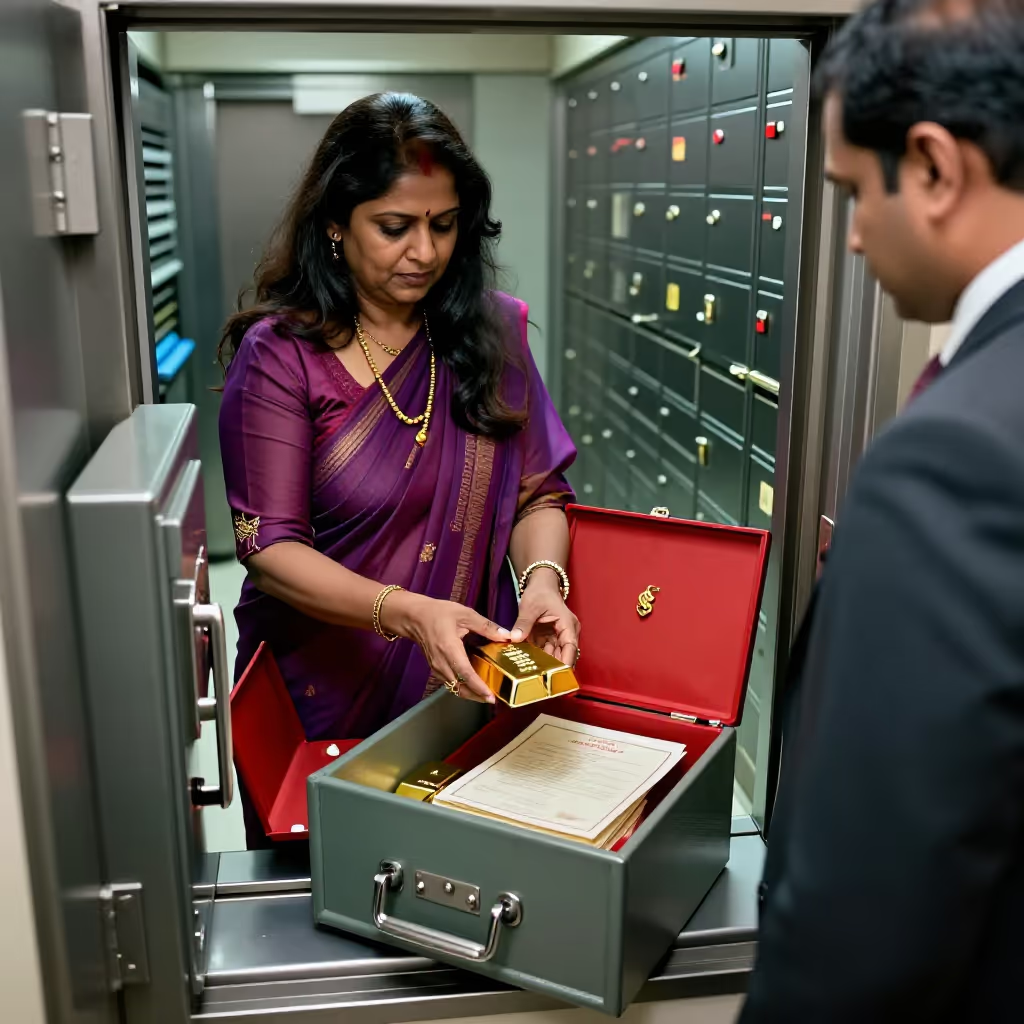
You can recognize this meaning from the context of finance, security, and valuables. Typical objects are 'Gold' (gold), 'Wertpapiere' (securities), or 'Kunstwerke' (works of art), which are often stored 'bei einer Bank' (at a bank).
EXAMPLE
Er hat sein Gold sicher bei einer Bank im Ausland eingelagert.
He has safely deposited his gold at a bank abroad.
Compare with
near_synonym · confusable
einlagern vs einstellen
to hire / adjust / stop
'einstellen' and 'einlagern' can both mean putting something in a safe place and leaving it there. 'einstellen' fits better when you simply put an object inside, for example a bicycle in the basement or plants in the house. 'einlagern' sounds more planned and longer-term: you store things, goods, or supplies so they can be used again later. The words can be confused because both have to do with keeping things somewhere. In practice: when the place and the act of putting something there are important, 'einstellen' often fits. When longer-term storage is important, 'einlagern' is more precise.
einlagern
Nach dem Umzug hat Paul mehrere Kisten bei einer Firma eingelagert.
After the move, Paul stored several boxes with a company.
einstellen
Vor dem Winter stellen wir die Gartenmöbel in die Garage ein.
Before winter, we put the garden furniture away in the garage.