


lagern
to store
To keep things, goods, or supplies in a place for a certain period of time.
EXAMPLE
Wir lagern die Winterreifen im Keller.
We store the winter tires in the basement.
to store / camp
Loading your saved state.
to store
To keep things, goods, or supplies in a place for a certain period of time.
Wir lagern die Winterreifen im Keller.
We store the winter tires in the basement.
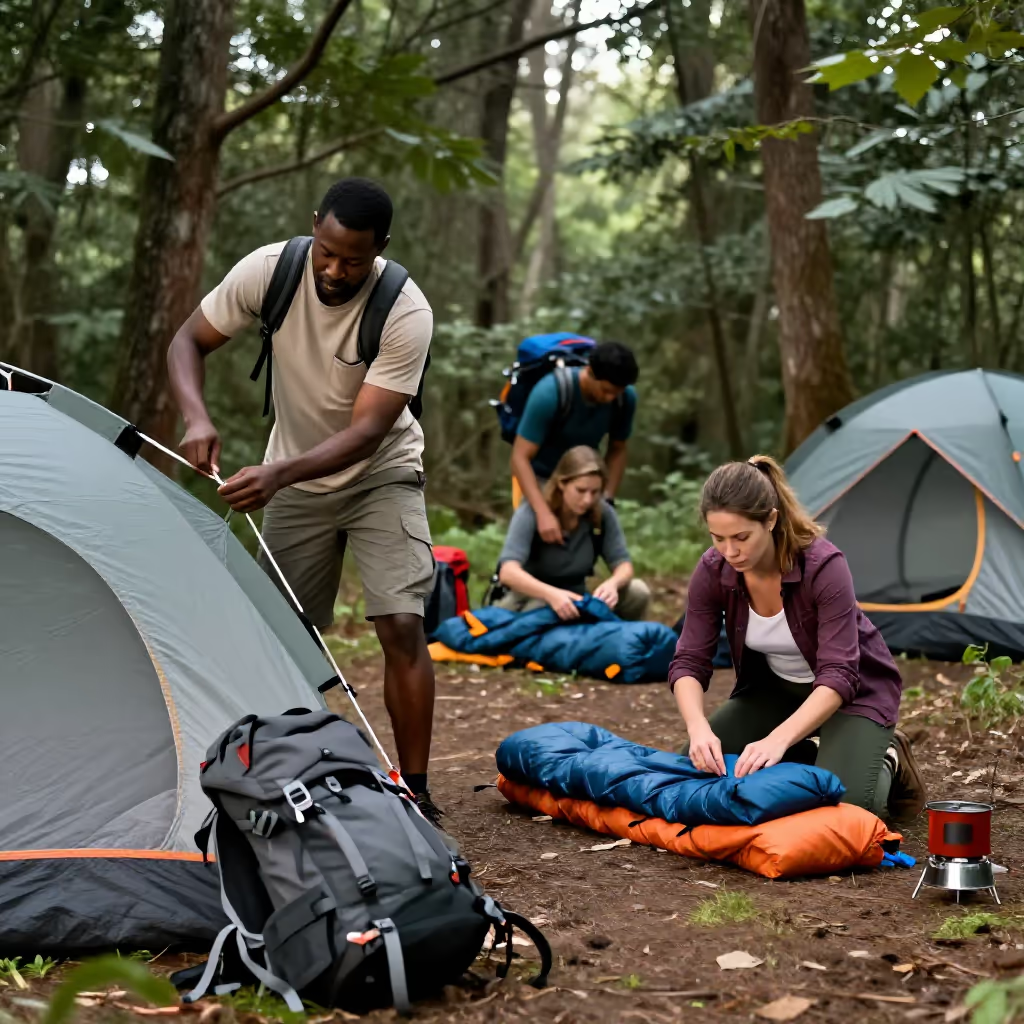
to camp
To settle down in a place for a rest or overnight stay, often outdoors; to camp.
Die Wanderer lagerten am Ufer des Sees.
The hikers camped on the shore of the lake.

to gather around
To accumulate or group around something.
Dichter Nebel lagerte sich um das alte Schloss.
Dense fog gathered around the old castle.
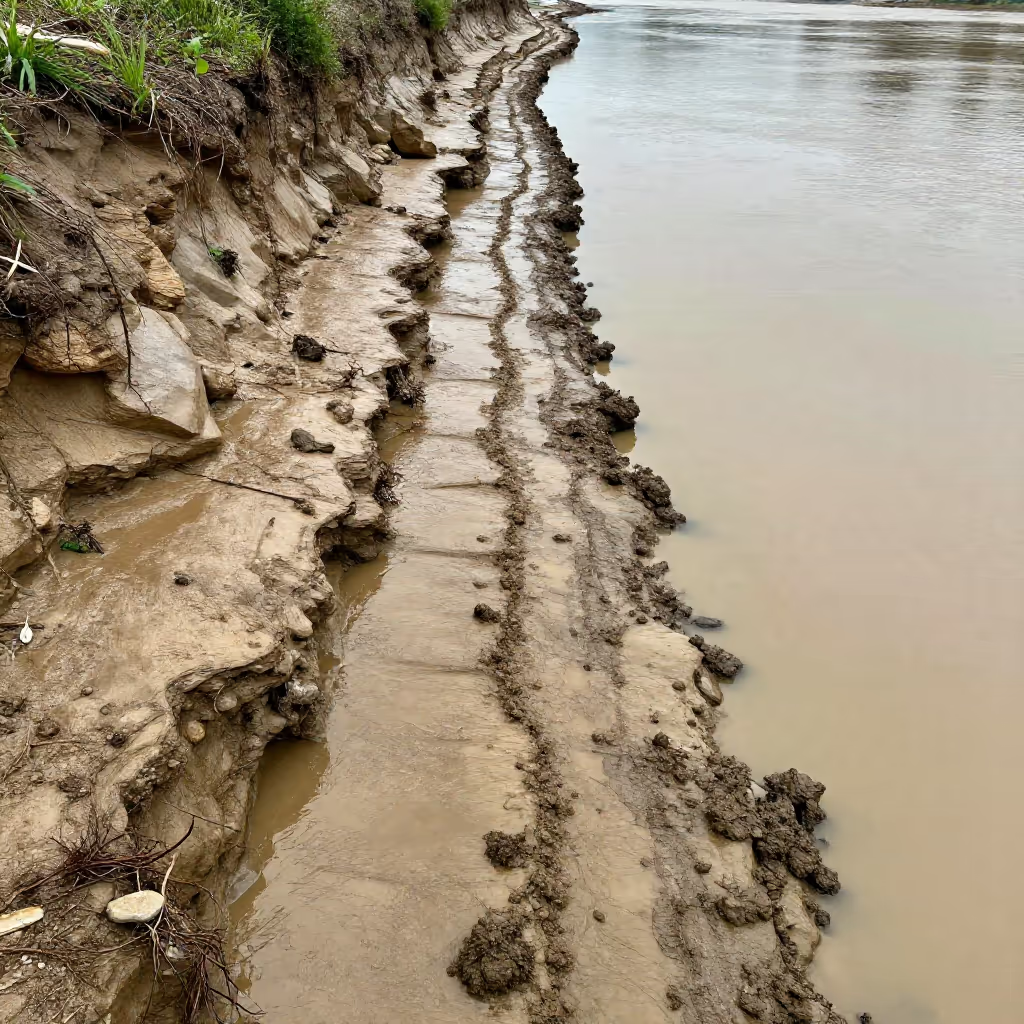
to be deposited
To accumulate or settle in nature as a layer or deposit.
Über dem Kalkstein lagern dicke Schichten aus Sand und Ton.
Thick layers of sand and clay are deposited above the limestone.
The verb 'lagern' (to store/camp) is derived from the noun 'das Lager' (storage place/camp). This noun has two main meanings that are reflected in the verb: 'das Warenlager' (warehouse/storage facility, storing something) and 'das Zeltlager' (tent camp, camping).
Die Firma lagert ihre Produkte in einer großen Halle.
The company stores its products in a large hall.
When 'lagern' (to store) means to keep something in storage, it requires an accusative object. When it means 'campieren' (to camp), it is used without an object.
Wir müssen das Holz trocken lagern.
We need to store the wood in a dry place.
In connection with storing food or other products, you often read the instruction 'kühl und trocken lagern' (store in a cool, dry place).
Diese Medikamente muss man kühl und dunkel lagern.
These medications must be stored in a cool, dark place.
In the figurative meaning 'sich ansammeln' (to accumulate), 'lagern' is used reflexively with 'sich' and the preposition 'um' (+ accusative) or 'auf' (+ dative).
Die Schatten der Bäume lagerten sich auf dem Weg.
The shadows of the trees lay on the path.
The meaning related to geological deposits is typical of technical language, especially in geology and geography.
In der Tiefe lagern wertvolle Erze.
Valuable ores are deposited deep underground.
to lie / be located
Liegen describes a wine bottle’s horizontal position in a neutral way. Lagern emphasizes that the wine is intentionally kept for a certain period of time. If the focus is only on the position, liegen is appropriate; for planned storage, lagern is the better choice.

Wir lagern den Wein mehrere Jahre im Kellerregal.
We are storing the wine on the cellar shelf for several years.
Die Weinflasche liegt waagerecht im Kellerregal.
The wine bottle is lying horizontally on the cellar shelf.