


das Ziel
goal
A state or result in the future that one wants to achieve through one's own efforts.
EXAMPLE
Mein Ziel ist es, nächstes Jahr den Marathon zu laufen.
My goal is to run the marathon next year.
goal / destination / target
Loading your saved state.
goal
A state or result in the future that one wants to achieve through one's own efforts.
Mein Ziel ist es, nächstes Jahr den Marathon zu laufen.
My goal is to run the marathon next year.

destination
The endpoint of a journey, a route, or a race.
Nach einer langen Fahrt erreichten wir endlich unser Ziel.
After a long drive, we finally reached our destination.
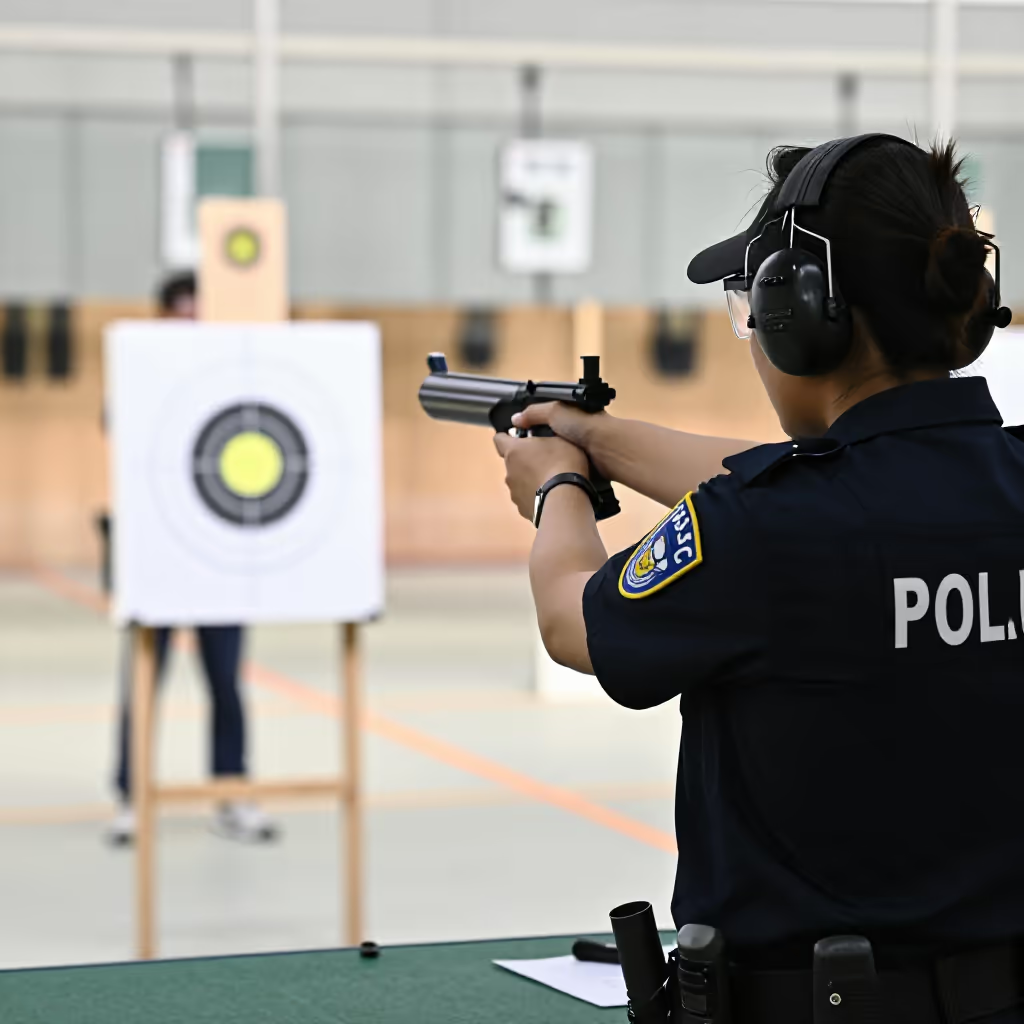
target
An object, person, or place that one aims at in an attack or shot.
Der Schütze traf das Ziel genau in der Mitte.
The shooter hit the target right in the middle.

to overshoot the mark
To do more than is necessary or appropriate; to exaggerate.
Mit seiner Kritik ist er weit über das Ziel hinausgeschossen.
With his criticism, he went far beyond the mark.
The noun 'das Ziel' (the goal/destination/target) is closely related to the verb 'zielen' (to aim). This connection helps you understand the different meanings: you 'aim' at a result (Ziel), a place (Ziel), or an object (Ziel).
Der Jäger zielte auf den Hirsch, verfehlte aber das Ziel.
The hunter aimed at the deer but missed the target.
The meaning of 'Ziel' can often be recognized from the verbs. 'Ein Ziel setzen' (to set a goal) or 'verfolgen' (to pursue) refers to an abstract plan or aim. 'Ein Ziel erreichen' (to reach a goal/destination) can mean a plan or a place (destination). 'Ein Ziel treffen' (to hit a target) or 'verfehlen' (to miss) refers to a concrete target of attack.
Wir haben uns für dieses Jahr hohe Ziele gesetzt.
We have set ourselves high goals for this year.
To describe a goal as an action, the structure 'Das Ziel ist es, ... zu ...' (The goal is to ... ) is used very often. The 'es' is stylistically important here and makes the sentence sound more natural.
Sein größtes Ziel ist es, eine eigene Firma zu gründen.
His biggest goal is to start his own company.
When 'Ziel' means a place, the prepositions are important. 'Am Ziel sein' means that you have arrived. 'Ins Ziel kommen/laufen' describes movement across the finish line, especially in sports.
Wir sind endlich am Ziel unserer Wanderung angekommen.
We have finally arrived at the destination of our hike.
end
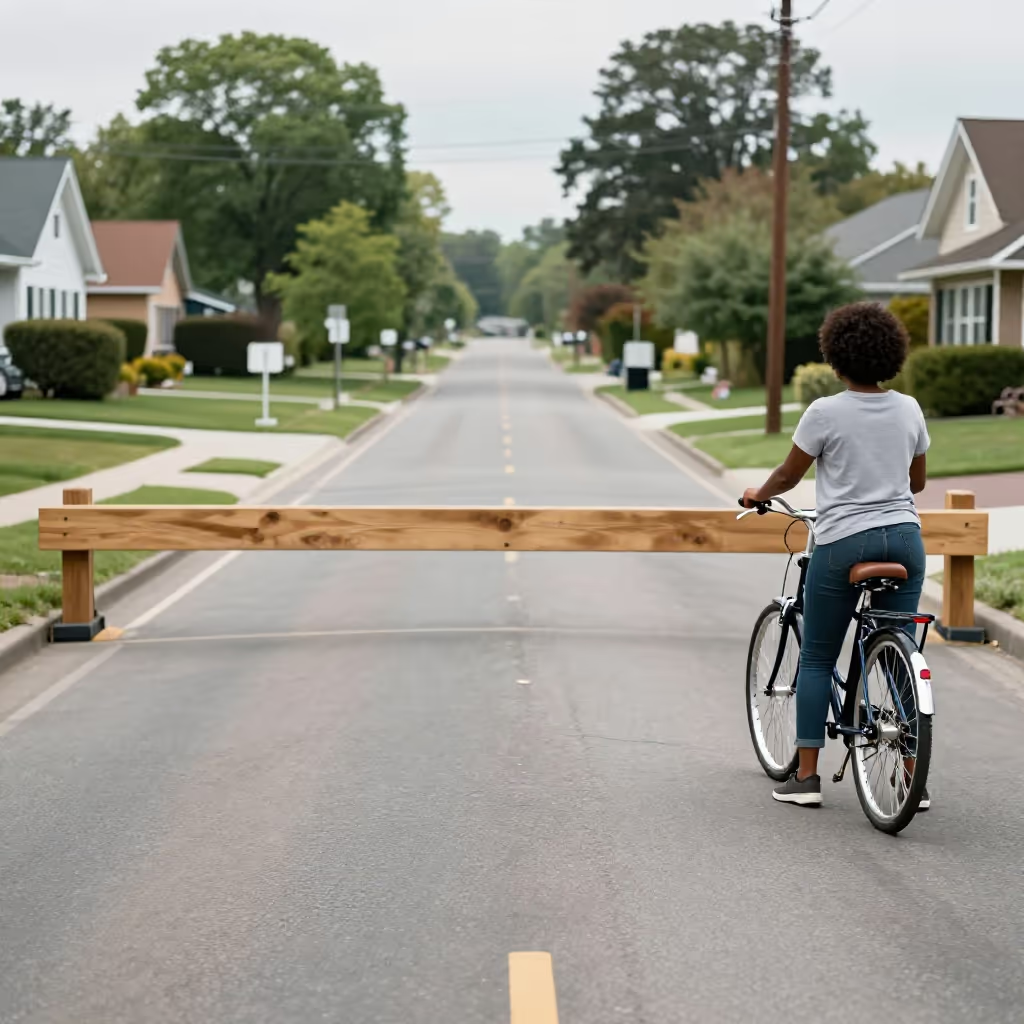
Ende and Ziel can both refer to the last point of a route. The Ende is simply the point where the route stops; the Ziel is the intended arrival point of a journey or race. The key question is therefore whether an arrival is planned.
Das Ziel unserer Wanderung ist die Hütte am See.
The destination of our hike is the hut by the lake.
Am Ende des Wanderwegs versperrt ein Zaun den weiteren Weg.
At the end of the hiking trail, a fence blocks the way forward.