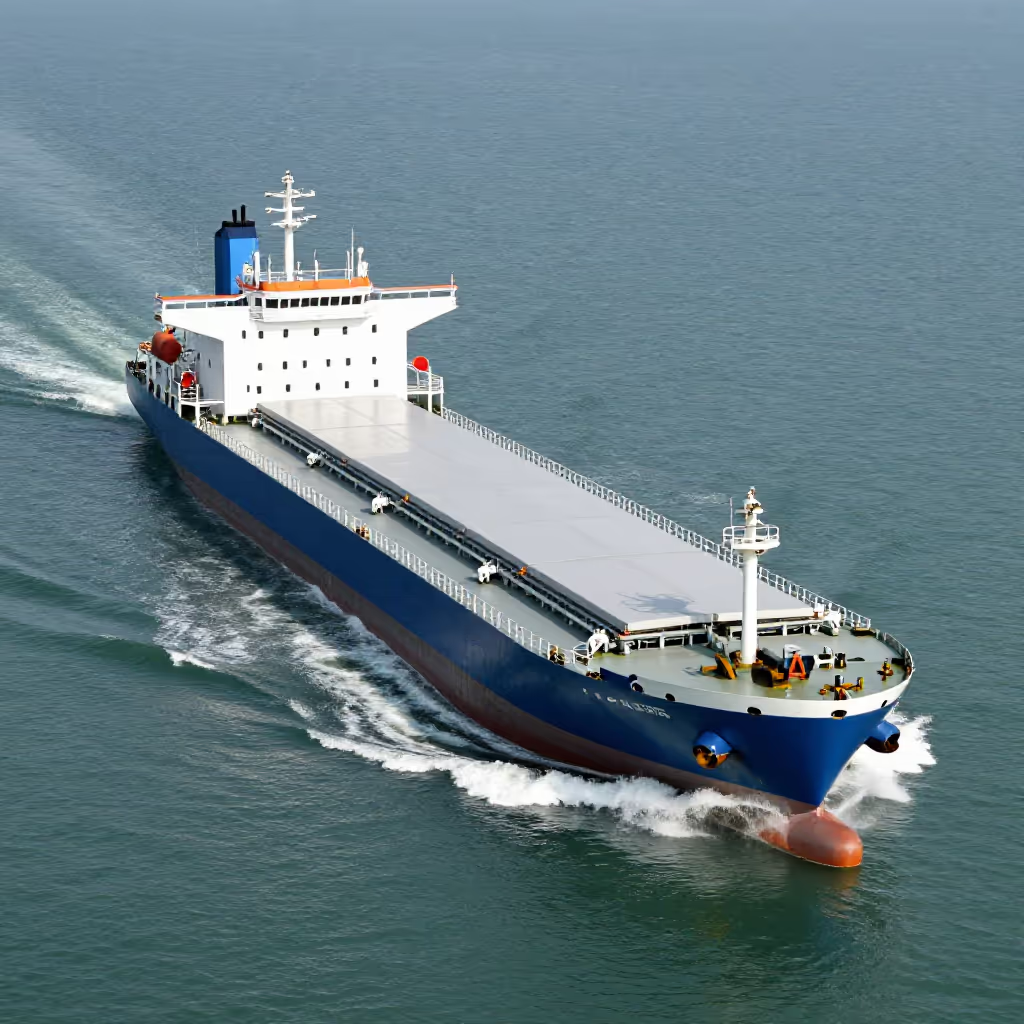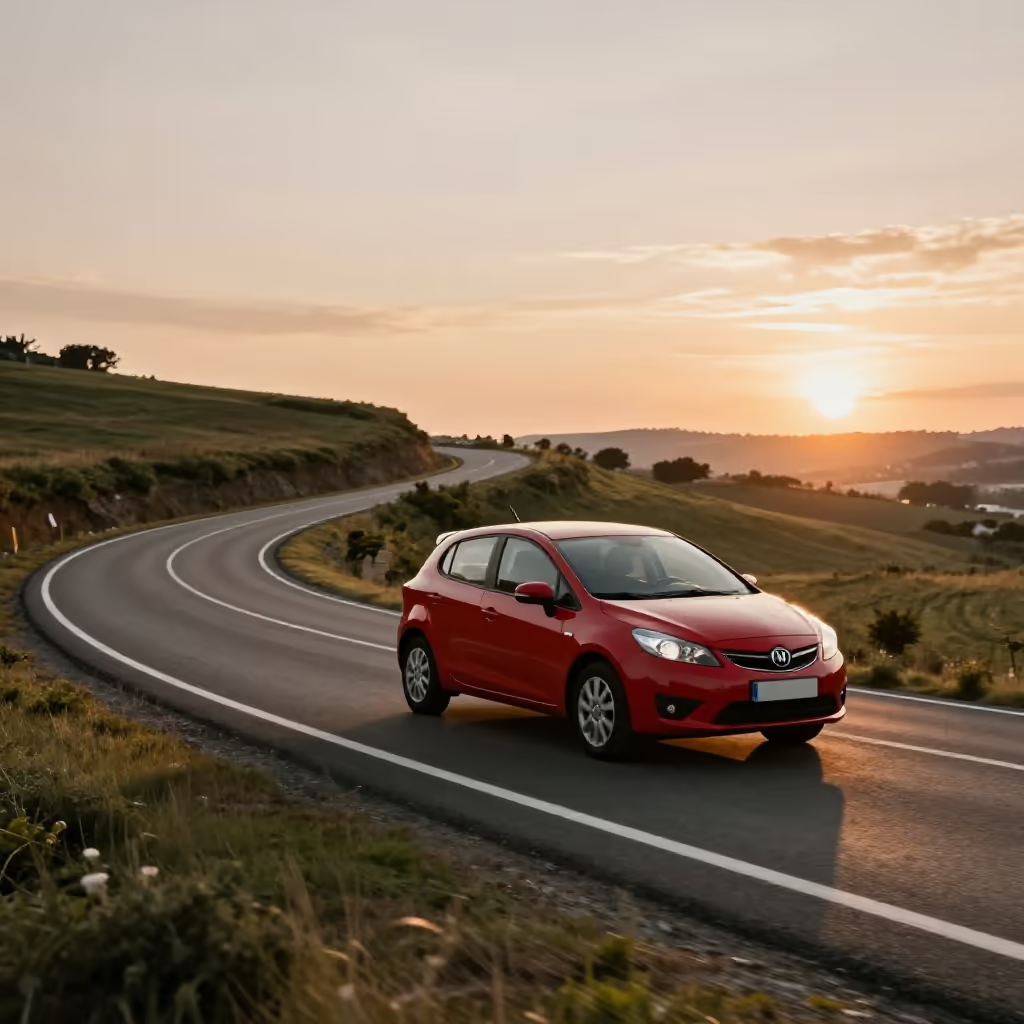
Movement from one place to another by vehicle, such as by car, train, or ship. It refers both to the act of traveling and to the distance covered.
example
Die Fahrt von Hamburg nach München dauert mit dem Zug etwa sechs Stunden.
The journey from Hamburg to Munich takes about six hours by train.

Usage tips
Word family
'Die Fahrt' (trip/ride) is the noun related to the verb 'fahren' (to drive/travel). It describes the result or process of traveling by vehicle.
EXAMPLE
Wir fahren morgen nach Berlin. Die Fahrt wird lange dauern.
We're going to Berlin tomorrow. The trip will take a long time.
Prepositions
To express that something happens during the journey, German uses the preposition 'auf' with the dative: 'auf der Fahrt' (on/during the trip). Movement toward going on a trip is expressed with 'auf eine Fahrt gehen/fahren' (to go on a trip).
EXAMPLE
Auf der Fahrt in den Urlaub haben wir viel gesungen.
On the trip to our vacation destination, we sang a lot.
Typical compounds
For planned group trips, 'Fahrt' is often used as the second part of a compound word. Typical examples are 'Klassenfahrt' (school trip), 'Betriebsfahrt' (company outing), or 'Vereinsfahrt' (club outing).
EXAMPLE
Meine Tochter freut sich schon auf die Klassenfahrt nach London.
My daughter is already looking forward to the school trip to London.
Fixed expression
The expression 'Fahrt aufnehmen' (to gain momentum) means that something becomes faster or gains momentum. It can refer to a vehicle, but also to a discussion, a project, or the economy.
EXAMPLE
Nach dem Start nahm der Zug langsam Fahrt auf.
After starting, the train slowly gained speed.
Context clue
The meaning 'Geschwindigkeit' (speed) is often found in shipping or technical contexts. Verbs like 'drosseln' (to reduce/throttle), 'verringern' (to decrease), or 'beibehalten' (to maintain) point to this meaning.
EXAMPLE
Das Schiff muss im Hafen die Fahrt reduzieren.
The ship must reduce its speed in the harbor.
Compare with
near_synonym · confusable
Fahrt vs Reise
journey / trip
'die Reise' and 'die Fahrt' can both describe movement to another place. 'Reise' usually means the whole act of traveling, including the destination, stay, and purpose. 'Fahrt' places more emphasis on the journey by vehicle, for example by car, train, or bus. With groups, 'Fahrt' can also mean a planned trip, as in 'eine Klassenfahrt' (a school trip). The words are easy to confuse because a 'Reise' often includes a 'Fahrt'. In practical terms: for the means of transport and the route, people often say 'Fahrt'; for the whole undertaking, 'Reise' is more common.
Fahrt
Die Fahrt mit dem Zug hat heute länger gedauert als geplant.
The train journey took longer than planned today.
Reise
Für die Reise nach Italien packt Maria schon am Abend ihren Koffer.
Maria is already packing her suitcase in the evening for the trip to Italy.