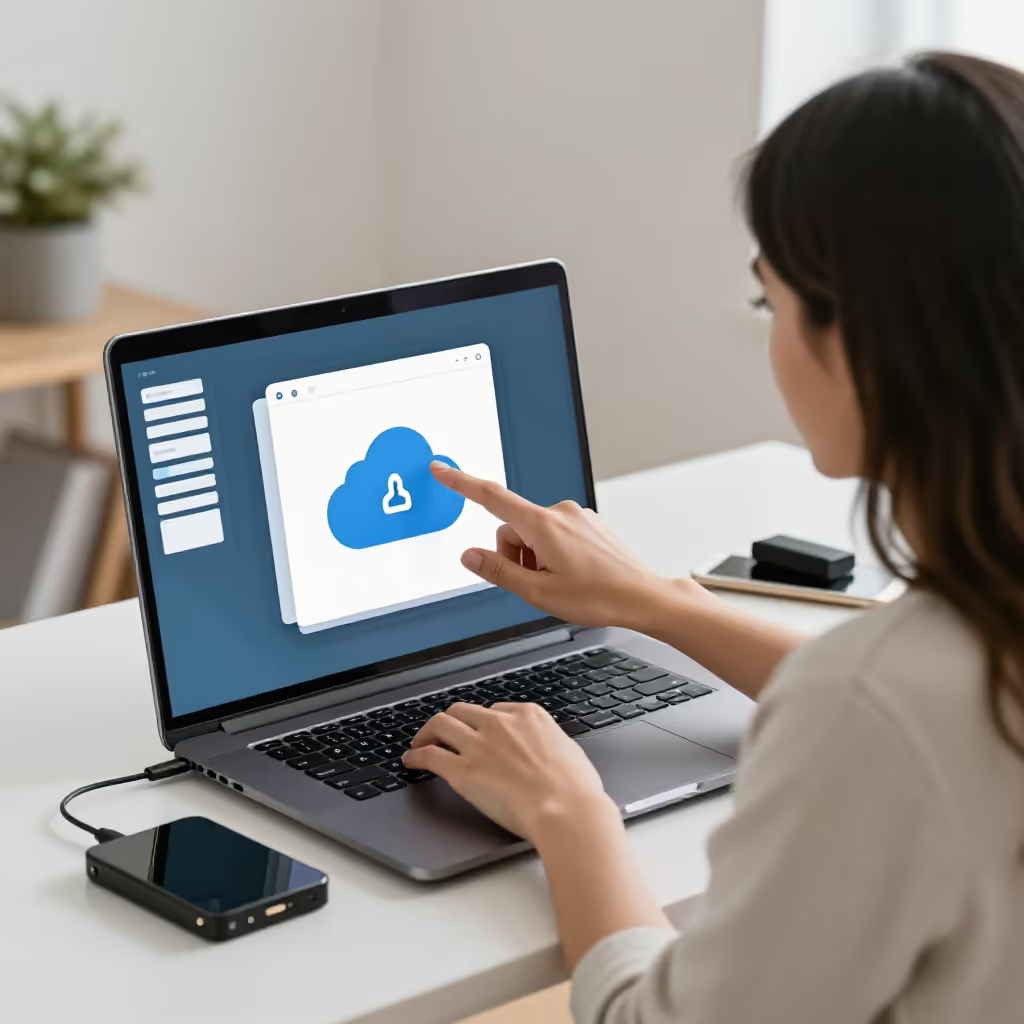
To save digital data on a computer or storage medium (e.g., hard drive, cloud) so that it is available again later.
example
Bitte vergiss nicht, das Dokument zu speichern, bevor du den Computer ausschaltest.
Please don't forget to save the document before you turn off the computer.
Usage tips
Word family
The verb 'speichern' (to save/store) belongs to the noun 'der Speicher' (storage/memory/attic). A Speicher is a place or device where something is kept, for example data storage or the attic of a house.
EXAMPLE
Der Speicher meines Handys ist fast voll.
My phone's storage is almost full.
Context clue
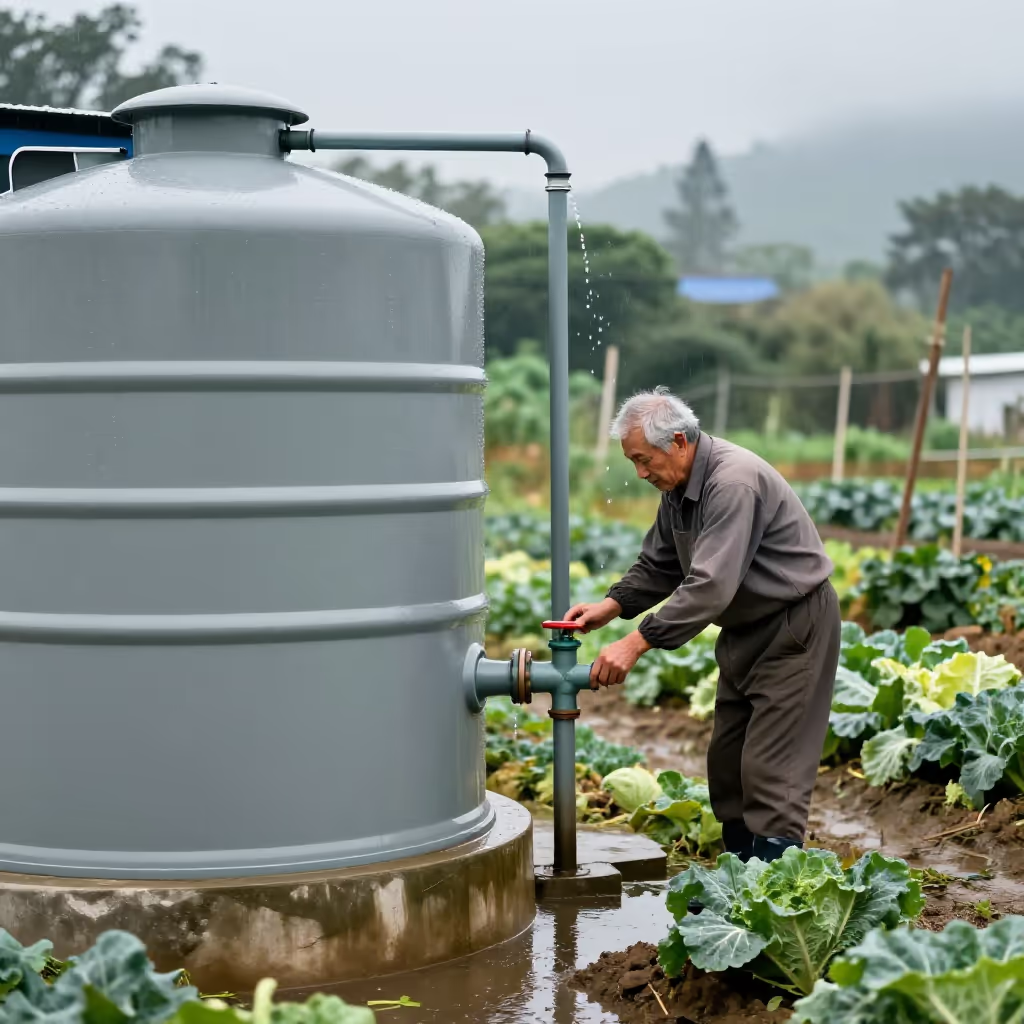
You can easily recognize which meaning 'speichern' (to save/store) has from the object of the sentence. 'Daten' (data) or 'ein Dokument' (a document) point to the digital meaning, 'Energie' (energy) or 'Wärme' (heat) to the physical meaning, and 'im Gedächtnis' (in memory) to the mental meaning.
EXAMPLE
Moderne Batterien können viel Strom speichern.
Modern batteries can store a lot of electricity.
Typical collocations
In a digital context, 'speichern' (to save) is often combined with 'eine Datei' (a file), 'ein Dokument' (a document), 'Fotos' (photos), or 'Daten' (data). To indicate the location, the preposition 'auf' (on) with the dative is often used.
EXAMPLE
Ich speichere meine Fotos immer auf einer externen Festplatte.
I always save my photos on an external hard drive.
Scientific context
In the meaning of accumulating or keeping something, 'speichern' (to store) is often used in biological or technical contexts. It describes a natural or technical process.
EXAMPLE
Pflanzen speichern Energie aus dem Sonnenlicht durch Fotosynthese.
Plants store energy from sunlight through photosynthesis.
Compare with
antonym
speichern vs vergessen
to forget
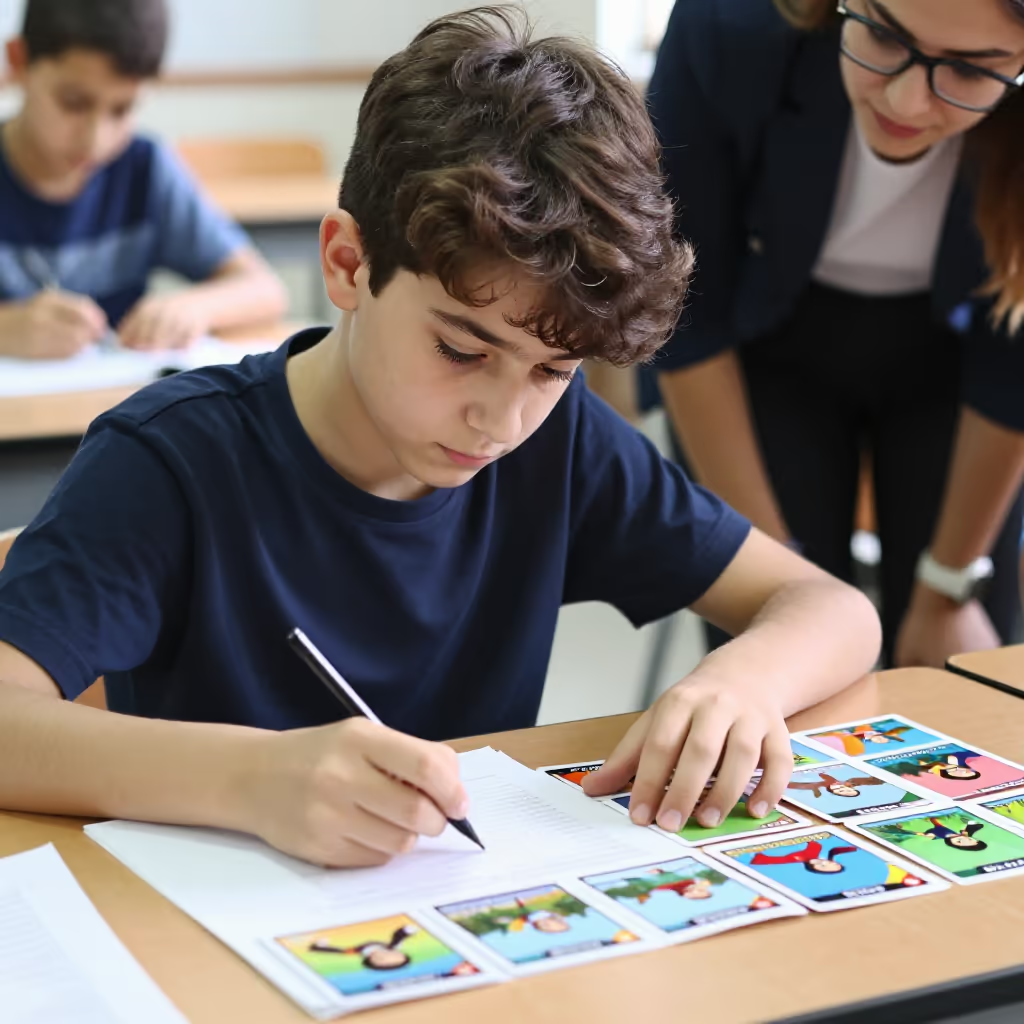
'vergessen' and 'speichern' are opposites in the context of remembering. 'vergessen' means that a piece of information is no longer in your memory. Here, 'speichern' means that information or impressions are kept in memory. 'speichern' is also often used for computers or for things like energy, but in this relation it is about memory. Put simply: what you store well, you do not forget so easily.
speichern
Das Gehirn speichert wichtige Erlebnisse oft sehr lange.
The brain often stores important experiences for a very long time.
vergessen
Ich vergesse oft Namen, wenn ich viele neue Leute treffe.
I often forget names when I meet a lot of new people.