

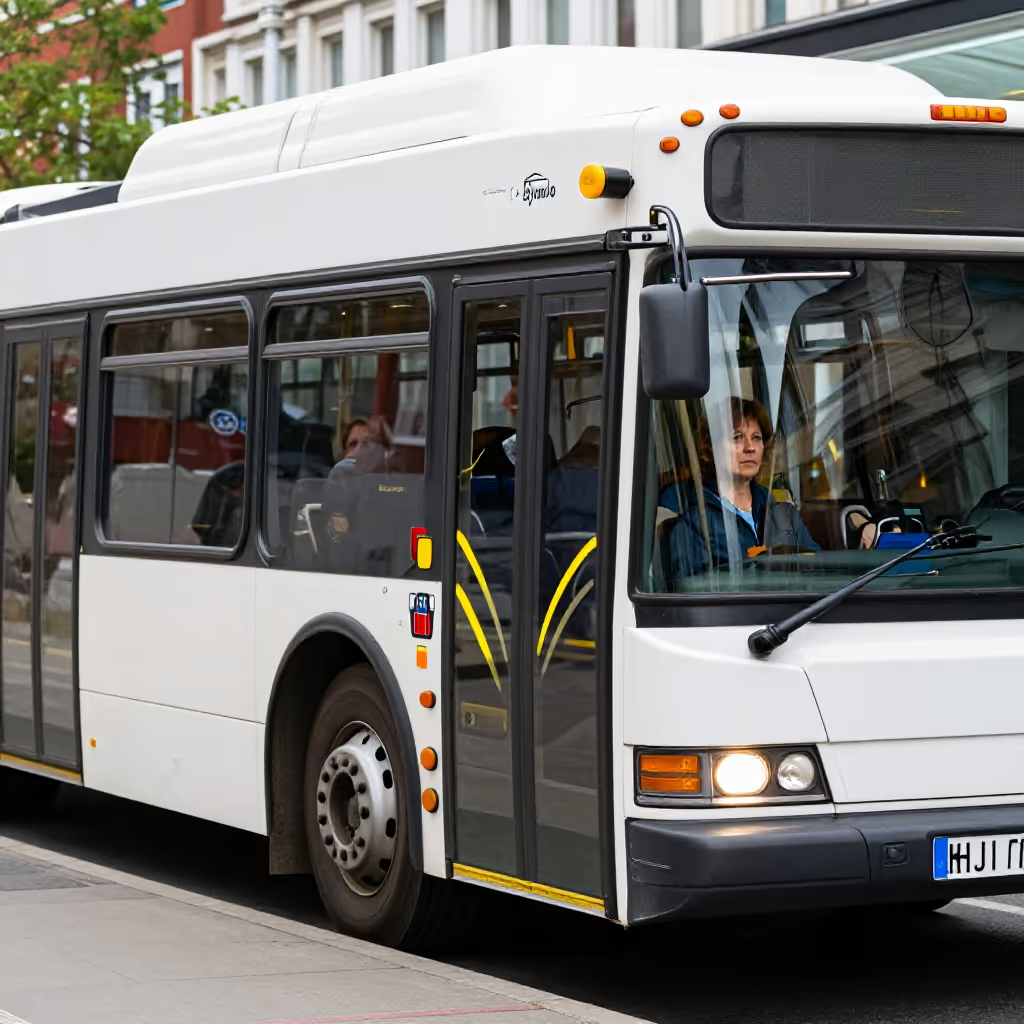
anfahren
to start moving
To start driving or moving from a standstill with a vehicle (e.g., car, train).
EXAMPLE
Der Bus fuhr an der Haltestelle langsam an.
The bus slowly started moving at the stop.
to start moving / approach
Loading your saved state.
to start moving
To start driving or moving from a standstill with a vehicle (e.g., car, train).
Der Bus fuhr an der Haltestelle langsam an.
The bus slowly started moving at the stop.

to approach / drive to
To head for a specific destination or place with a vehicle.
Auf dem Weg nach Hause können wir noch den Supermarkt anfahren.
On the way home, we can still drive to the supermarket.

to snap at
To speak to or shout at someone sharply, angrily, or unfriendly.
Der Chef fuhr mich an, weil ich einen kleinen Fehler gemacht hatte.
The boss snapped at me because I had made a small mistake.
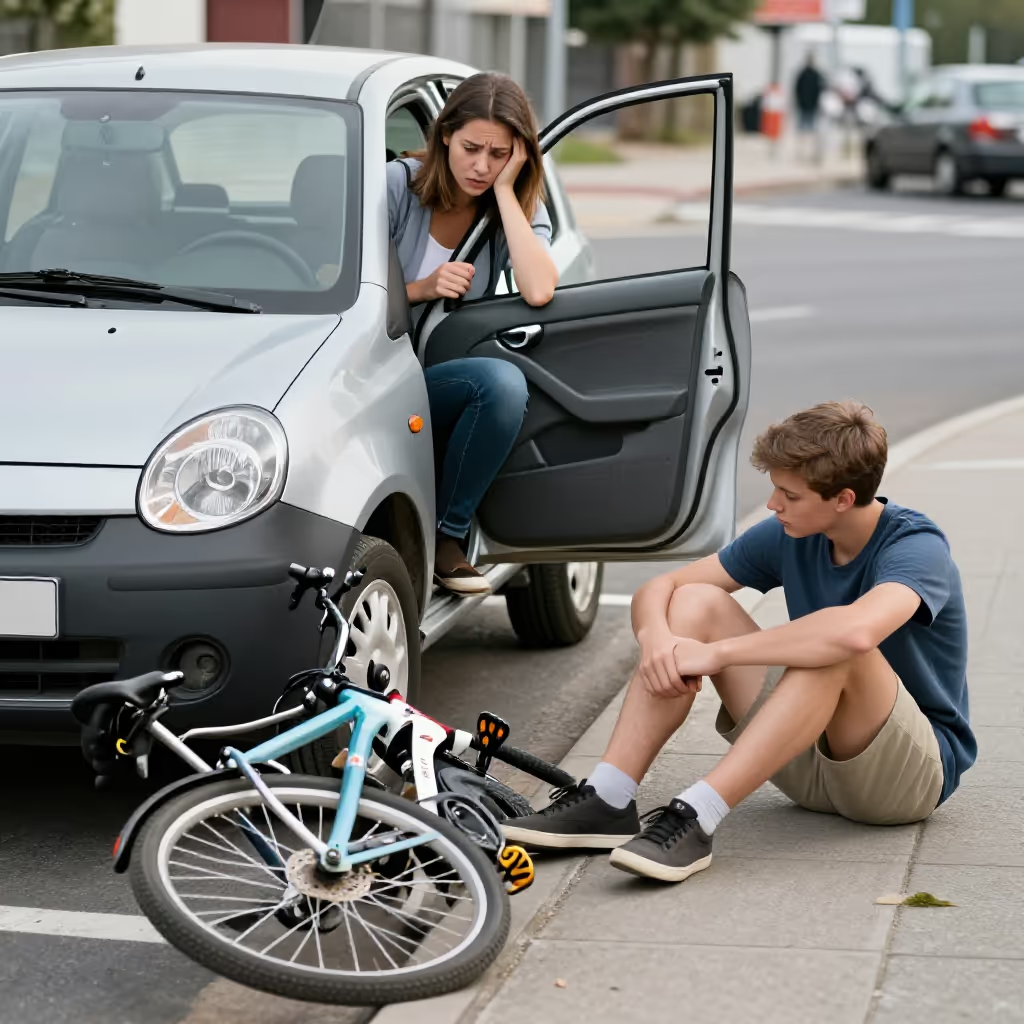
to hit with a vehicle
To collide with someone or something with a vehicle, often causing damage or injury.
Der Radfahrer wurde von einem Auto angefahren und leicht verletzt.
The cyclist was hit by a car and slightly injured.
'Anfahren' is a separable verb. The prefix 'an-' comes at the end in a main clause. In subordinate clauses and in the infinitive with 'zu', the verb stays together.
Der Zug fährt pünktlich um 8:05 Uhr an.
The train starts moving on time at 8:05.
The auxiliary verb in the perfect tense depends on the meaning. For 'losfahren' (to start moving/driving), which indicates movement, 'sein' is used. For all other meanings (to head for, to shout at, to collide with), 'haben' is used.
Der LKW ist langsam angefahren.
The truck started moving slowly.
The object helps you recognize the meaning. Without an object, it means 'losfahren' (to start moving). With a place as the object, it means 'ansteuern' (to head for). With a person as the object, it can mean 'anschreien' (to shout at) or 'anstoßen' (to hit/collide with), which the context clarifies.
Wir haben auf unserer Reise mehrere kleine Städte angefahren.
We drove to several small towns on our trip.
In the meaning of 'to hit someone/something with a vehicle', the passive is often used, especially in news reports or accident reports. The person or thing that was hit then becomes the subject.
Ein Fußgänger wurde an der Kreuzung von einem Auto angefahren.
A pedestrian was hit by a car at the intersection.
to start
When talking about a vehicle, both verbs can refer to the beginning of a journey. Starten generally refers to the start of the journey, while anfahren specifically means starting to move from a standstill. Use starten for the journey as a whole and anfahren for the moment when the vehicle sets off.

Der Zug fährt am Bahnsteig langsam an.
The train slowly starts moving at the platform.
Der Zug startet pünktlich um sechs Uhr.
The train starts promptly at six o’clock.