


die Passage
passage
A specific section or part of a text, piece of music, or film.
EXAMPLE
Könnten Sie bitte die letzte Passage des Romans noch einmal vorlesen?
Could you please read the last passage of the novel aloud again?
passage
Loading your saved state.
passage
A specific section or part of a text, piece of music, or film.
Könnten Sie bitte die letzte Passage des Romans noch einmal vorlesen?
Could you please read the last passage of the novel aloud again?

arcade / passage
A covered passageway that often contains shops and connects two streets or buildings.
In der neuen Einkaufspassage gibt es viele interessante Läden.
There are many interesting shops in the new shopping arcade.

passage / crossing
The journey or crossing, especially on a ship, from one place to another.
Die Passage über den Atlantik dauerte damals mehrere Wochen.
The passage across the Atlantic took several weeks back then.
passage
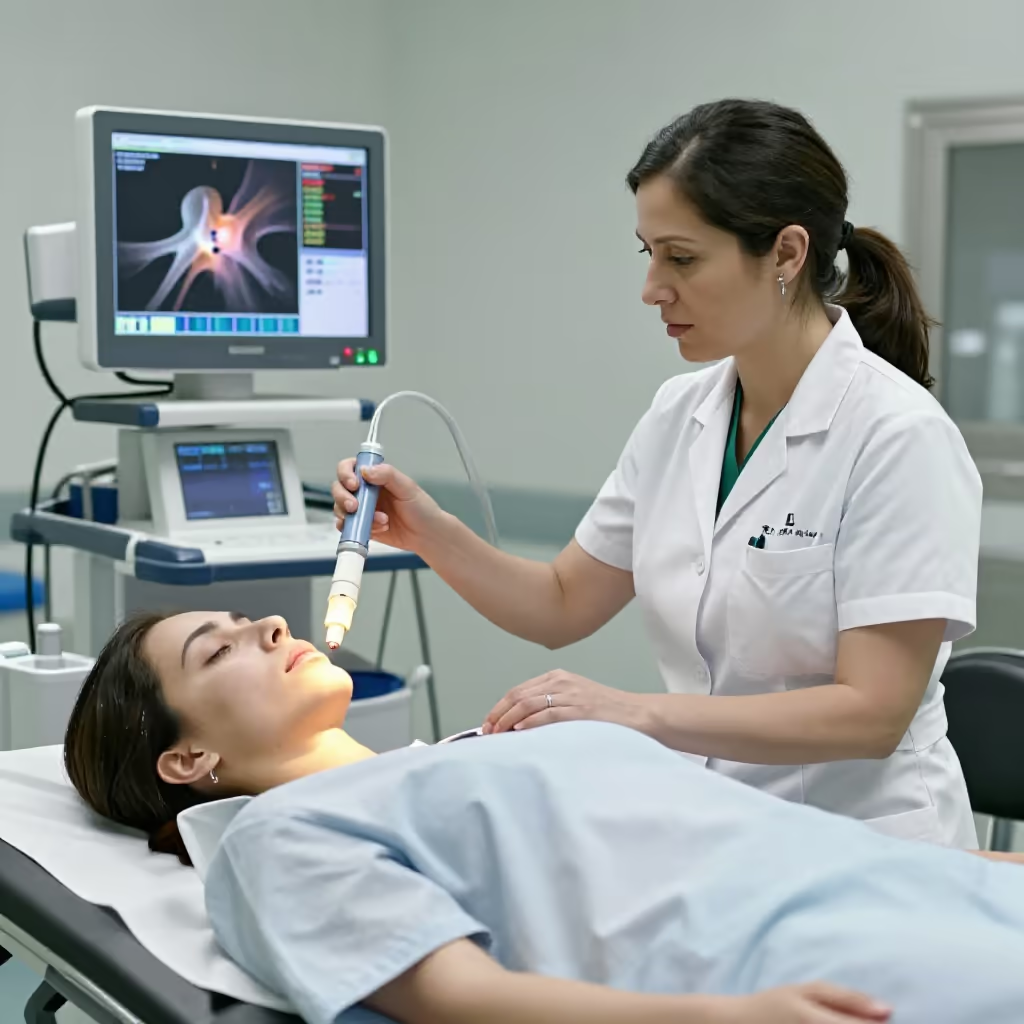
In medicine, the passage or movement of substances or instruments through a body part or organ system.
Der Arzt prüfte die Passage der Nahrung durch den Darm.
The doctor checked the passage of food through the intestine.
The meaning of 'Passage' (passage) depends heavily on the topic. Pay attention to signal words: 'Buch' (book) or 'Text' (text) point to a section, 'Geschäfte' (shops) to a passageway, and 'Schiff' (ship) to a crossing.
Er las eine Passage aus seinem Lieblingsbuch vor.
He read a passage from his favorite book aloud.
In the meaning of 'Abschnitt' (section), the word is often combined with the medium from which the section comes. Typical examples are 'Textpassage' (text passage), 'Filmpassage' (film passage), or 'Musikpassage' (musical passage).
Der Lehrer analysierte eine schwierige Textpassage mit den Schülern.
The teacher analyzed a difficult text passage with the students.
In the architectural meaning, 'Passage' (arcade/passage) is often part of compound nouns. The best known are 'Einkaufspassage' (shopping arcade) and 'Ladenpassage' (shopping passage).
Am Wochenende bummeln wir gerne durch die neue Einkaufspassage.
On the weekend, we like to stroll through the new shopping arcade.
The meaning of the 'Durchgang' (passage) of substances in the body is used almost exclusively in medicine. You will hardly hear this meaning in everyday life.
Der Arzt erklärte dem Patienten die Magen-Darm-Passage.
The doctor explained the gastrointestinal passage to the patient.
place / position
Both Stelle and Passage can refer to part of a text. Stelle tends to locate a specific position or a short section, while Passage usually refers to a connected, somewhat longer part of a text. Use Stelle when locating something and Passage when emphasizing the entire excerpt.
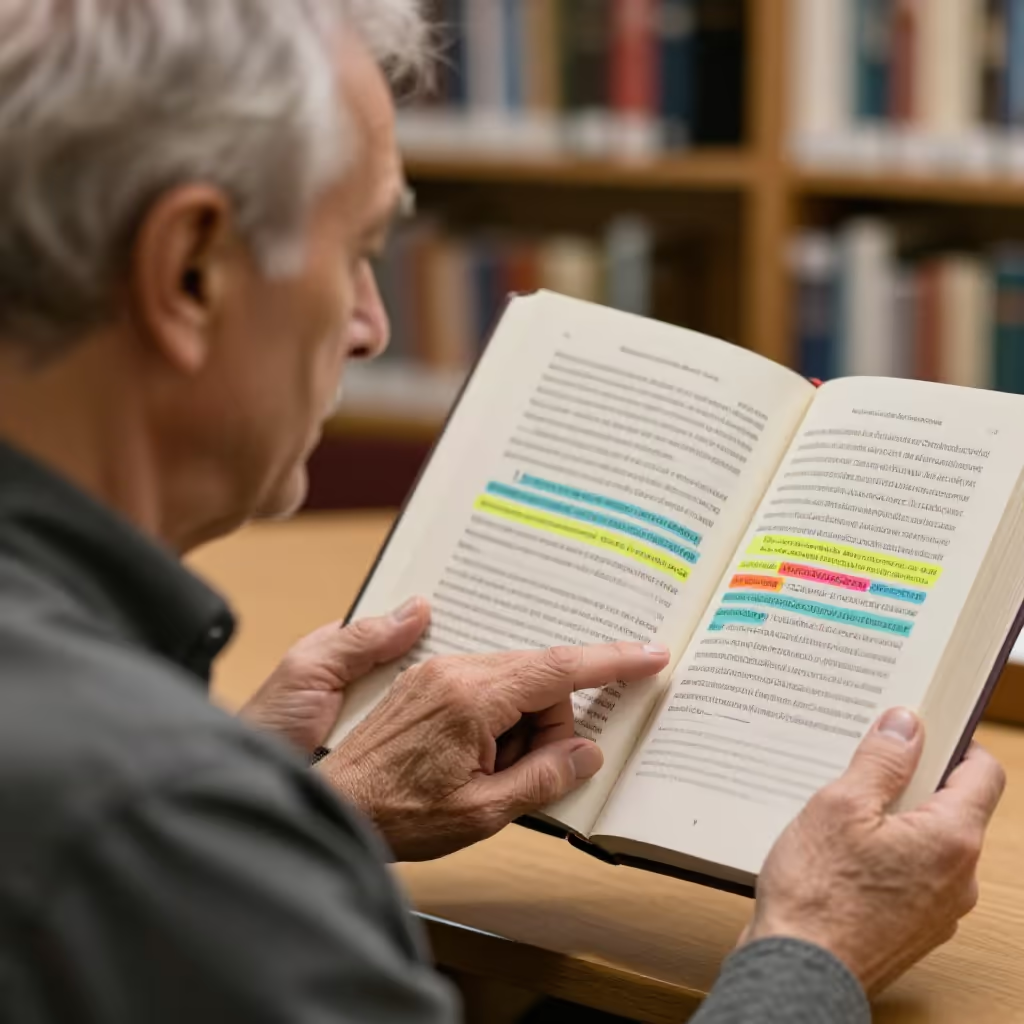
Bitte lies die Passage im Text, in der die Hauptfigur ihre Entscheidung erklärt.
Please read the passage in which the main character explains her decision.
Bitte markiere die Stelle im Text, an der die Antwort steht.
Please mark the place in the text where the answer appears.