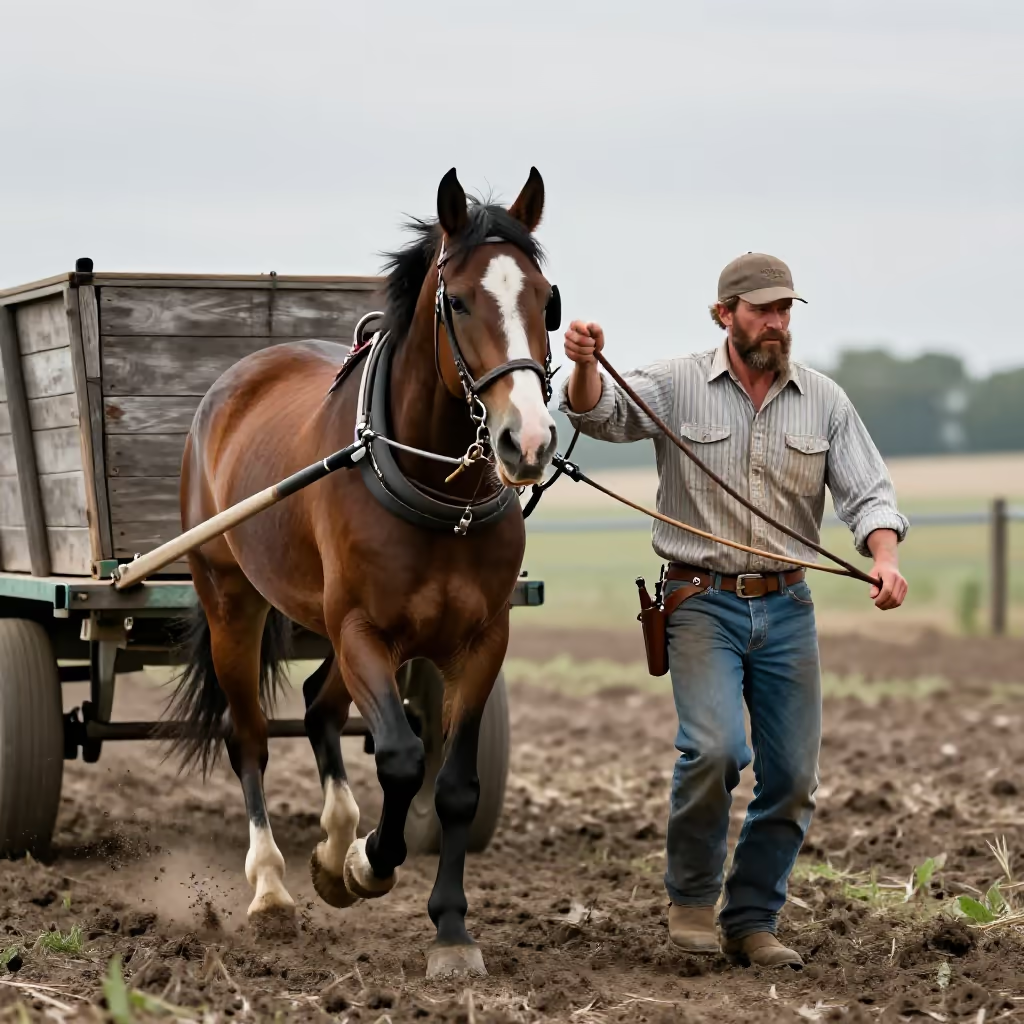
To hit someone or an animal with a whip, often to drive them on or punish them.
example
Der Zirkusdirektor peitschte mit der Peitsche auf den Boden, um die Aufmerksamkeit der Löwen zu bekommen.
The circus director cracked the whip on the ground to get the lions' attention.

Usage tips
Word family
The verb 'peitschen' (to whip) is derived directly from the noun 'die Peitsche' (whip). It describes the action you perform with a whip.
EXAMPLE
Der Kutscher hielt die Peitsche in der Hand, benutzte sie aber nicht.
The coachman held the whip in his hand but did not use it.
Context clues
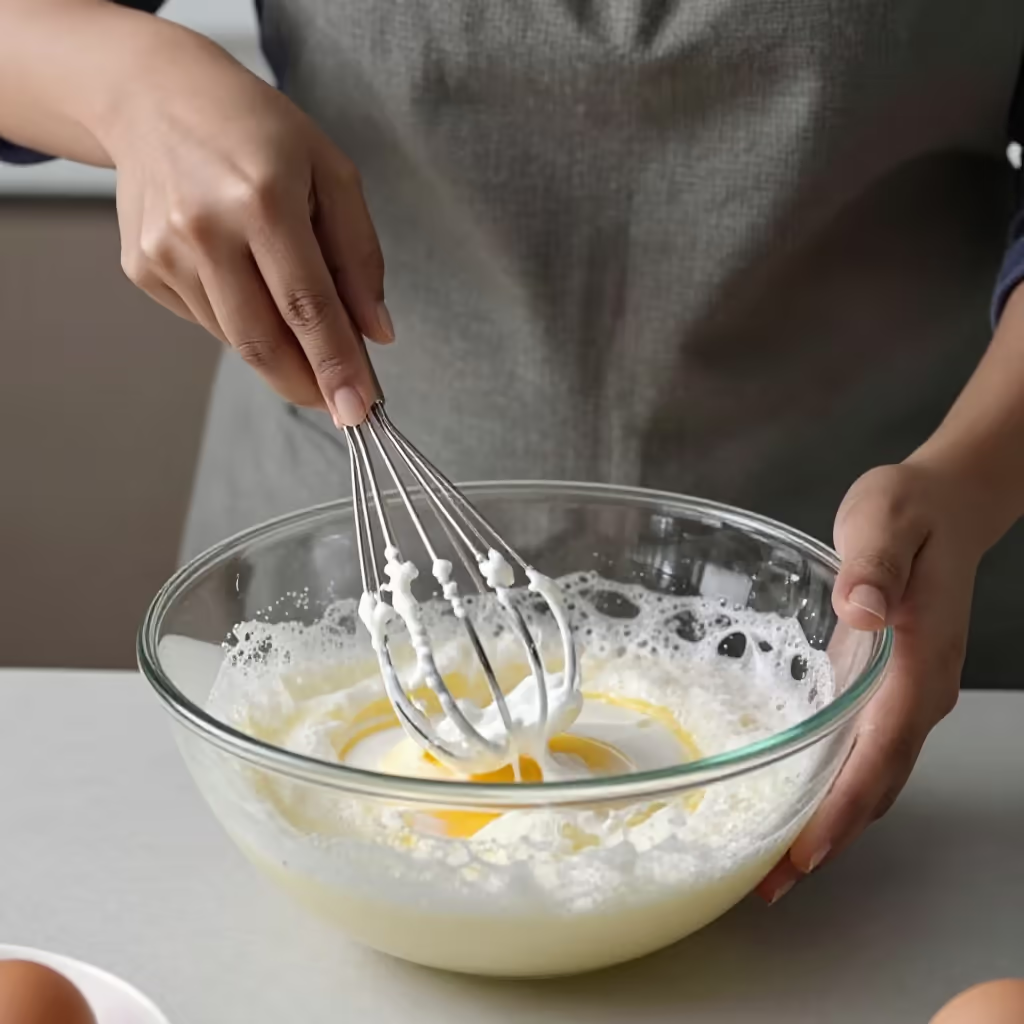
You can easily recognize the meaning of 'peitschen' (to whip/lash/whisk) from the context. If it is about weather (rain, wind), the figurative meaning 'to strike violently' is meant. If it is about cooking (cream, egg whites), it means 'to stir quickly'.
EXAMPLE
Der starke Wind peitschte die Wellen an die Küste.
The strong wind lashed the waves against the coast.
Use with weather
In the weather meaning, the subject is always an element such as 'der Regen' (the rain), 'der Wind' (the wind), or 'die Wellen' (the waves). The preposition 'gegen' + accusative is often used to name the target.
EXAMPLE
Hagel peitschte mit voller Wucht gegen das Autodach.
Hail lashed against the car roof with full force.
Use in cooking
In cooking contexts, the typical objects are 'Sahne' (cream) or 'Eiweiß' (egg white). An adjective is often added to describe the result, e.g. 'steif peitschen' (to whisk until stiff) or 'schaumig peitschen' (to whisk until foamy).
EXAMPLE
Die Eier mit dem Zucker schaumig peitschen.
Whisk the eggs with the sugar until foamy.
Compare with
near_synonym · confusable
peitschen vs schlagen
to hit / beat
'schlagen' and 'peitschen' can both refer to a fast, forceful movement. With people or animals, 'schlagen' is more general: you hit someone with your hand or an object. 'peitschen' is more precise when a whip is used, or figuratively when something lashes violently against something else. In the kitchen, both can occur with cream or egg whites, but 'schlagen' is the normal word for this. Learners may confuse them because both express force and fast movement. As a simple guide: 'schlagen' is more general, while 'peitschen' is more specific and sounds stronger or more figurative.
peitschen
Der Regen peitschte gegen die Fenster, während wir im Zug saßen.
The rain lashed against the windows while we were sitting on the train.
schlagen
Für den Kuchen schlägt Maria die Sahne mit dem Mixer steif.
For the cake, Maria whips the cream with the mixer until stiff.