

das Selbstbewusstsein
self-confidence
Trust in one's own abilities, strengths, and worth; confidence.
Sie trat mit großem Selbstbewusstsein auf und überzeugte das Publikum.
She appeared with great self-confidence and convinced the audience.
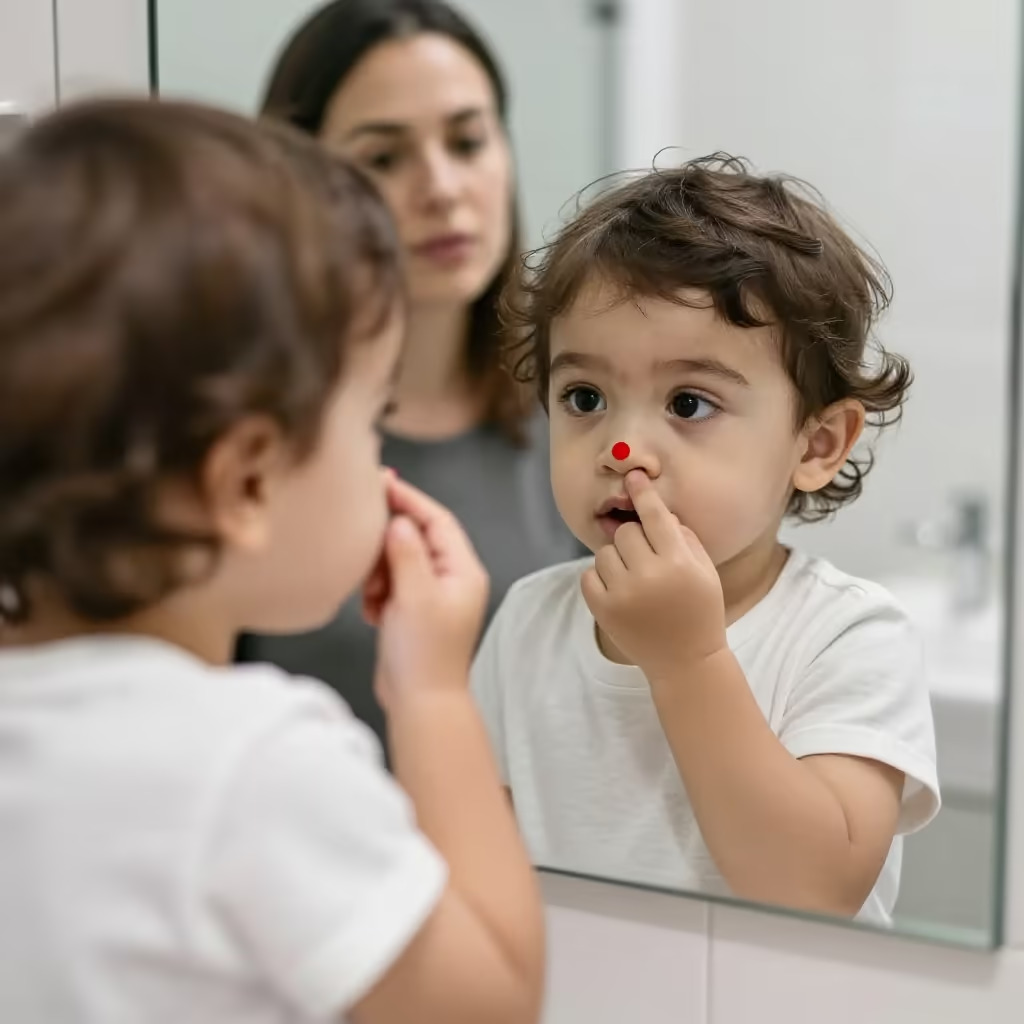
self-confidence / self-awareness
das Selbstbewusstsein
Loading your saved state.

self-confidence
Trust in one's own abilities, strengths, and worth; confidence.
Sie trat mit großem Selbstbewusstsein auf und überzeugte das Publikum.
She appeared with great self-confidence and convinced the audience.

self-awareness
Awareness of one's own existence as a thinking and feeling individual; the ability to perceive oneself.
In der Philosophie ist die Frage nach dem Ursprung des Selbstbewusstseins zentral.
In philosophy, the question of the origin of self-awareness is central.
| gender | neuter das |
|---|---|
| genitive | des Selbstbewusstseins |
| singular | plural | |
|---|---|---|
| nominative | das Selbstbewusstsein | – |
| accusative | das Selbstbewusstsein | – |
| dative | dem Selbstbewusstsein | – |
| genitive | des Selbstbewusstseins | – |
The article changes with the case; it is shown in colour.
The word is made up of 'selbst' (self), 'bewusst' (aware/conscious), and the ending '-sein' (being). It literally means being aware of oneself. This structure helps you understand both meanings: self-confidence and self-awareness.
Durch den Erfolgserlebnis wuchs sein Selbstbewusstsein.
Because of the experience of success, his self-confidence grew.
In everyday language, the meaning 'Selbstvertrauen' (self-confidence) is almost always meant. The philosophical meaning 'Selbstwahrnehmung' (self-awareness) is found mainly in academic or psychological texts.
Er hat nicht genug Selbstbewusstsein, um vor vielen Menschen zu sprechen.
He doesn't have enough self-confidence to speak in front of many people.
Die Entwicklung des Selbstbewusstseins beim Kind ist ein wichtiges Forschungsthema.
The development of self-awareness in children is an important research topic.
For the meaning 'Selbstvertrauen' (self-confidence), combinations with adjectives such as 'groß' (great), 'stark' (strong), or 'wenig' (little) are typical. Common verbs are 'haben' (to have), 'stärken' (to strengthen), 'aufbauen' (to build up), or 'zeigen' (to show).
Man kann lernen, sein Selbstbewusstsein zu stärken.
You can learn to strengthen your self-confidence.
Sie hat ein sehr starkes Selbstbewusstsein.
She has very strong self-confidence.
ego
Selbstbewusstsein mainly refers to confidence in one’s own abilities and can have a positive meaning. In everyday usage, Ego focuses more strongly on a person’s sense of self-importance and often sounds critical, especially when someone has a big ego. Selbstbewusstsein is appropriate for healthy confidence, while Ego is more suitable for exaggerated self-importance.

Ihr Selbstbewusstsein half ihr, die schwierige Präsentation ruhig zu halten.
Her self-confidence helped her deliver the difficult presentation calmly.
Sein großes Ego machte es ihm schwer, Kritik anzunehmen.
His big ego made it difficult for him to accept criticism.