

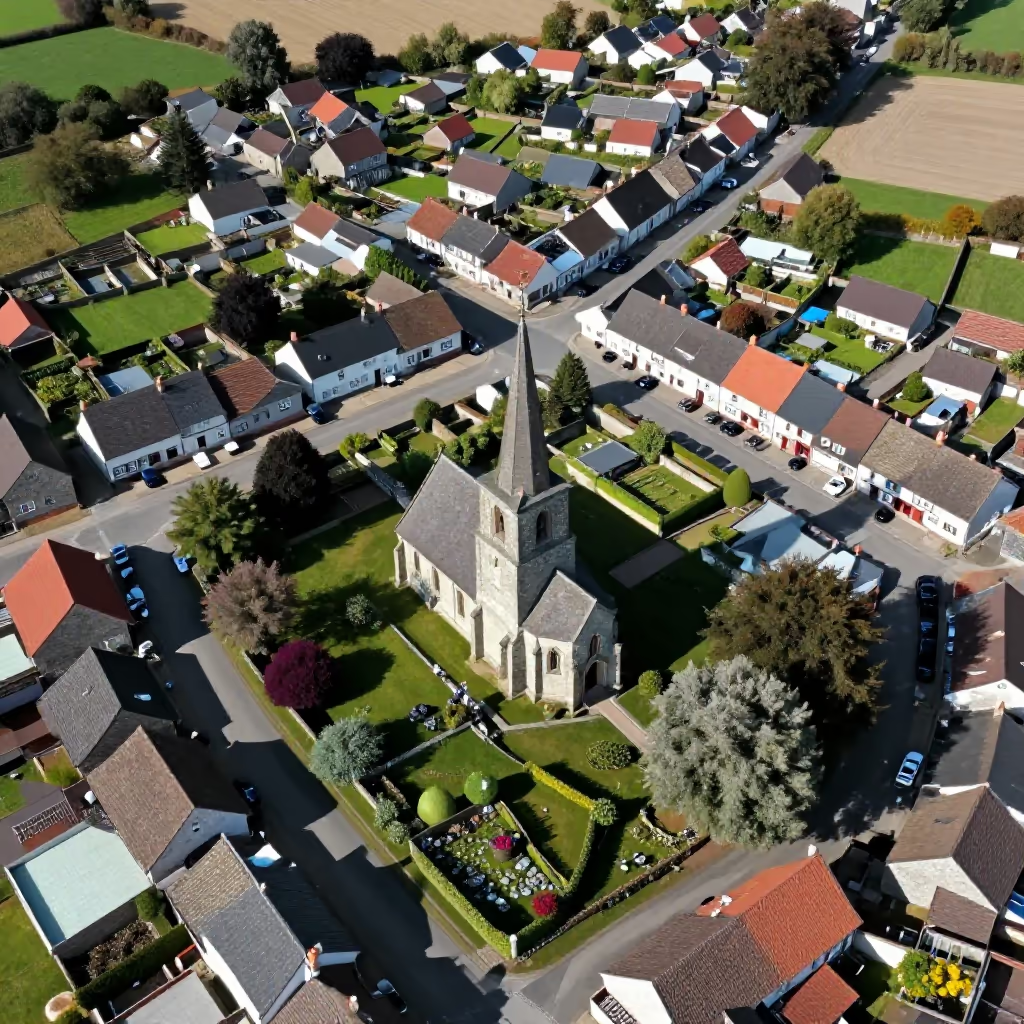
umliegend
surrounding
Located in the immediate neighborhood or vicinity of something.
EXAMPLE
Die Bewohner der umliegenden Dörfer kaufen in der Stadt ein.
The residents of the surrounding villages do their shopping in the city.
surrounding
Loading your saved state.
surrounding
Located in the immediate neighborhood or vicinity of something.
Die Bewohner der umliegenden Dörfer kaufen in der Stadt ein.
The residents of the surrounding villages do their shopping in the city.
'Umliegend' (surrounding) is the present participle of the separable verb 'umliegen'. It therefore describes something that 'lies around' a particular place.
Der Wald, der das Dorf umgibt, ist ein beliebtes Wandergebiet.
The forest that surrounds the village is a popular hiking area.
This adjective is used almost exclusively before a noun (attributive use). Using it as a standalone predicate adjective is very unusual.
Alle umliegenden Parkplätze waren bereits besetzt.
All surrounding parking spaces were already occupied.
'Umliegend' (surrounding) is often combined with geographical or administrative units. Typical phrases are 'umliegende Dörfer' (surrounding villages), 'umliegende Gemeinden' (surrounding municipalities), or 'umliegende Felder' (surrounding fields).
Ein schweres Gewitter zog über die Stadt und die umliegenden Gebiete.
A severe thunderstorm moved over the city and the surrounding areas.
neighboring / adjacent
Benachbart and umliegend both refer to places nearby. “Benachbart” emphasizes a specific neighboring relationship to a particular place, while “umliegend” describes the area around that reference point more generally. Use “benachbart” for the direct neighbor and “umliegend” for places in the surrounding area.
Die umliegenden Gemeinden liegen in der Umgebung unserer Stadt.
The surrounding municipalities are located in the area around our city.
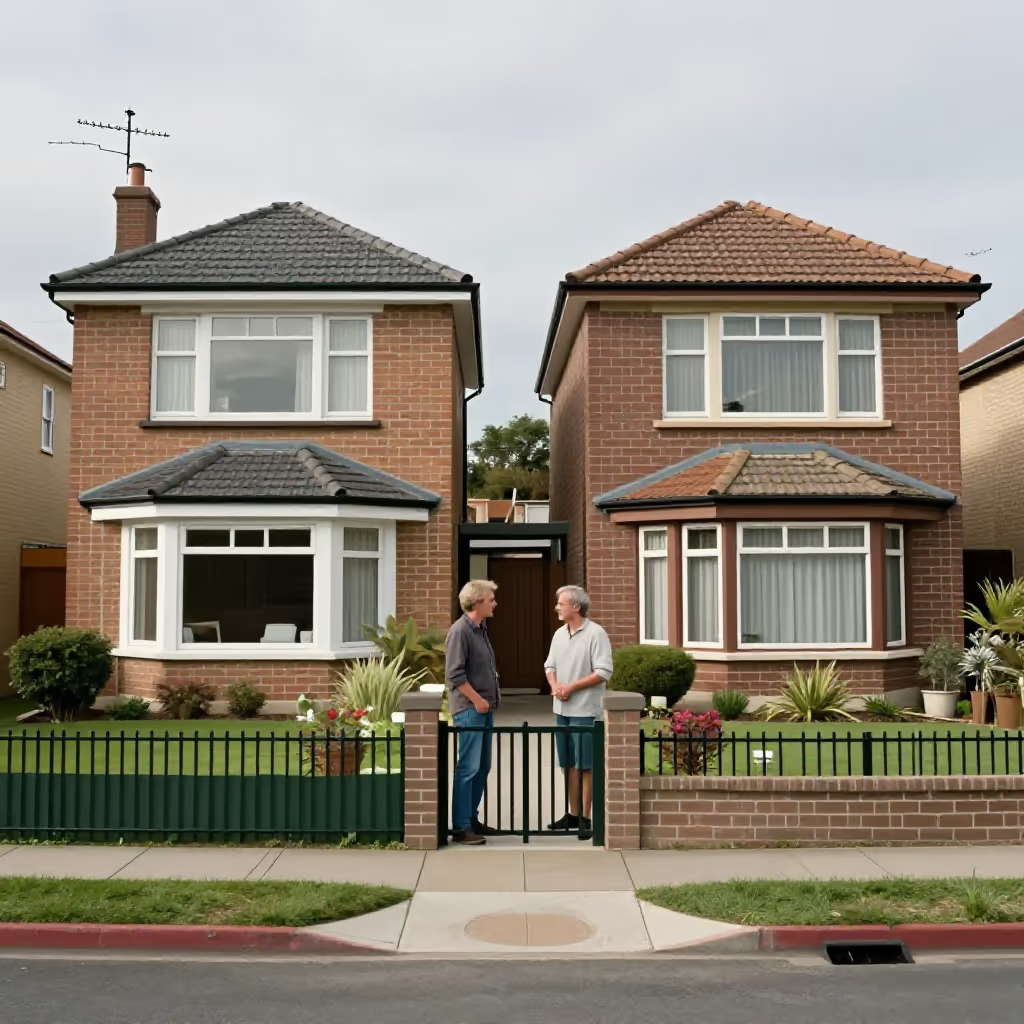
Die benachbarte Gemeinde grenzt direkt an unsere Stadt.
The neighboring municipality directly borders our city.