

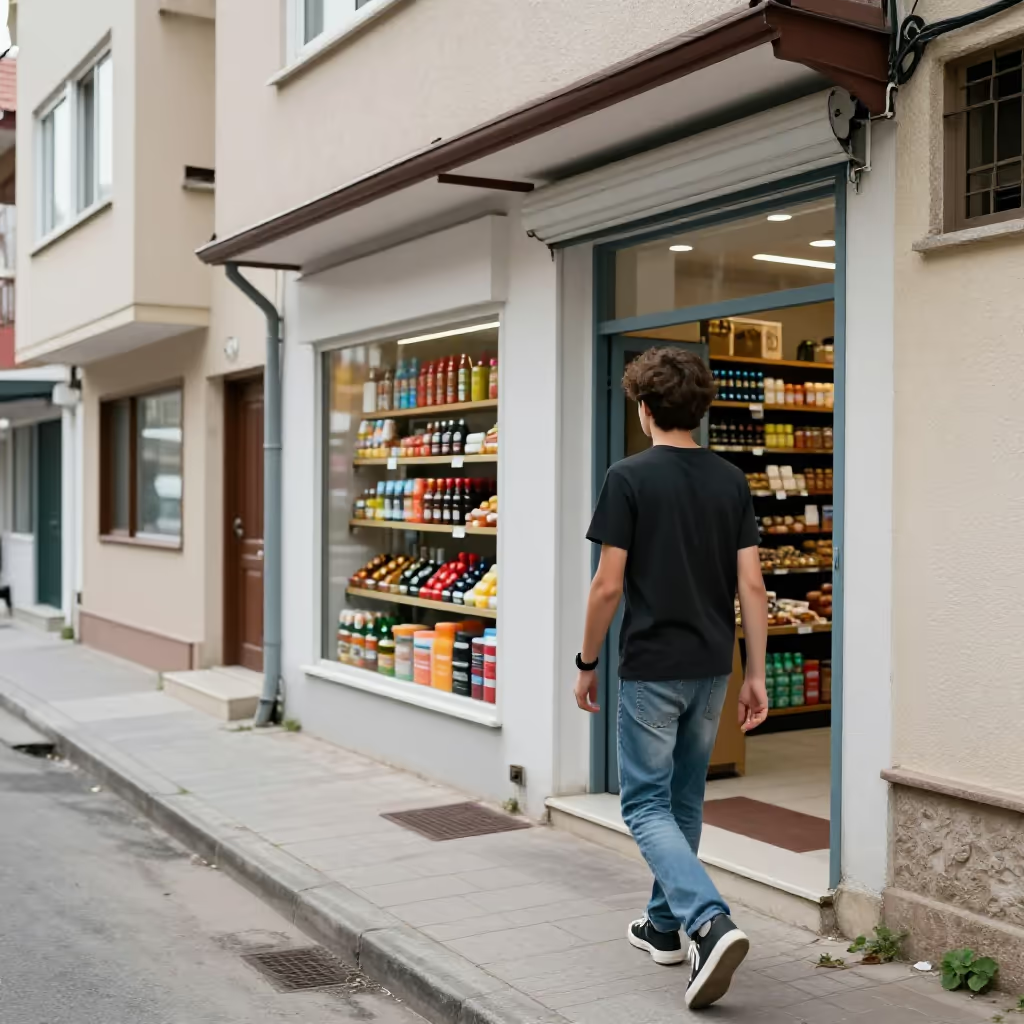
nahegelegen
nearby
Located at a short distance; situated nearby.
EXAMPLE
Wir gingen in ein nahegelegenes Café, um uns aufzuwärmen.
We went to a nearby café to warm up.
nearby
Loading your saved state.
nearby
Located at a short distance; situated nearby.
Wir gingen in ein nahegelegenes Café, um uns aufzuwärmen.
We went to a nearby café to warm up.
The word is made up of 'nahe' (near) and 'gelegen' (past participle of 'liegen' (to lie/be located)). So it literally means 'something that is located nearby.'
Wir suchen ein nahegelegenes Hotel für eine Nacht.
We are looking for a nearby hotel for one night.
'Nahegelegen' (nearby) is used almost exclusively as an adjective before a noun (attributively). Predicative use, e.g. 'Das Restaurant ist nahegelegen.' (The restaurant is nearby.), is very unusual.
Der nahegelegene Supermarkt hat bis 22 Uhr geöffnet.
The nearby supermarket is open until 10 p.m.
The adjective is often combined with places that people are looking for or want to visit. Typical examples are 'ein nahegelegenes Restaurant' (a nearby restaurant), 'der nahegelegene Bahnhof' (the nearby train station), or 'ein nahegelegener Park' (a nearby park).
Gibt es hier einen nahegelegenen Spielplatz für die Kinder?
Is there a nearby playground here for the children?
surrounding
Umliegend and nahegelegen refer to something at a short distance. Umliegend places several locations or things in the vicinity of a reference point. Nahegelegen merely emphasizes that a particular destination is not far away.
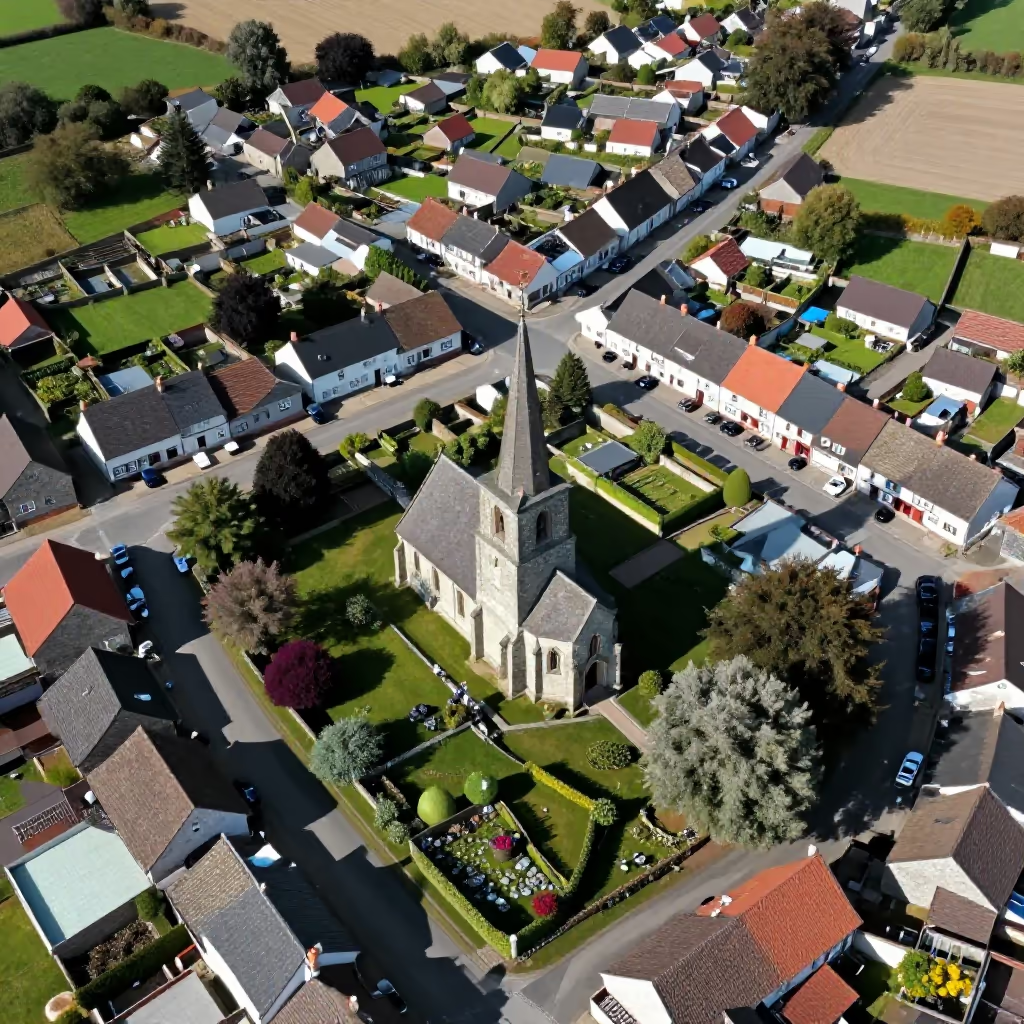
Die Besucher übernachteten in einem nahegelegenen Hotel der Stadt.
The visitors stayed overnight in a nearby hotel in the city.
Die Besucher verteilten sich auf die umliegenden Hotels der Stadt.
The visitors spread out among the city's surrounding hotels.