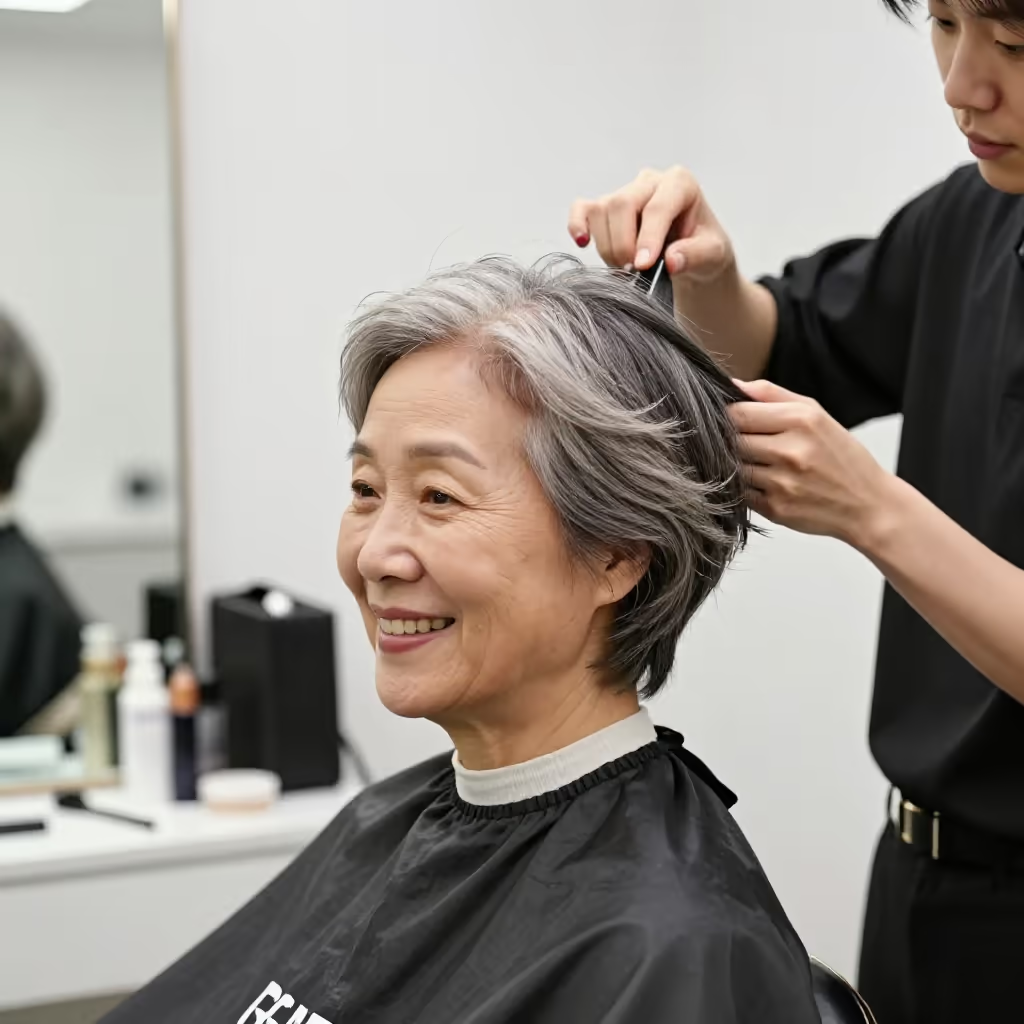
To make sure that someone or something looks younger, feels younger, or gains a more vital, modern structure.
example
Die neue Hautcreme soll das Gesicht angeblich sichtbar verjüngen.
The new skin cream is supposedly meant to visibly rejuvenate the face.

Usage tips
Word structure
The verb is formed from the adjective 'jung' (young) and the prefix 'ver-'. The prefix 'ver-' describes a change here, so 'verjüngen' literally means 'to make younger'.
EXAMPLE
Die Firma möchte mit neuen Produkten ihr Image verjüngen.
The company wants to rejuvenate its image with new products.
Reflexive or not?
Pay attention to the usage: when something becomes narrower on its own, the verb is used reflexively: 'sich verjüngen' (to taper). When a person or thing is actively made younger, it is used without 'sich'.
EXAMPLE
Die breite Allee verjüngt sich am Ende zu einem schmalen Pfad.
The wide avenue tapers at the end into a narrow path.
Typical collocations
In the meaning 'to lower the average age', the verb is often used with groups. Typical objects are 'das Team' (the team), 'die Mannschaft' (the team), 'der Kader' (the squad), 'der Vorstand' (the board), or 'eine Partei' (a party).
EXAMPLE
Der neue Trainer hat die Aufgabe, den Kader zu verjüngen.
The new coach has the task of rejuvenating the squad.
Technical language: geometry
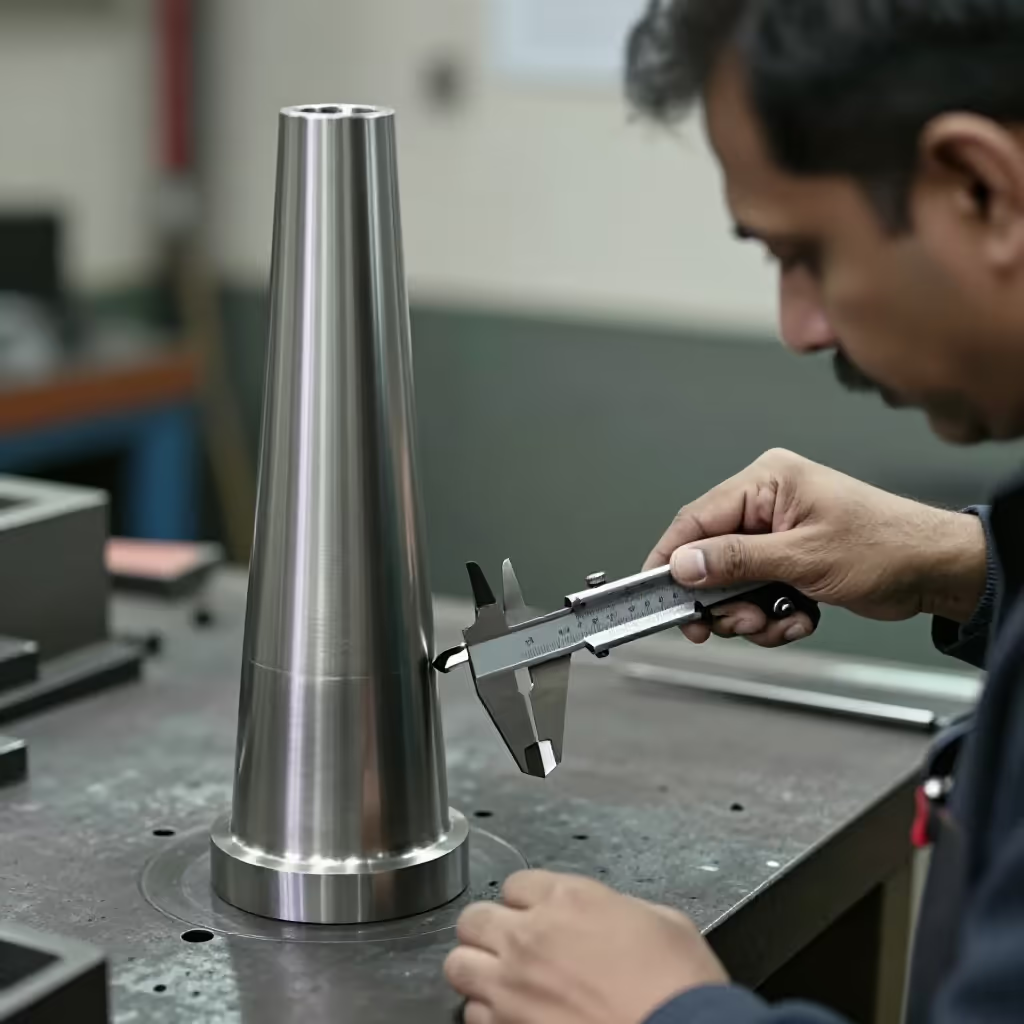
The reflexive meaning 'sich verjüngen' (to taper) is often used in technology, geometry, or architecture. It describes an object becoming narrower or more pointed toward one end.
EXAMPLE
Der Kirchturm verjüngt sich nach oben hin elegant.
The church tower tapers elegantly toward the top.
Technical language: forestry
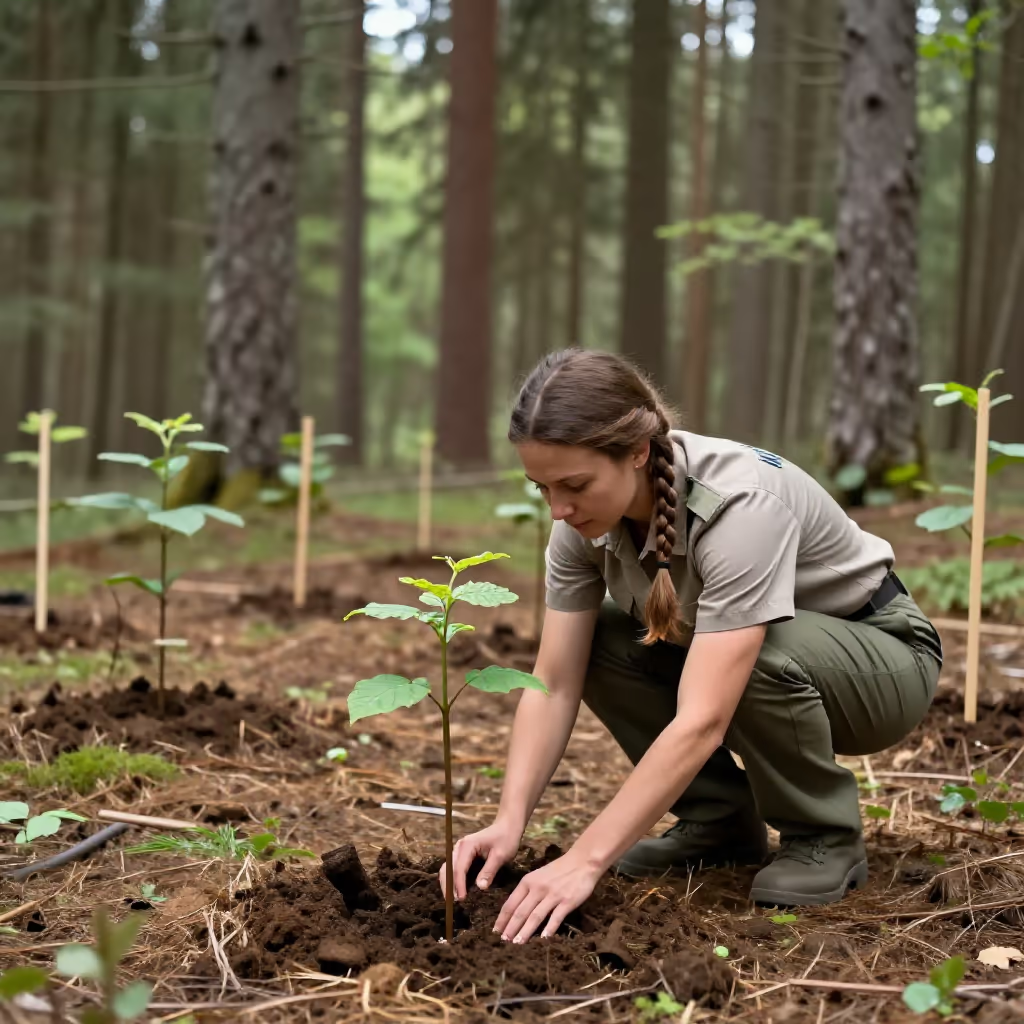
In the context of forestry, 'verjüngen' has a special meaning. It describes the targeted renewal of a forest by planting young trees or through natural seeds.
EXAMPLE
Der Förster will den Wald mit Eichen und Buchen verjüngen.
The forester wants to regenerate the forest with oaks and beeches.
Compare with
near_synonym · confusable
verjüngen vs erneuern
to renew
'erneuern' and 'verjüngen' can both mean that something becomes fresher, more modern, or better again. However, 'erneuern' is used more when something old, broken, or worn out is replaced with something new. 'verjüngen' emphasizes that someone or something looks younger, fresher, or more lively, or that a group becomes younger by adding younger people. For example, you can 'ein Dach erneuern' (replace/renew a roof), but 'ein Team verjüngen' (rejuvenate a team). The words can be confused because both have to do with change and new energy. As a practical rule: for replacement, 'erneuern' usually fits; for a younger appearance or younger structure, 'verjüngen' fits.
verjüngen
Der Verein hat sein Team mit mehreren jungen Spielern verjüngt.
The club rejuvenated its team with several young players.
erneuern
Die Nachbarn haben heute den alten Zaun im Garten erneuert.
The neighbors replaced the old fence in the garden today.