

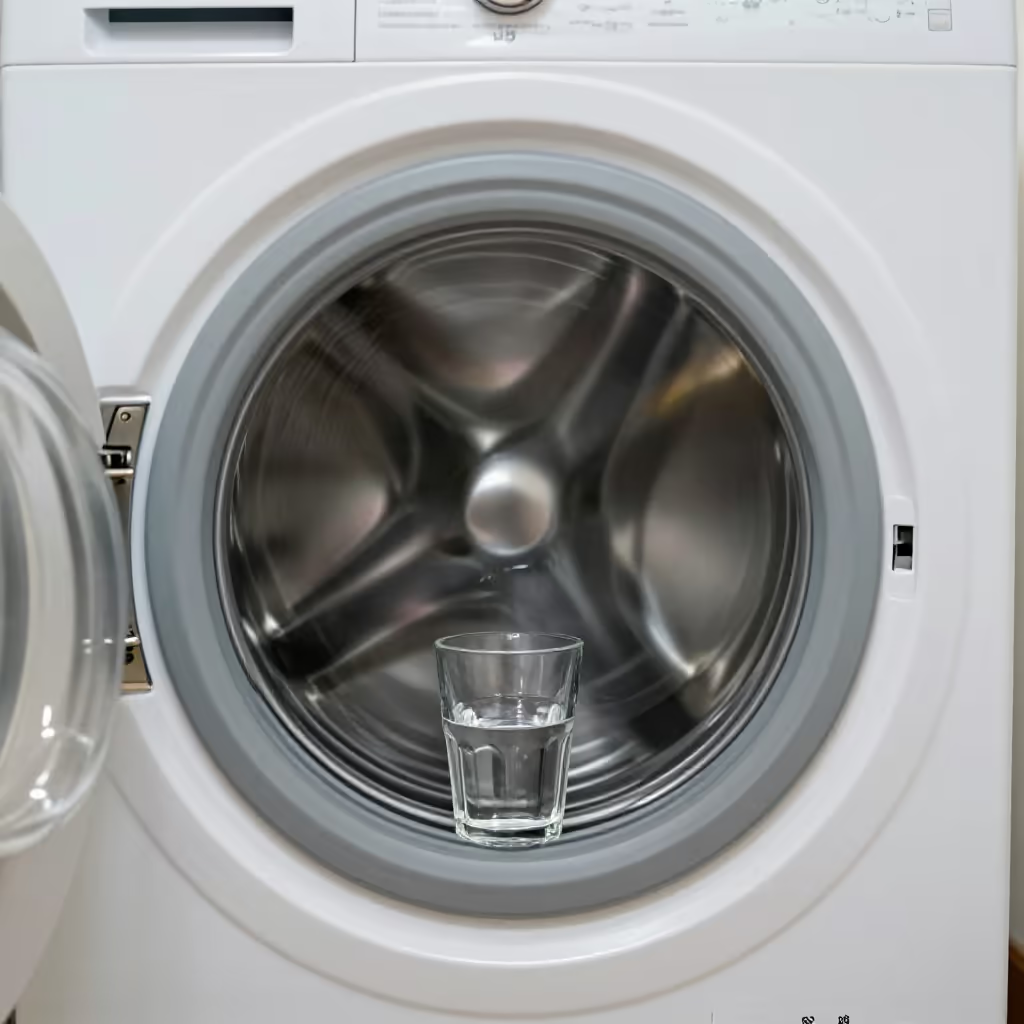
die Vibration
vibration
A fast, oscillating or trembling movement of a body or object.
EXAMPLE
Ich spürte die Vibration des Handys in meiner Hosentasche.
I felt the vibration of the phone in my pants pocket.
vibration
Loading your saved state.
vibration
A fast, oscillating or trembling movement of a body or object.
Ich spürte die Vibration des Handys in meiner Hosentasche.
I felt the vibration of the phone in my pants pocket.

vibe
(colloquial) A particular atmosphere, mood, or feeling that comes from a place or person. Often used in the plural as 'Vibrationen' (vibrations) or 'Vibes' (vibes).
Die positive Vibration des Raumes war sofort spürbar.
The positive vibe of the room was immediately noticeable.
Words that end in '-ion' are almost always feminine and have the article 'die'. They often come from Latin and are similar in many languages.
Die Explosion verursachte eine starke Vibration im Boden.
The explosion caused a strong vibration in the ground.
In the singular ('die Vibration' — the vibration), it usually means the physical oscillation. In the plural ('die Vibrationen' — the vibrations), it can also refer to the colloquial meaning 'mood' or 'atmosphere'.
Die Vibration des Motors ist normal.
The vibration of the engine is normal.
In the physical sense, 'Vibration' (vibration) is often combined with verbs such as 'spüren' (to sense/feel), 'fühlen' (to feel), 'erzeugen' (to generate), or 'verursachen' (to cause). Adjectives include 'stark' (strong), 'schwach' (weak), or 'leicht' (slight).
Man spürt die leichten Vibrationen der Baustelle sogar hier im Haus.
You can feel the slight vibrations from the construction site even here in the house.
The meaning 'Stimmung' (mood) or 'Atmosphäre' (atmosphere) is colloquial. It is often used in the plural as 'gute/schlechte Vibrationen' (good/bad vibes) and is influenced by the English word 'vibes'.
Auf dem Festival herrschten nur gute Vibrationen.
There were only good vibes at the festival.
mood / atmosphere
Stimmung and Vibration can both describe the emotional impression of a place. Stimmung is the neutral word for the atmosphere, while Vibration is colloquial and places more emphasis on the feeling that comes from a place or from people. Stimmung is usually appropriate in neutral texts, while Vibration can also be used in casual language.

Von dem kleinen Café gingen am Abend angenehme Vibrationen aus.
The small café gave off pleasant vibes that evening.
Im kleinen Café herrschte am Abend eine ruhige Stimmung.
There was a calm atmosphere in the small café that evening.