


die Stimmung
atmosphere
The general atmosphere or emotional climate in a place or within a group of people.
EXAMPLE
Auf dem Festival herrschte eine fantastische Stimmung.
There was a fantastic atmosphere at the festival.
mood / atmosphere
Loading your saved state.
atmosphere
The general atmosphere or emotional climate in a place or within a group of people.
Auf dem Festival herrschte eine fantastische Stimmung.
There was a fantastic atmosphere at the festival.

mood
A person's personal, current emotional state or mood.
Nach der guten Nachricht war er in bester Stimmung.
After the good news, he was in the best of moods.
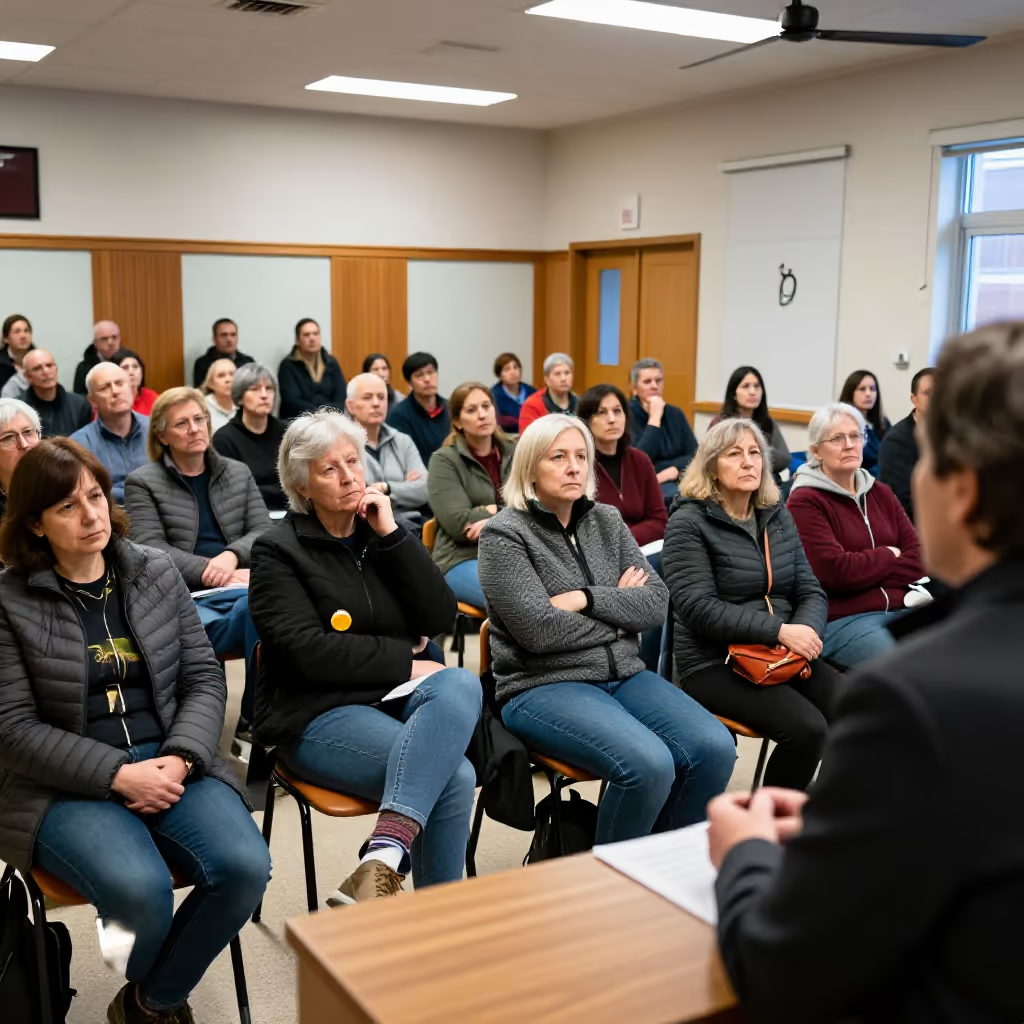
public mood
The prevailing opinion or attitude among the public or a particular group of the population about a topic.
Die Stimmung im Land ist nach der politischen Entscheidung angespannt.
The mood in the country is tense after the political decision.
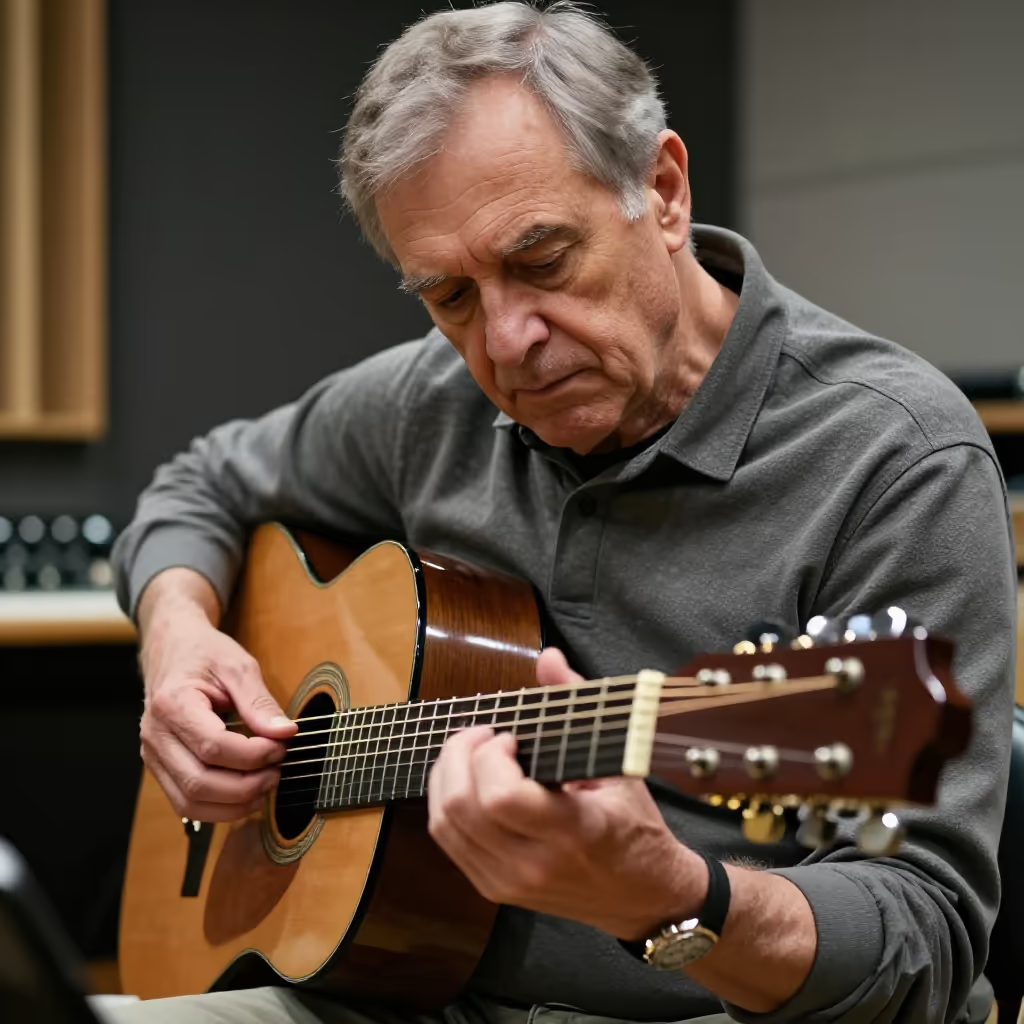
tuning
The correct adjustment of the pitch of a musical instrument.
Vor dem Konzert muss der Klaviertechniker die Stimmung des Flügels überprüfen.
Before the concert, the piano technician has to check the tuning of the grand piano.
'Stimmung' (mood/atmosphere/tuning) comes from the verb 'stimmen' (to be correct; to tune). The basic meaning of 'stimmen' is 'to be correct' or 'to tune an instrument'. All meanings of 'Stimmung' derive from whether the emotional or musical 'setting' is right.
Wenn die Chemie zwischen den Leuten stimmt, ist die Stimmung gut.
When the chemistry between people is right, the atmosphere is good.
To distinguish between the general atmosphere and a personal mood, pay attention to the verbs and prepositions. 'Eine Stimmung herrscht' (an atmosphere prevails) describes a place, while 'in einer Stimmung sein' (to be in a mood) describes a person.
Auf der Party herrschte eine ausgelassene Stimmung.
There was a lively atmosphere at the party.
For the atmosphere in a place, fixed verb combinations are often used. Typical ones are 'für gute Stimmung sorgen' (to create a good atmosphere), 'die Stimmung aufhellen' (to brighten the mood), or the expression 'es herrscht eine ... Stimmung' (there is a ... atmosphere).
Der DJ sorgte mit seiner Musikauswahl für gute Stimmung.
The DJ created a good atmosphere with his choice of music.
To express a personal mood, the phrase 'in ... Stimmung sein' (to be in a ... mood) is often used. The adjective in between describes the type of mood.
Ich bin heute nicht in der Stimmung für einen Witz.
I'm not in the mood for a joke today.
When 'Stimmung' means public opinion, it often appears together with geographic or social groups. Typical phrases are 'die Stimmung im Land' (the mood in the country), 'die Stimmung unter den Wählern' (the mood among voters), or 'die Stimmung kippt' (the mood is shifting).
Die Umfrage zeigt, dass die Stimmung in der Bevölkerung langsam kippt.
The survey shows that the mood among the population is slowly shifting.
You can always recognize the meaning 'tuning of an instrument' from the context. It is used only in connection with musical instruments such as a piano, guitar, or violin.
Die alte Gitarre hält die Stimmung nicht mehr lange.
The old guitar no longer holds its tuning for long.
climate
Stimmung and Klima can describe the atmosphere in a group or at a particular place. Stimmung highlights the current emotional state above all, whereas Klima can also be shaped by general social or institutional conditions. Stimmung is usually the better choice for feelings, while Klima is more suitable for broader conditions.

Nach der heftigen Diskussion war die Stimmung im Team angespannt.
After the heated discussion, the mood on the team was tense.
Im Unternehmen hat sich das Klima durch mehr Mitbestimmung deutlich verbessert.
The climate in the company has improved significantly because employees now have more say.