

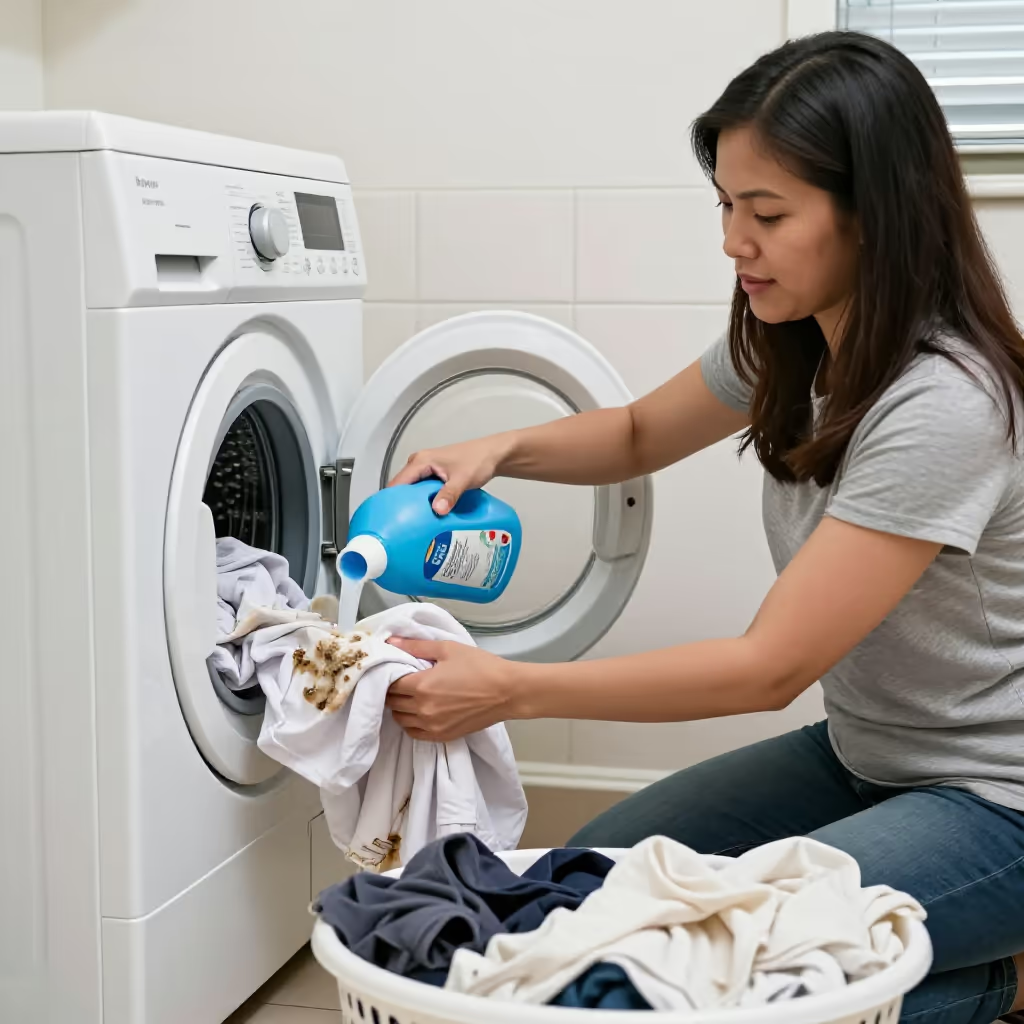
waschen
to wash
To clean something, especially clothing or dishes, with water and usually soap or detergent.
EXAMPLE
Ich muss am Wochenende dringend meine Wäsche waschen.
I urgently need to wash my laundry this weekend.
to wash
Loading your saved state.
to wash
To clean something, especially clothing or dishes, with water and usually soap or detergent.
Ich muss am Wochenende dringend meine Wäsche waschen.
I urgently need to wash my laundry this weekend.
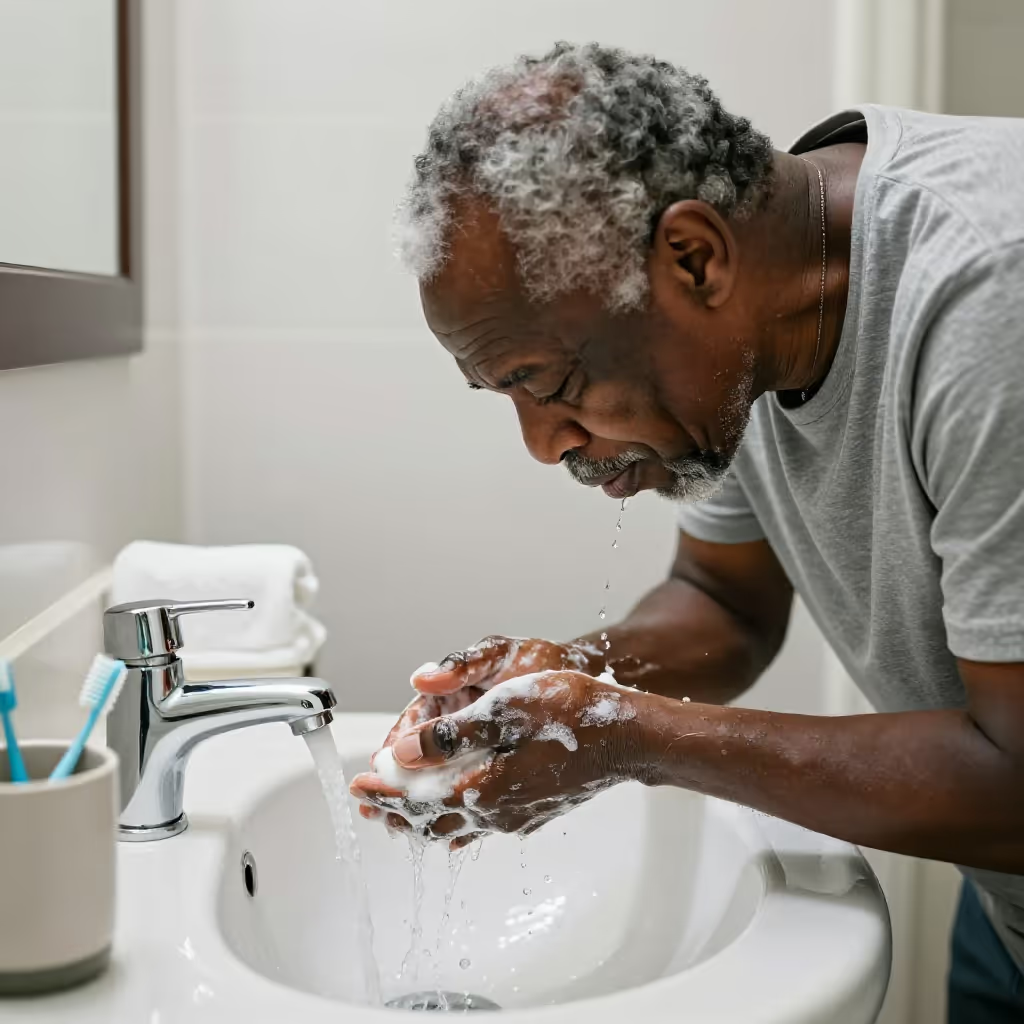
to wash oneself
To clean one's own body or parts of it with water and soap.
Vor dem Essen solltest du dir die Hände waschen.
Before eating, you should wash your hands.

to give someone a scolding
To reprimand someone clearly and sharply because of misbehavior.
Nachdem er das Auto zerkratzt hatte, hat ihm sein Vater ordentlich den Kopf gewaschen.
After he had scratched the car, his father gave him a proper scolding.

to launder
To introduce illegally obtained money into the legal financial system through a series of transactions in order to conceal its origin.
Die Bande wird beschuldigt, Millionenbeträge aus Drogenhandel gewaschen zu haben.
The gang is accused of laundering millions from drug trafficking.

to wash one's hands of it
To distance oneself from guilt or responsibility and claim to be innocent.
Er wusste von dem Plan, versuchte aber danach, seine Hände in Unschuld zu waschen.
He knew about the plan, but afterward he tried to wash his hands of it.
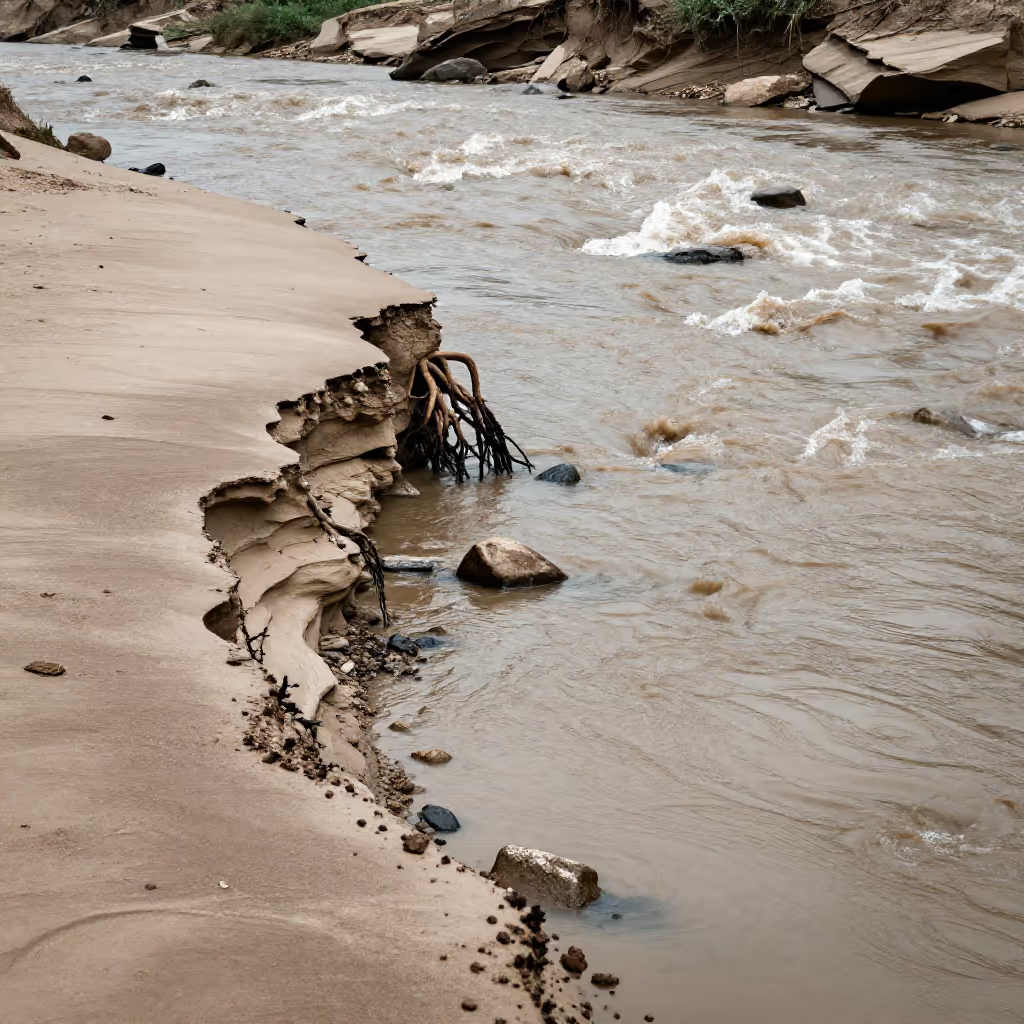
to wash / erode
In geology, the shaping of land through the constant movement of water that carries away material.
Über Jahrtausende hat der Fluss ein tiefes Tal in den Fels gewaschen.
Over thousands of years, the river washed a deep valley into the rock.
'Waschen' (to wash) is an irregular verb. Pay attention to the vowel change from 'a' to 'ä' in the 2nd and 3rd person singular in the present tense. This is a common mistake among learners.
Du wäschst dir bitte vor dem Essen die Hände.
Please wash your hands before eating.
You need to distinguish between washing objects and washing your own body. When you wash an object, you need an accusative object. When you wash yourself, you use the verb reflexively.
Sie wäscht das schmutzige Geschirr.
She washes the dirty dishes.
In everyday life, 'waschen' (to wash) is often combined with certain things. Typical collocations are 'Wäsche waschen' (to do the laundry), 'Geschirr waschen' (to wash the dishes), 'Auto waschen' (to wash the car), or 'sich die Haare waschen' (to wash one's hair).
Ich habe keine sauberen Socken mehr, ich muss Wäsche waschen.
I don't have any clean socks left; I need to do the laundry.
When you wash a specific body part of your own, the reflexive pronoun is in the dative and the body part is in the accusative. This is a very typical construction in German.
Ich wasche mir die Hände.
I wash my hands.
In the idiom 'jemandem den Kopf waschen' (to give someone a scolding), the person being criticized is always in the dative. This is a fixed part of the expression.
Der Chef hat ihm heute Morgen ordentlich den Kopf gewaschen.
The boss gave him a proper scolding this morning.
In the meaning 'illegal Geld legalisieren' (to legalize illegal money), 'waschen' (to launder) is used almost exclusively with the object 'Geld' (money). The context is always crime or financial crime.
Die Ermittler glauben, dass das Restaurant nur dazu diente, Geld zu waschen.
The investigators believe that the restaurant only served to launder money.
to clean
Waschen and putzen can both mean making something clean. Waschen emphasizes cleaning with water, while putzen more often refers to manually cleaning a surface or removing unwanted parts from food. For fruit, waschen is appropriate when cleaning it with water, while putzen is used when preparing it.
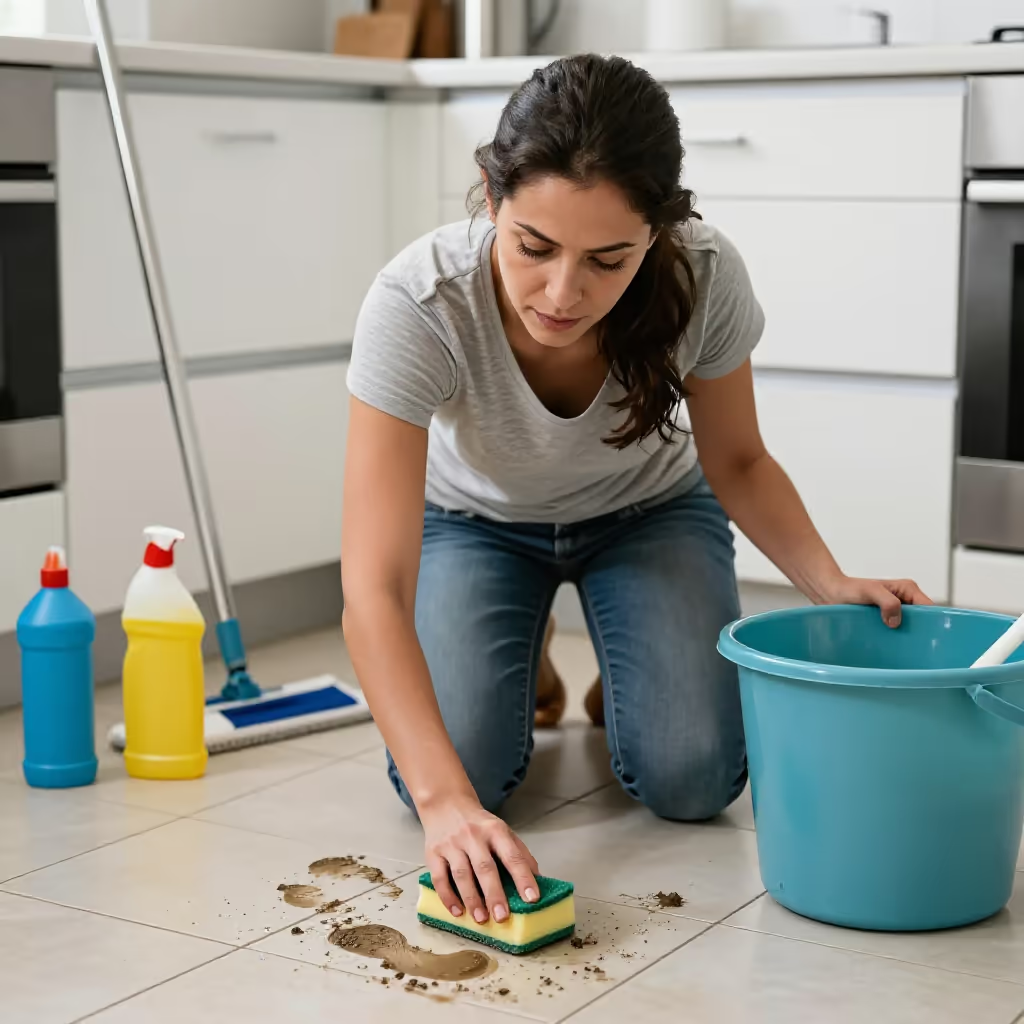
Vor dem Essen wasche ich die Erdbeeren vorsichtig mit Wasser.
Before eating them, I carefully wash the strawberries with water.
Vor dem Essen putze ich die Erdbeeren und entferne die grünen Blätter.
Before eating them, I prepare the strawberries by removing the green leaves.