

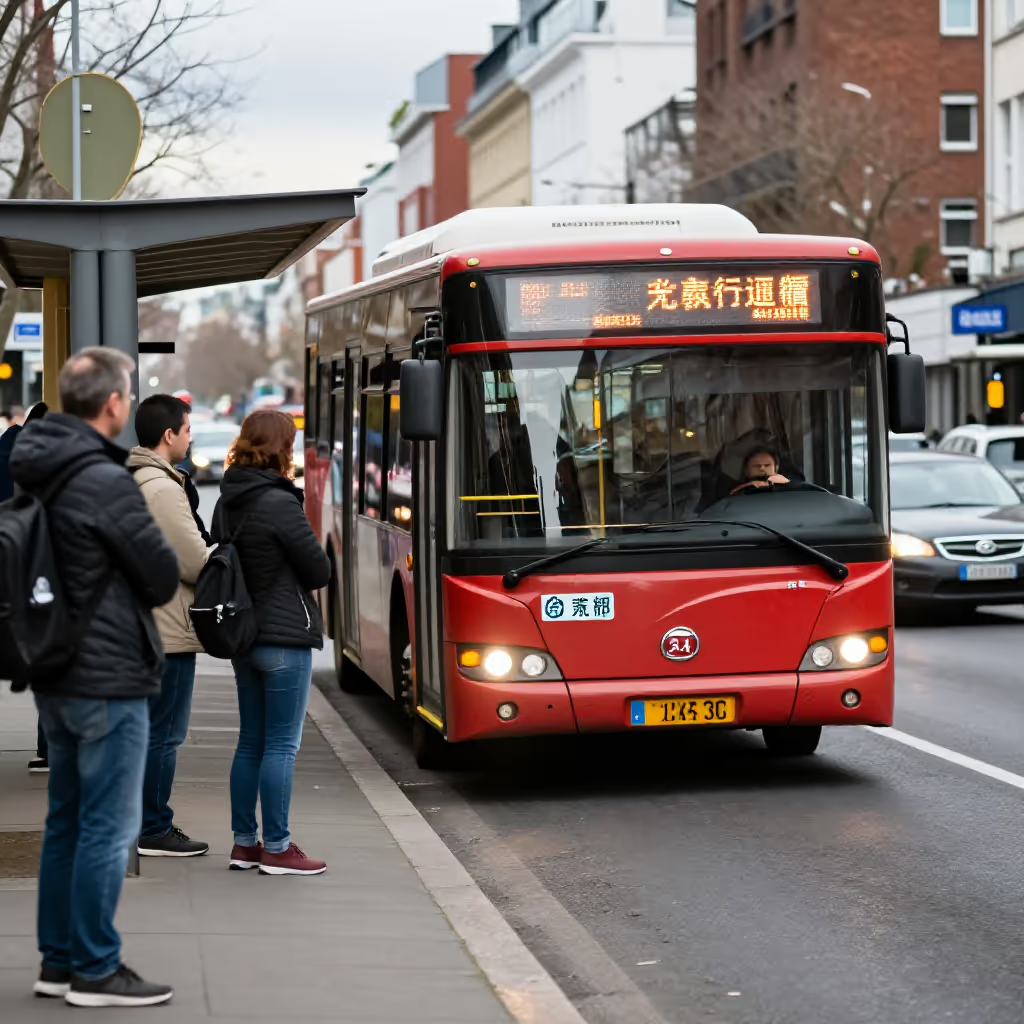
anhalten
to stop
To stop moving or come to a standstill. This can refer to vehicles, people, or machines.
EXAMPLE
Der Bus musste an der roten Ampel anhalten.
The bus had to stop at the red light.
to stop / continue
Loading your saved state.
to stop
To stop moving or come to a standstill. This can refer to vehicles, people, or machines.
Der Bus musste an der roten Ampel anhalten.
The bus had to stop at the red light.
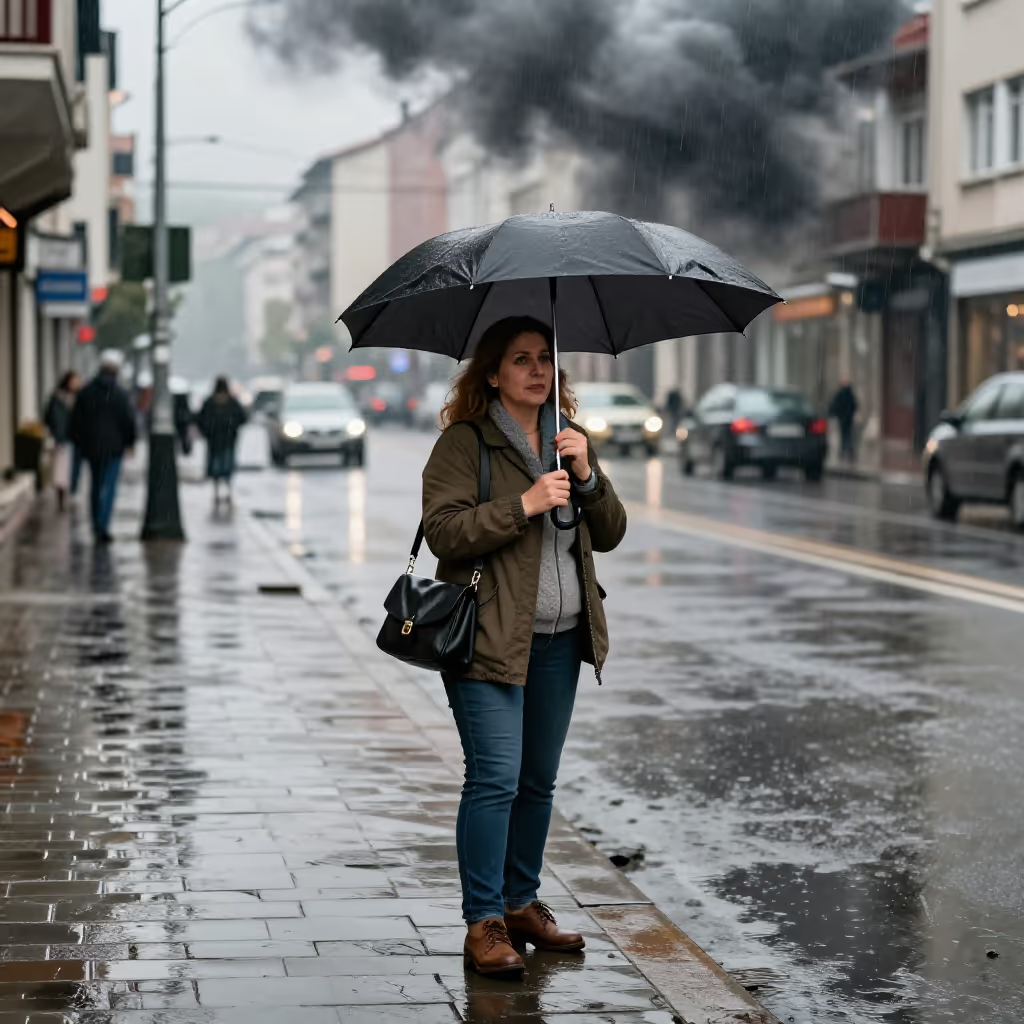
to continue
To last or continue over a longer period of time. Often refers to conditions, situations, or weather patterns.
Wenn die Kopfschmerzen anhalten, sollten Sie einen Arzt aufsuchen.
If the headaches continue, you should see a doctor.
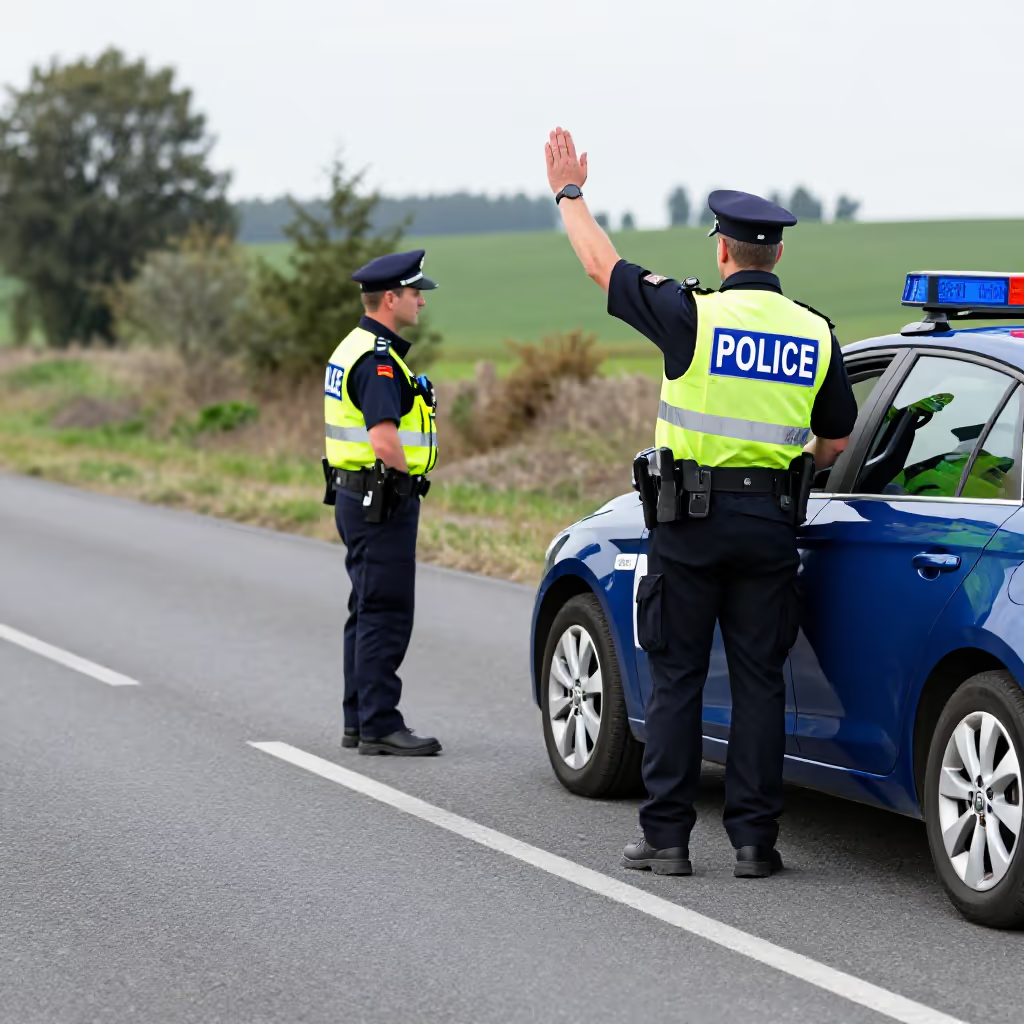
to stop
To force someone or a vehicle to stop. Often used in the context of police checks.
Eine Polizeistreife hat den Fahrer wegen überhöhter Geschwindigkeit angehalten.
A police patrol stopped the driver for speeding.

to urge someone
To admonish, urge, or get someone to do something specific or behave in a certain way.
Die Lehrerin hielt die Schüler zu mehr Ordnung im Klassenzimmer an.
The teacher urged the students to keep the classroom more orderly.
'Anhalten' (to stop / continue) is a separable verb. The prefix 'an-' goes to the end in main clauses. In subordinate clauses and in the infinitive with 'zu', the verb stays together.
Der Fahrer hielt plötzlich an.
The driver stopped suddenly.
The auxiliary verb in the perfect tense depends on the meaning. For 'stoppen' (to stop) in its intransitive use, 'haben' is usually used. For 'andauern' (to continue/last), 'haben' is always used.
Der Schneefall hat die ganze Nacht angehalten.
The snowfall continued all night.
You can recognize the meaning from context. If it is about movement that stops (car, person), it means 'stoppen' (to stop). If it is about a condition that continues (weather, pain), it means 'andauern' (to continue/last).
Bitte halten Sie an der nächsten Haltestelle an.
Please stop at the next stop.
A very common transitive use is the fixed expression 'den Atem anhalten' (to hold one's breath). This means not to breathe for a short moment, often because of suspense or fear.
Während der spannenden Szene im Film hielten alle den Atem an.
During the exciting scene in the film, everyone held their breath.
In the meaning 'ermahnen' (to admonish/urge), the verb has a fixed structure: you urge someone (accusative) to do something or toward something (dative): jemanden zu etwas anhalten.
Die Eltern halten ihre Kinder zu mehr Pünktlichkeit an.
The parents urge their children to be more punctual.
to hold
For vehicles, both words refer to the end of a movement. “Halten” often refers to a scheduled stop at a particular place. “Anhalten” focuses more strongly on the process by which the vehicle comes to a standstill or is brought to a standstill.
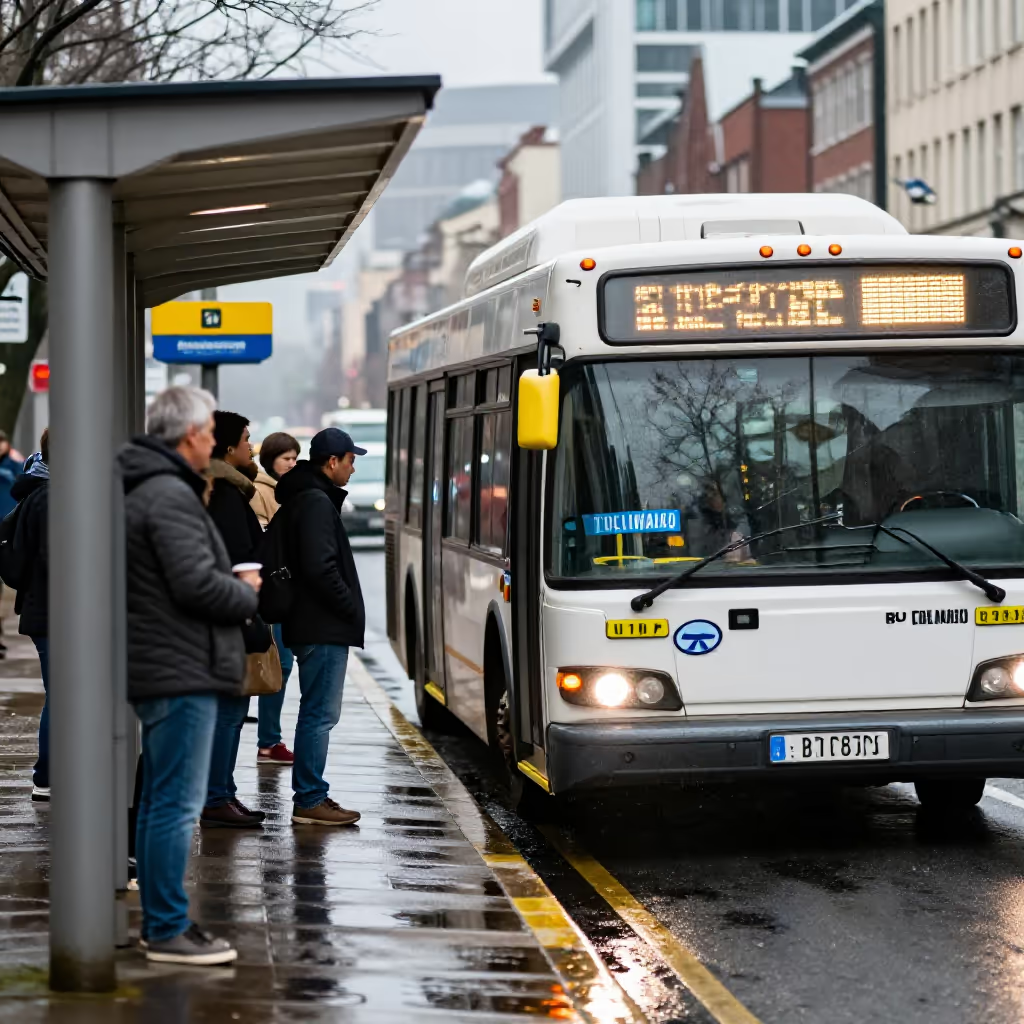
Wegen eines Hindernisses hält der Fahrer den Bus vor dem Rathaus an.
Because of an obstacle, the driver stops the bus in front of the town hall.
Der Bus hält planmäßig vor dem Rathaus.
The bus stops as scheduled in front of the town hall.