

aufhalten
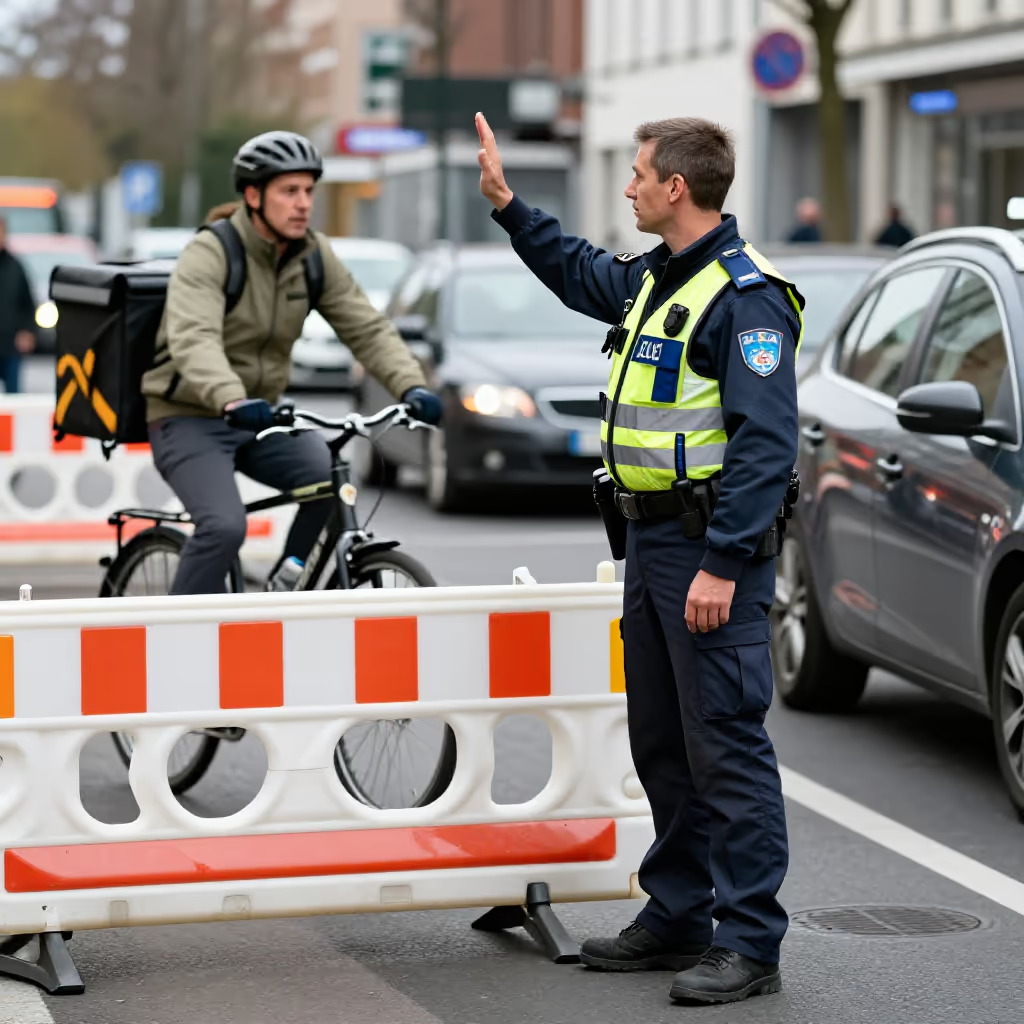
to delay
To prevent someone or something from continuing on or continuing an activity; to delay.
EXAMPLE
Entschuldigung für die Verspätung, ich wurde von einem Anruf aufgehalten.
Sorry for being late; I was delayed by a phone call.
to delay / stay / hold open
Loading your saved state.
to delay
To prevent someone or something from continuing on or continuing an activity; to delay.
Entschuldigung für die Verspätung, ich wurde von einem Anruf aufgehalten.
Sorry for being late; I was delayed by a phone call.

to stay
To be in a particular place or remain there for a certain period of time.
Er hält sich zurzeit aus geschäftlichen Gründen in London auf.
He is currently staying in London for business reasons.

to hold open
To keep something that would close, such as a door or window, open.
Könntest du mir bitte die schwere Tür aufhalten?
Could you please hold the heavy door open for me?
'Aufhalten' (to delay/to hold open) is a separable verb. The prefix 'auf-' goes to the end in a main clause. In subordinate clauses and in the infinitive with 'zu', the verb stays together.
Der Stau hält uns auf.
The traffic jam is delaying us.
The reflexive form 'sich aufhalten' (to stay/be located) always means that someone is in a place. Without the reflexive pronoun 'sich', the verb means 'to delay' or 'to hold open'.
Wo hält sich der Verdächtige gerade auf?
Where is the suspect currently staying?
In the meaning 'to delay', the structure 'jemanden aufhalten' (to delay someone) is often used. In the passive, the form is 'aufgehalten werden' (to be delayed).
Lass uns gehen, ich will dich nicht länger aufhalten.
Let's go; I don't want to delay you any longer.
The form 'sich aufhalten' (to stay/be located) is always used with an indication of place. You stay 'in' a city, 'an' a place, or 'bei' friends.
Im Sommer halten wir uns am liebsten am See auf.
In summer, we prefer to stay by the lake.
'Sich aufhalten' (to stay/be located) is often part of formal or official language, for example in police reports or administrative letters.
Der Gesuchte soll sich im Ausland aufhalten.
The wanted person is said to be staying abroad.
In the meaning 'to hold open', the objects are almost always 'die Tür' (the door), 'das Fenster' (the window), or 'das Tor' (the gate).
Sei so nett und halte mir die Tür auf, meine Hände sind voll.
Be so kind and hold the door open for me; my hands are full.
to be
Sein and sich aufhalten can indicate a person’s location. Sein is neutral and simply states the location; sich aufhalten usually sounds more formal and can emphasize staying somewhere for a certain period of time. In official statements, sich aufhalten is therefore often a better choice.

Laut Bericht hält sich der Zeuge derzeit in Berlin auf.
According to the report, the witness is currently staying in Berlin.
Der Zeuge ist derzeit in Berlin.
The witness is currently in Berlin.