

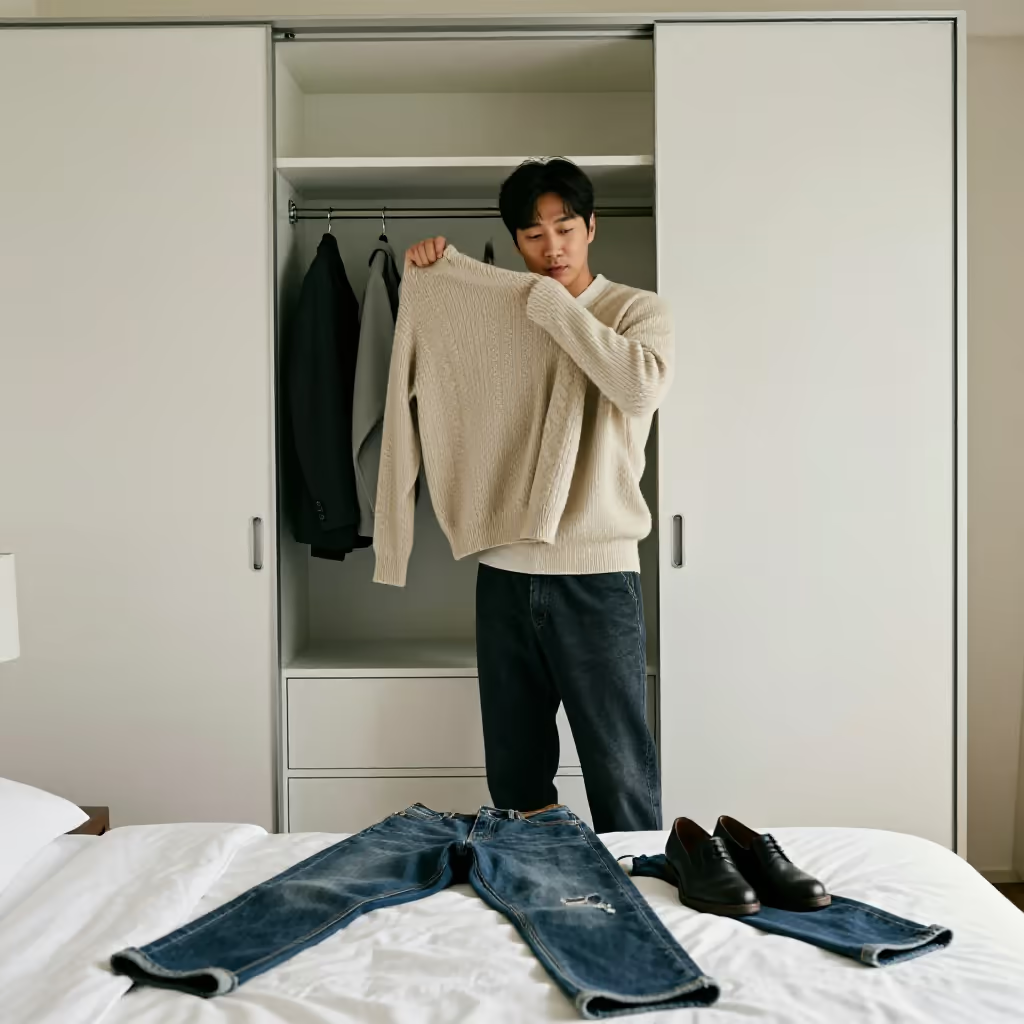
sich anziehen
to get dressed
To put clothing on one's own body.
EXAMPLE
Ich muss mich noch schnell anziehen, bevor die Gäste kommen.
I still need to get dressed quickly before the guests arrive.
to put on / attract
Loading your saved state.
to get dressed
To put clothing on one's own body.
Ich muss mich noch schnell anziehen, bevor die Gäste kommen.
I still need to get dressed quickly before the guests arrive.
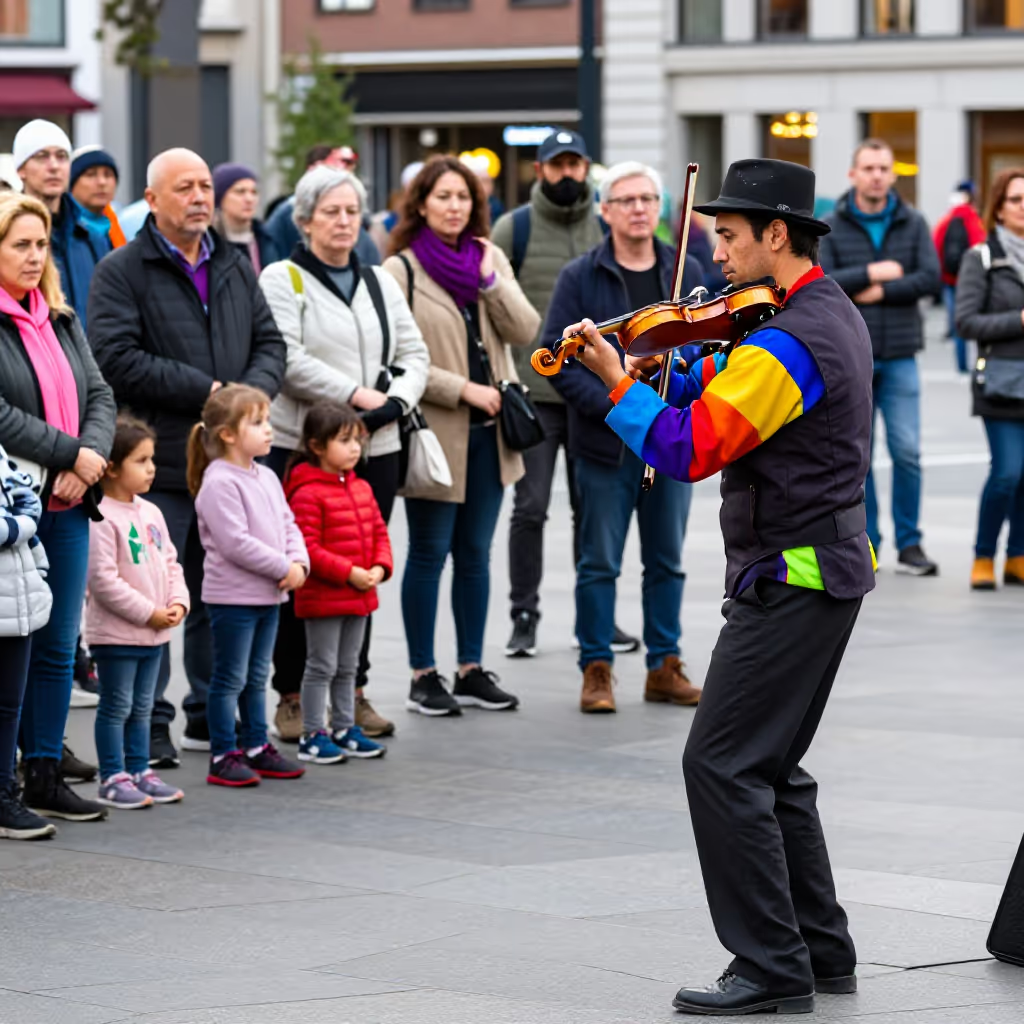
to attract
To have an attractive, fascinating effect on someone or something; to draw someone or something in.
Das bunte Plakat soll die Aufmerksamkeit der Kunden anziehen.
The colorful poster is meant to attract customers' attention.

to dress someone
To put clothing on another person, often a child.
Die Mutter zieht ihrem Baby einen warmen Strampler an.
The mother dresses her baby in a warm romper.
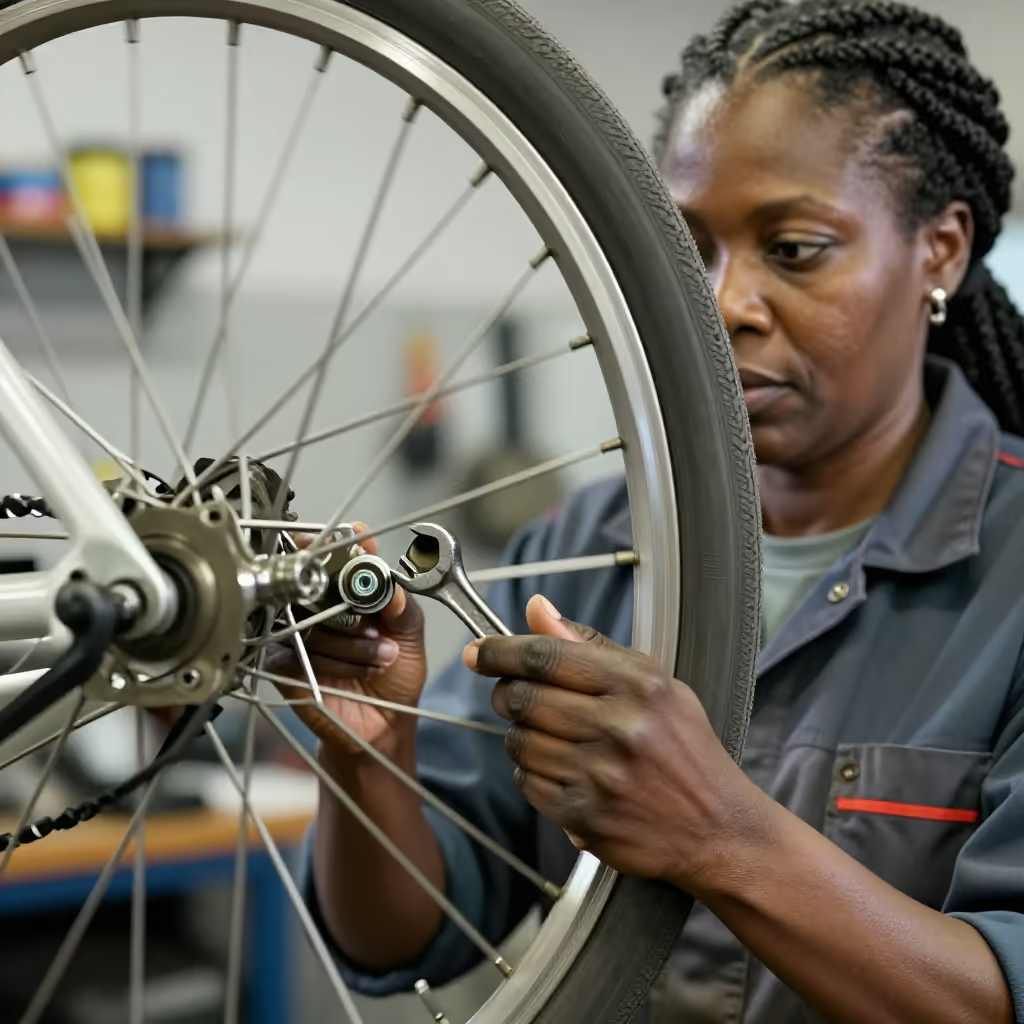
to tighten
To make something, such as a screw or a knot, tighter or tauter.
Du musst die Schrauben am Rad noch etwas fester anziehen.
You still need to tighten the screws on the wheel a bit more.

to rise / increase
To increase or raise the pace, prices, or intensity of something.
Nach der Zinserhöhung haben die Preise für Immobilien stark angezogen.
After the interest rate increase, real estate prices rose sharply.
'Anziehen' is a separable verb. In a main clause, the prefix 'an-' goes at the end of the sentence. In a subordinate clause or in the infinitive, the verb stays together.
Ich ziehe mir schnell eine Jacke an.
I quickly put on a jacket.
The verb consists of 'an' and 'ziehen' (to pull). The literal meaning 'to pull something toward oneself' or 'to pull something onto the body' is still recognizable in many meanings, for example when putting on clothes or tightening a screw.
Er zog den Knoten mit aller Kraft an.
He tightened the knot with all his strength.
Pay attention to the difference in sentence structure: 'sich anziehen' (to get dressed) means that you put clothes on yourself. 'Jemandem etwas anziehen' (to put something on someone) means that you help another person get dressed, and it requires a dative object (jemandem) and an accusative object (etwas).
Er muss sich für die Party noch schick anziehen.
He still needs to dress smartly for the party.
When you name a specific item of clothing that you are putting on yourself, you use a dative construction: the reflexive pronoun is in the dative ('mir', 'dir', 'sich') and the item of clothing is in the accusative.
Ich ziehe mir einen warmen Pullover an.
I put on a warm sweater.
In the meaning 'anlocken' (to attract/lure), 'anziehen' is often combined with abstract things such as 'Aufmerksamkeit' (attention), 'Interesse' (interest), or 'Kritik' (criticism). It can also be used for groups of people such as 'Touristen' (tourists) or 'Investoren' (investors).
Das Festival zieht jedes Jahr Tausende von Besuchern an.
The festival attracts thousands of visitors every year.
The meaning 'steigen' (to rise) or 'sich erhöhen' (to increase) is very often used in business and financial contexts. Typical subjects in these sentences are 'die Preise' (prices), 'die Zinsen' (interest rates), 'die Nachfrage' (demand), or 'der Markt' (the market).
Die Nachfrage nach Elektroautos hat stark angezogen.
Demand for electric cars has increased sharply.
to gain weight / increase
Both words can express that the pace, prices, or intensity are increasing. „anziehen“ usually emphasizes that the increase becomes noticeable or more dynamic, while „zunehmen“ describes more generally that something is growing in extent or strength. „anziehen“ is therefore often a good fit when a development suddenly becomes stronger.

Am Abend zog der Wind plötzlich stark an.
In the evening, the wind suddenly picked up strongly.
Am Abend nahm die Stärke des Windes langsam zu.
In the evening, the wind gradually grew stronger.