

dann
then
Indicates a chronological sequence; after that, afterwards.
EXAMPLE
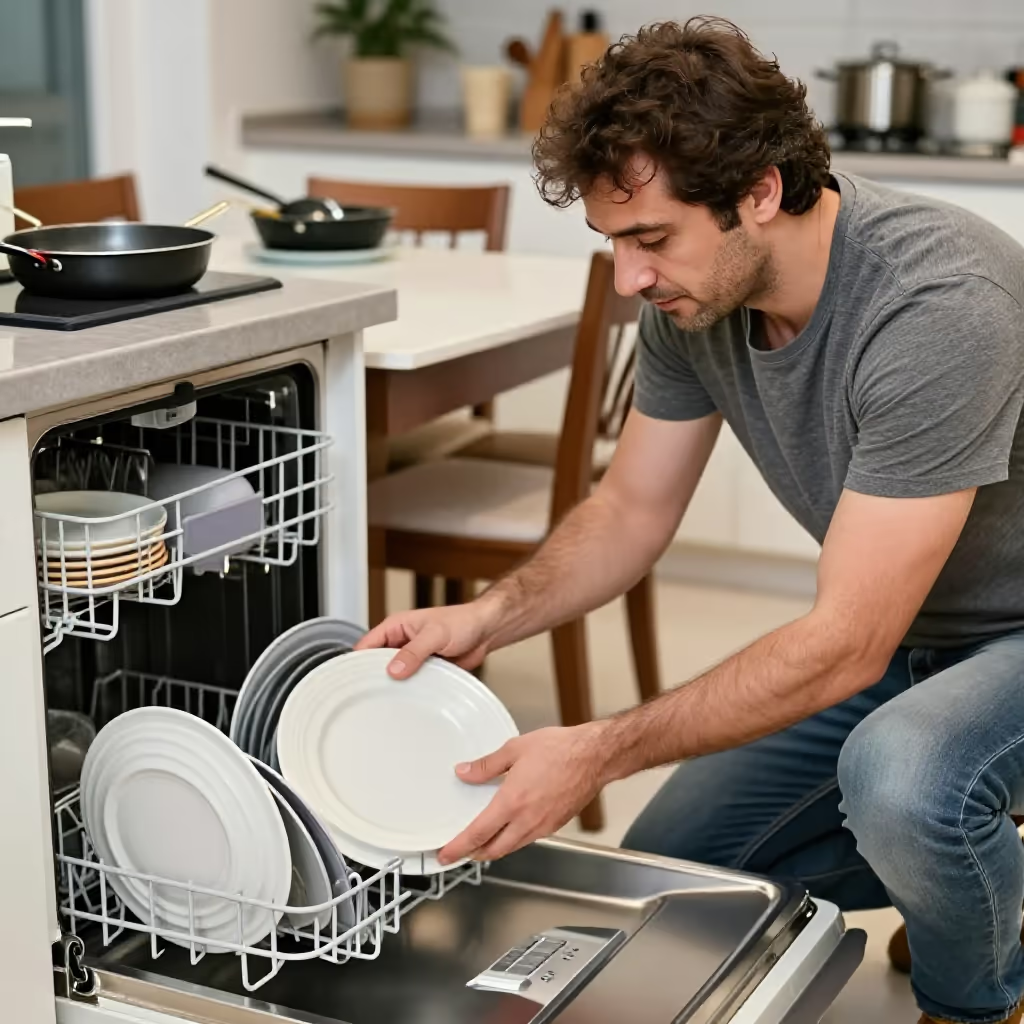
Zuerst putze ich die Zähne, dann gehe ich ins Bett.
First I brush my teeth, then I go to bed.
then
Loading your saved state.
then
Indicates a chronological sequence; after that, afterwards.
Zuerst putze ich die Zähne, dann gehe ich ins Bett.
First I brush my teeth, then I go to bed.
then
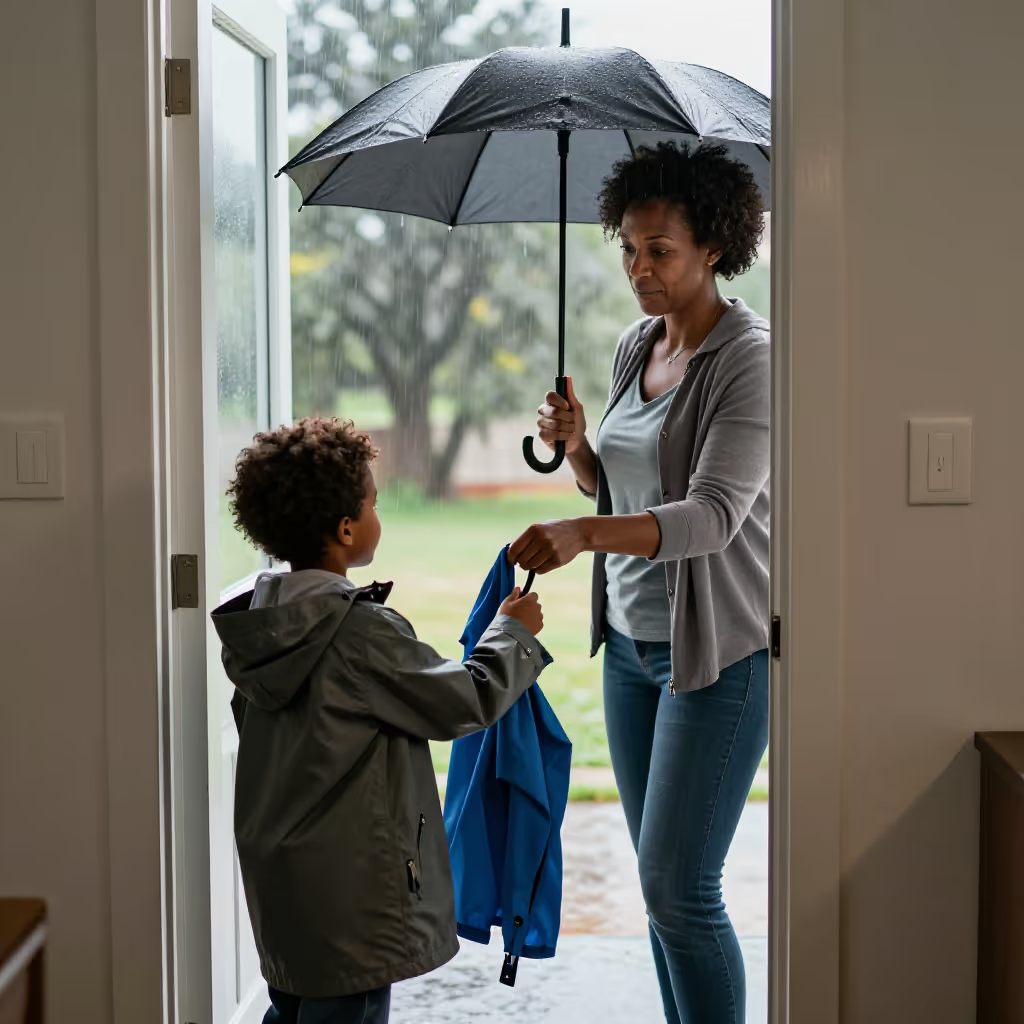
Introduces the result of a condition; in that case.
Wenn du nicht mitkommst, dann bleibe ich auch zu Hause.
If you're not coming along, then I'll stay at home too.

then
Used to express a conclusion or consequence.
Der Wecker hat nicht geklingelt, dann habe ich natürlich verschlafen.
The alarm didn't go off, so then of course I overslept.
'Dann' is an adverb, not a conjunction. When it stands at the beginning of a sentence (position 1), the conjugated verb must follow directly after it in position 2 (inversion).
Wir essen jetzt zu Abend. Dann sehen wir einen Film.
We're having dinner now. Then we'll watch a film.
In 'Wenn-dann-Sätzen' (if-then sentences), 'dann' introduces the result in the main clause. It can be used for emphasis, but it is often optional and can be left out.
Wenn du Zeit hast, dann können wir uns treffen.
If you have time, then we can meet up.
'Dann' is used very frequently to order steps in an action or events in a story. It often appears in a chain with adverbs like 'zuerst' (first) and 'danach' (after that).
Zuerst die Zwiebeln schneiden, dann in der Pfanne anbraten.
First cut the onions, then fry them in the pan.
The combination 'na dann' is a very common reaction in spoken language. It expresses agreement, a conclusion, or the beginning of an action.
Die Arbeit ist fertig. Na dann, schönen Feierabend!
The work is done. Well then, enjoy your evening!
and
Und connects successive actions without explicitly marking their chronological order; the order often becomes clear from the context. Dann explicitly means “after that” and stands as a sentence adverb before the verb when it introduces the second sentence.

Ich räume die Küche auf, dann gehe ich einkaufen.
I tidy up the kitchen, then I go grocery shopping.
Ich räume die Küche auf und gehe einkaufen.
I tidy up the kitchen and go grocery shopping.