


regeln
to handle
To solve a problem, organize a matter, or take care of a task.
EXAMPLE
Keine Sorge wegen der Tickets, das regele ich.
Don't worry about the tickets; I'll handle it.
to handle / regulate
Loading your saved state.
to handle
To solve a problem, organize a matter, or take care of a task.
Keine Sorge wegen der Tickets, das regele ich.
Don't worry about the tickets; I'll handle it.
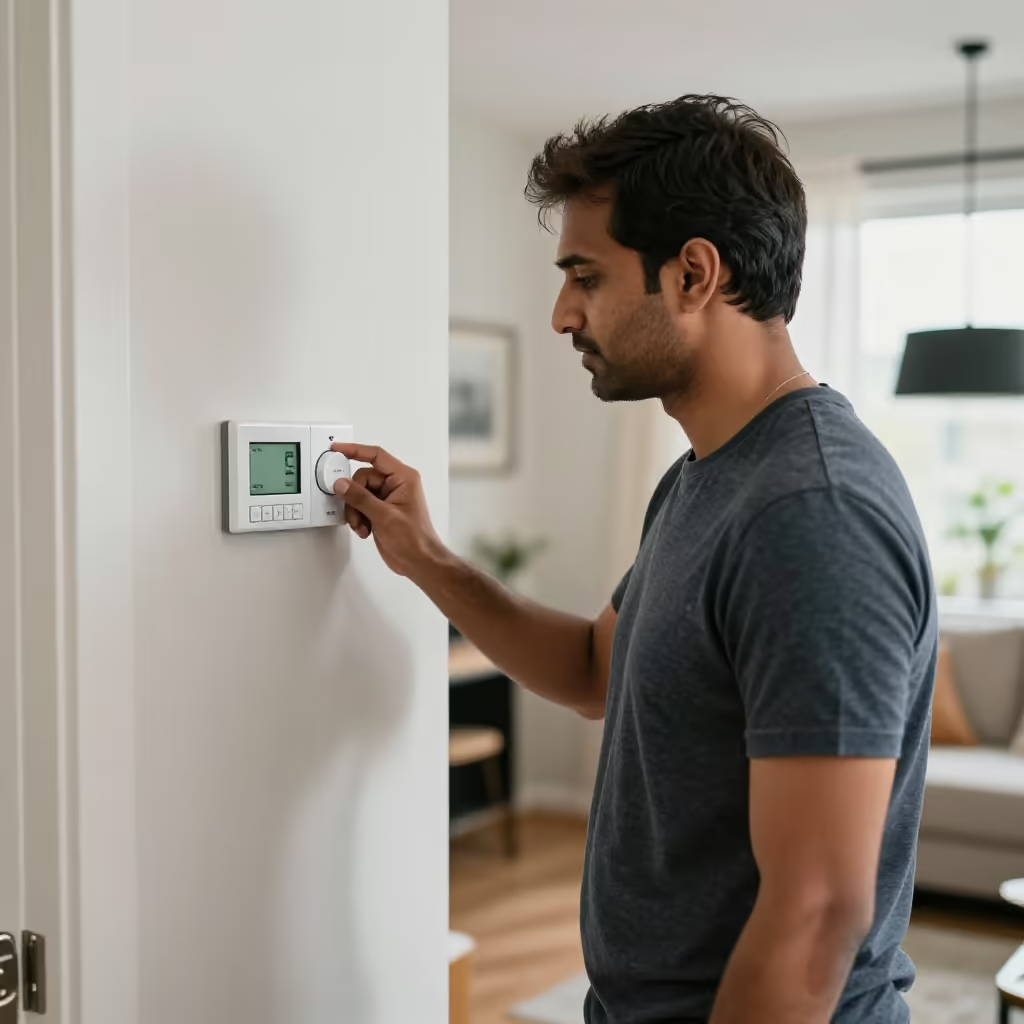
to regulate
To set, control, or adjust something so that it is in a desired state or functions properly.
Mit diesem Thermostat können Sie die Temperatur im Raum regeln.
You can regulate the temperature in the room with this thermostat.

to regulate
To establish through laws, regulations, or agreements how something is to be handled or how people should behave.
Das neue Gesetz regelt die Nutzung von Elektrollern im Straßenverkehr.
The new law regulates the use of electric scooters in road traffic.

to sort itself out
To clear up or work itself out on its own, without anyone having to actively intervene.
Warte einfach ab, das Problem wird sich schon von selbst regeln.
Just wait and see; the problem will sort itself out on its own.
The verb 'regeln' is derived directly from the noun 'die Regel' (the rule). So it literally means to bring something into a state of order or in line with a rule.
Eine Ampel regelt den Verkehr an der Kreuzung.
A traffic light regulates the traffic at the intersection.
The reflexive form 'sich regeln' means that a problem or situation solves itself without anyone having to intervene. It is often used together with 'von selbst' (by itself/on its own).
Mach dir keine Sorgen, das wird sich schon von selbst regeln.
Don't worry, it will sort itself out on its own.
In the meaning 'organisieren' (to organize) or 'erledigen' (to take care of), 'regeln' is very common in spoken language. The sentence 'Ich regel das.' is a common way to say that you will take care of something.
Wer holt die Getränke für die Party? – Keine Sorge, ich regel das.
Who's getting the drinks for the party? — Don't worry, I'll handle it.
When technical devices are involved, 'regeln' always means 'einstellen' (to set) or 'anpassen' (to adjust). Typical objects are 'Temperatur' (temperature), 'Lautstärke' (volume), or 'Geschwindigkeit' (speed).
Kannst du bitte die Heizung etwas höher regeln? Mir ist kalt.
Could you please turn up the heating a little? I'm cold.
In formal or legal texts, 'regeln' means that something is bindingly established by a law or regulation. The subject here is often the law itself.
Die Straßenverkehrsordnung regelt die Vorfahrt an dieser Kreuzung.
The traffic regulations govern right of way at this intersection.
to solve / loosen
Lösen and regeln can both mean bringing a difficult matter to an end. Lösen focuses more strongly on finding a solution to the problem, while regeln often refers to practical organization or taking care of the matter. Use lösen for the process of finding a solution and regeln when agreements or concrete steps are the focus.

Wir regelten die Angelegenheit mit dem Vermieter durch eine klare Absprache.
We sorted out the matter with the landlord by reaching a clear agreement.
Wir lösten das Problem mit einer neuen Idee, die sofort funktionierte.
We solved the problem with a new idea that worked immediately.