


die Position
position
The place or location where someone or something is.
EXAMPLE
Das Schiff sendete seine genaue Position an die Küstenwache.
The ship sent its exact position to the coast guard.
position
Loading your saved state.
position
The place or location where someone or something is.
Das Schiff sendete seine genaue Position an die Küstenwache.
The ship sent its exact position to the coast guard.

position
A specific role or job in the hierarchy of a company or organization.
Sie hat eine neue Position als Abteilungsleiterin angenommen.
She accepted a new position as department head.

position
An opinion, viewpoint, or stance on a particular topic.
Der Politiker hat seine Position zur Steuerreform klargemacht.
The politician made his position on the tax reform clear.
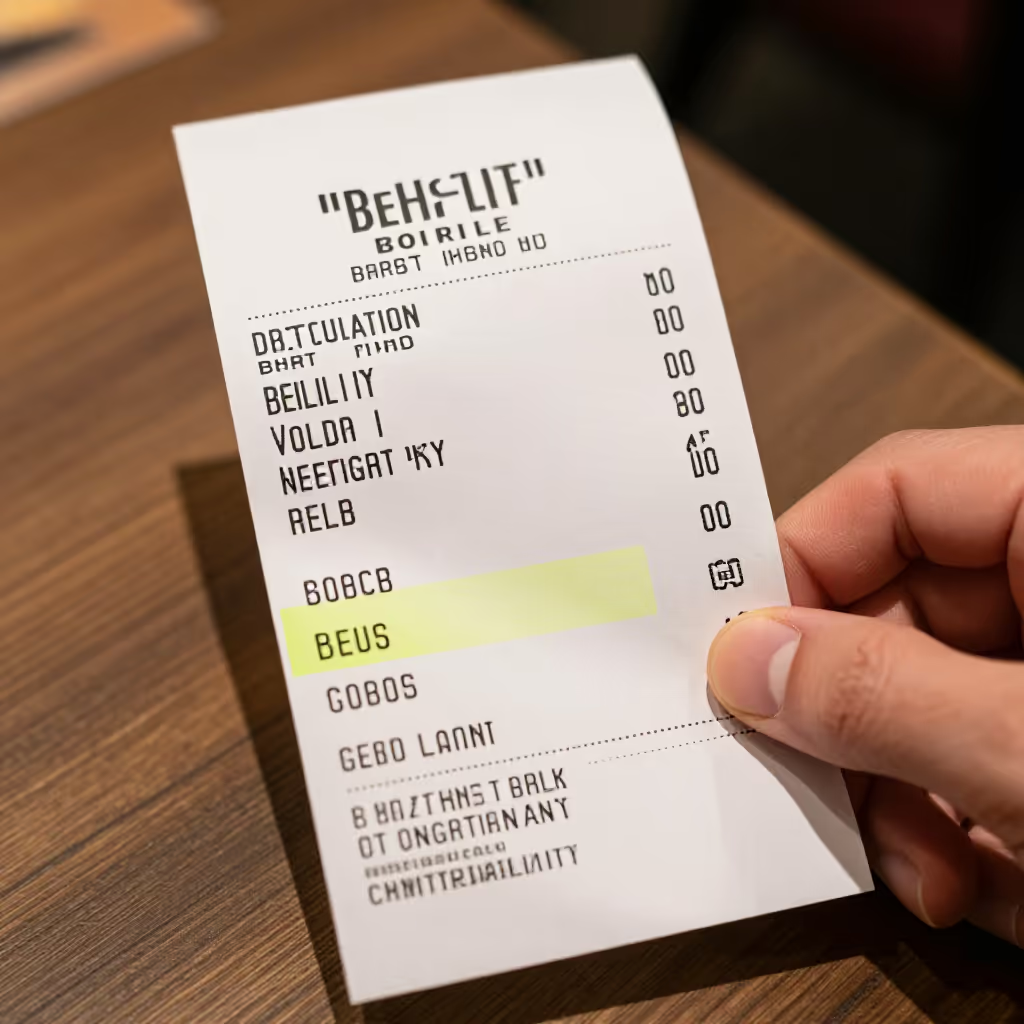
item
A single item or point on a list, an invoice, or in a budget.
Bitte prüfen Sie die letzte Position auf der Rechnung noch einmal.
Please check the last item on the invoice again.
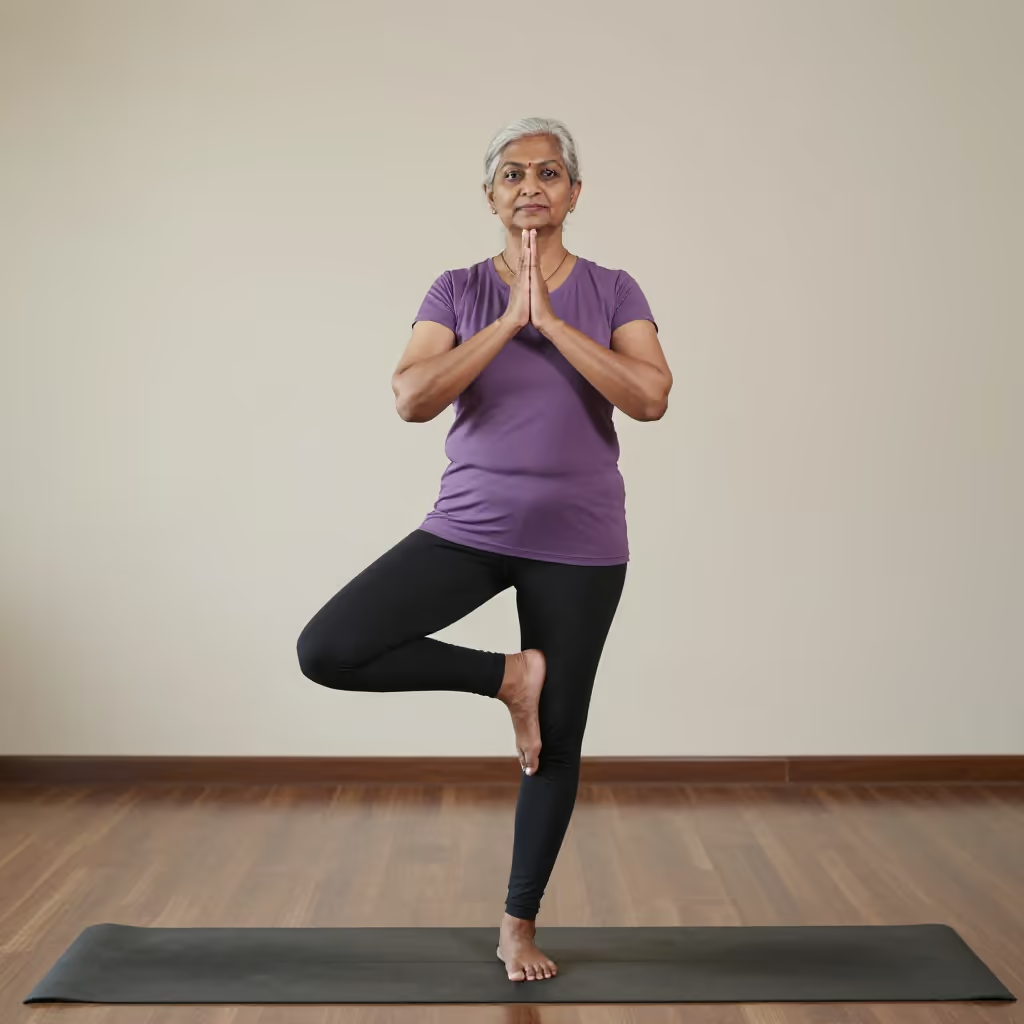
position
A specific posture of the body, for example in sports, dance, or yoga.
Nehmen Sie eine aufrechte Position ein und atmen Sie tief durch.
Assume an upright position and take a deep breath.
The noun 'Position' (position) is the basis for the verb 'positionieren' (to position something in a specific place) and the adjective 'positioniert' (positioned). If you know 'Position' (position), you can also understand these related words more easily.
Er hat sich klar gegen den Vorschlag positioniert.
He clearly positioned himself against the proposal.
You can almost always recognize the exact meaning of 'Position' (position) from the context. Words like 'Firma' (company) or 'Abteilungsleiter' (department head) point to a job, while 'Meinung' (opinion) or 'Debatte' (debate) refer to a viewpoint.
In der politischen Debatte vertrat sie eine klare Position.
In the political debate, she represented a clear position.
In a professional context, 'Position' (position) is often used with verbs such as 'annehmen' (to accept), 'bekommen' (to get), 'innehaben' (to hold), or 'sich bewerben auf' (to apply for). Typical adjectives are 'leitend' (managerial) or 'führend' (leading).
Sie hat sich auf eine leitende Position beworben.
She applied for a managerial position.
To express an opinion, people often use the fixed expression 'eine Position beziehen' (to take a position). Other typical verbs in this context are 'vertreten' (to represent/advocate) or 'verteidigen' (to defend).
In dieser Frage möchte ich noch keine Position beziehen.
I don't want to take a position on this issue yet.
When referring to body posture, 'Position' (position) is very often combined with the verb 'einnehmen' (to assume). 'Halten' (to hold) or 'wechseln' (to change) are also typical.
Bitte nehmen Sie für die nächste Übung eine sitzende Position ein.
Please assume a seated position for the next exercise.
place / space
Both words can refer to a place in a ranking or sequence. “Der Platz” is the usual and direct term for this, while “die Position” sounds more like a single point on a list and somewhat more neutral. For competition results, “Platz” is therefore usually the better choice.

Nach dem letzten Lauf stand Lina auf der zweiten Position der Rangliste.
After the last race, Lina was in second position in the rankings.
Nach dem letzten Lauf belegte Lina den zweiten Platz.
After the last race, Lina came in second.