

verarbeiten
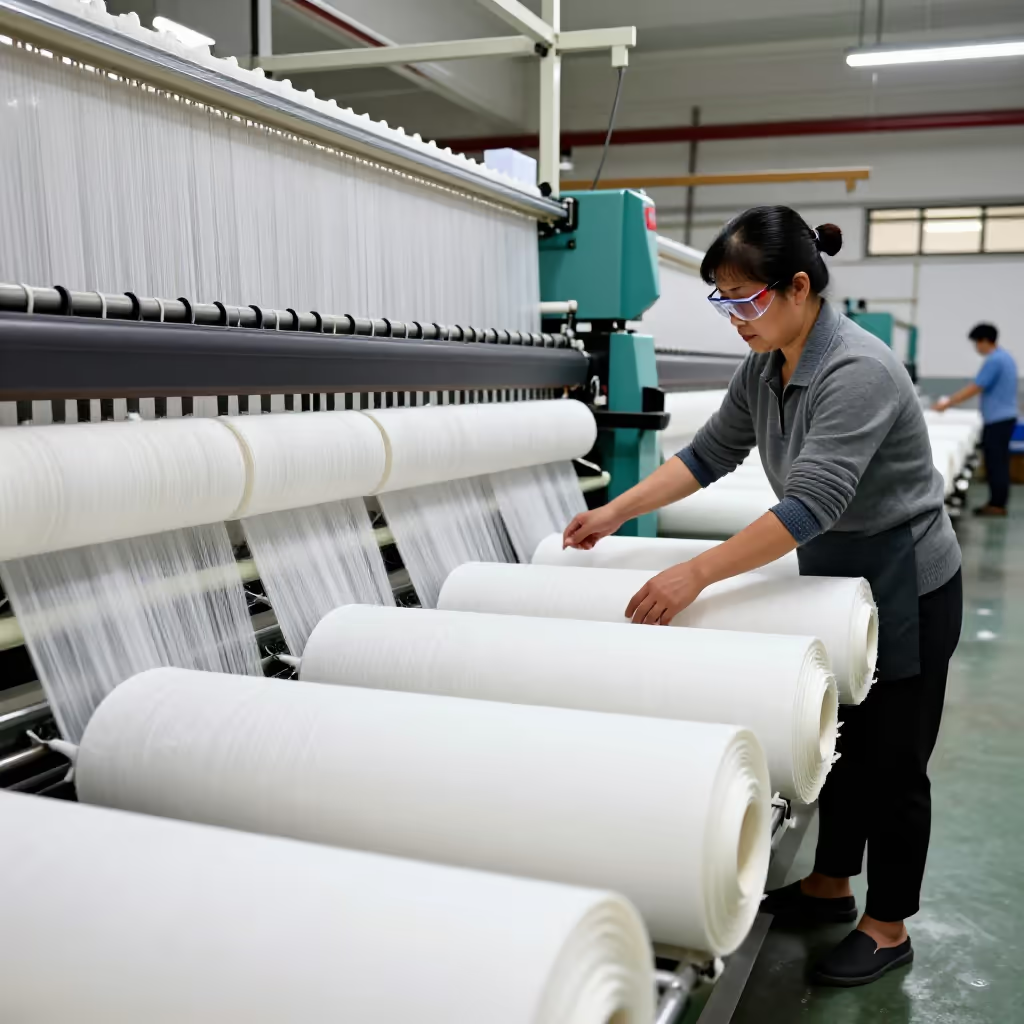
to process
To transform raw materials or materials into a finished product through a production process.
EXAMPLE
In dieser Fabrik wird Milch zu Käse und Joghurt verarbeitet.
In this factory, milk is processed into cheese and yogurt.
to process
Loading your saved state.
to process
To transform raw materials or materials into a finished product through a production process.
In dieser Fabrik wird Milch zu Käse und Joghurt verarbeitet.
In this factory, milk is processed into cheese and yogurt.

to process
To mentally and emotionally cope with and accept an emotional or difficult experience.
Sie braucht noch Zeit, um den plötzlichen Verlust ihres Arbeitsplatzes zu verarbeiten.
She still needs time to process the sudden loss of her job.

to process
To take in information, data, or impressions and process them mentally or technically.
Das Gehirn verarbeitet eine riesige Menge an Sinneseindrücken pro Sekunde.
The brain processes a huge amount of sensory impressions per second.

to work into
To use a topic, idea, or experience as the basis or an element in a creative work such as a book, film, or piece of music.
Der Regisseur hat seine eigenen Kindheitserlebnisse in dem Film verarbeitet.
The director worked his own childhood experiences into the film.
'Verarbeiten' (to process) is an inseparable verb. The prefix 'ver-' remains firmly attached to the stem 'arbeiten' (to work) in all tenses and sentence constructions. It often indicates a change or transformation.
Er verarbeitet die Eindrücke des Tages in seinen Träumen.
He processes the impressions of the day in his dreams.
The object of the verb reveals the exact meaning. With materials (wood, fabric), it is about production. With feelings (grief, shock), it is about psychological coping. With data or information, it is about their analysis.
Die Firma verarbeitet Leder zu hochwertigen Schuhen.
The company processes leather into high-quality shoes.
When a raw material is transformed into a product, the result is often introduced with the preposition 'zu' (into). The structure is: etwas (accusative) zu etwas (dative) verarbeiten.
Die Trauben aus der Region werden zu Wein verarbeitet.
The grapes from the region are processed into wine.
In the psychological meaning, 'verarbeiten' (to process) is usually combined with negative or intense experiences. Typical objects are 'ein Trauma' (a trauma), 'eine Niederlage' (a defeat), 'die Vergangenheit' (the past), or 'eine Trennung' (a breakup/separation).
Nach dem Unfall brauchte er psychologische Hilfe, um das Erlebnis zu verarbeiten.
After the accident, he needed psychological help to process the experience.
When a topic or experience appears in a work of art, the preposition 'in' is often used. For example, you can say 'seine Gefühle in einem Lied verarbeiten' (to work one's feelings into a song).
Die Autorin hat ihre Reiseerlebnisse in ihrem neuen Roman verarbeitet.
The author worked her travel experiences into her new novel.
to treat / to deal with
Behandeln and verarbeiten can both connect a topic with a creative work. Behandeln presents or discusses the topic itself. Verarbeiten means using a topic or experience creatively as the basis for, or as an element of, the work.

In dem Roman verarbeitet die Autorin die Flucht ihrer Familie zu einer erfundenen Geschichte.
In the novel, the author turns her family's escape into a fictional story.
Der Roman behandelt die Flucht einer Familie als zentrales Thema.
The novel deals with a family's escape as its central theme.