
Very great respect and high esteem for a person, based on their achievements, character, or position. The term is mostly used in a formal context.
example
Er spricht stets mit großer Hochachtung von seiner ehemaligen Mentorin.
He always speaks of his former mentor with great respect.
Usage tips
Word composition
The word is made up of 'hoch' (high) and 'Achtung' (respect). In this context, 'Achtung' means 'respect' or 'esteem', not 'caution'. So it describes very high respect.
EXAMPLE
Die Soldatin genoss die Hochachtung ihrer Kameraden.
The soldier enjoyed the high esteem of her comrades.
Formal style
'Hochachtung' (high esteem/deep respect) is a very formal word. It is used mainly in written language, in official speeches, or when speaking about a person with great respect.
EXAMPLE
In seiner Rede brachte er seine Hochachtung für die Lebensleistung des Künstlers zum Ausdruck.
In his speech, he expressed his deep respect for the artist's life's work.
Typical combinations
Common formulations are 'Hochachtung vor jemandem haben' (to have deep respect for someone, with dative), 'jemandem Hochachtung zollen' (to pay tribute/respect to someone), or 'voller Hochachtung sein' (to be full of respect).
EXAMPLE
Ich habe große Hochachtung vor Menschen, die ehrenamtlich arbeiten.
I have great respect for people who do volunteer work.
Outdated closing formula
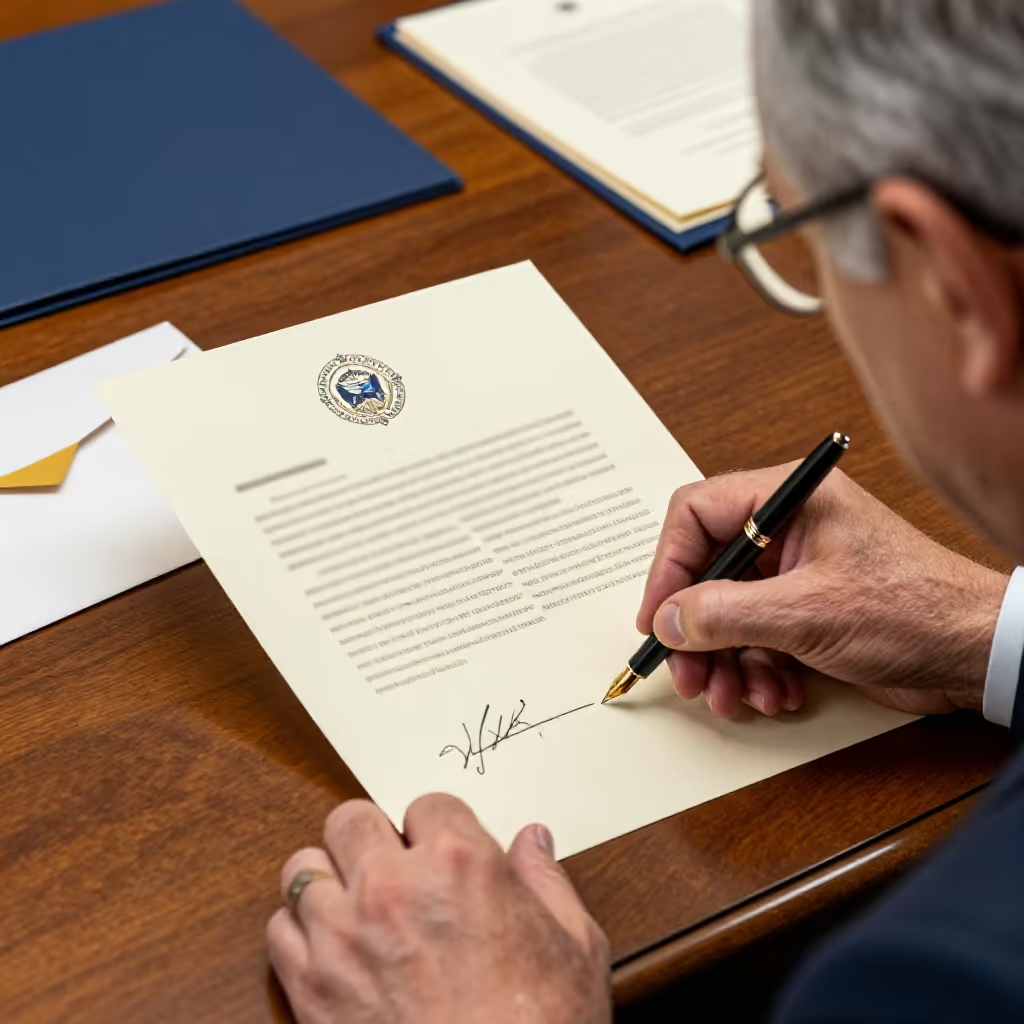
The phrase 'Mit vorzüglicher Hochachtung' (With highest respect) is a very old, formal closing formula at the end of a letter. It is hardly used today and can sound stiff or even ironic.
EXAMPLE
Sein Anwalt beendete das offizielle Schreiben mit „Mit vorzüglicher Hochachtung“.
His lawyer ended the official letter with 'Mit vorzüglicher Hochachtung' (With highest respect).
Compare with
near_synonym
Hochachtung vs Respekt
respect
'Respekt' (respect) and 'Hochachtung' (deep respect / high esteem) both have to do with respect for a person or thing. 'Respekt' is more general and fits many situations: you can have respect for an achievement or treat others with respect. 'Hochachtung' is stronger and sounds more formal. It is used more when you hold a person in very high esteem, for example because of their character or great achievement. In everyday life, 'Respekt' is usually more natural, while 'Hochachtung' sounds more solemn or official.
Hochachtung
Die Familie spricht mit großer Hochachtung von der Ärztin, die dem Großvater geholfen hat.
The family speaks with deep respect about the doctor who helped their grandfather.
Respekt
Johanna hat großen Respekt vor ihrer Kollegin, weil sie immer ruhig und fair bleibt.
Johanna has great respect for her colleague because she always stays calm and fair.