

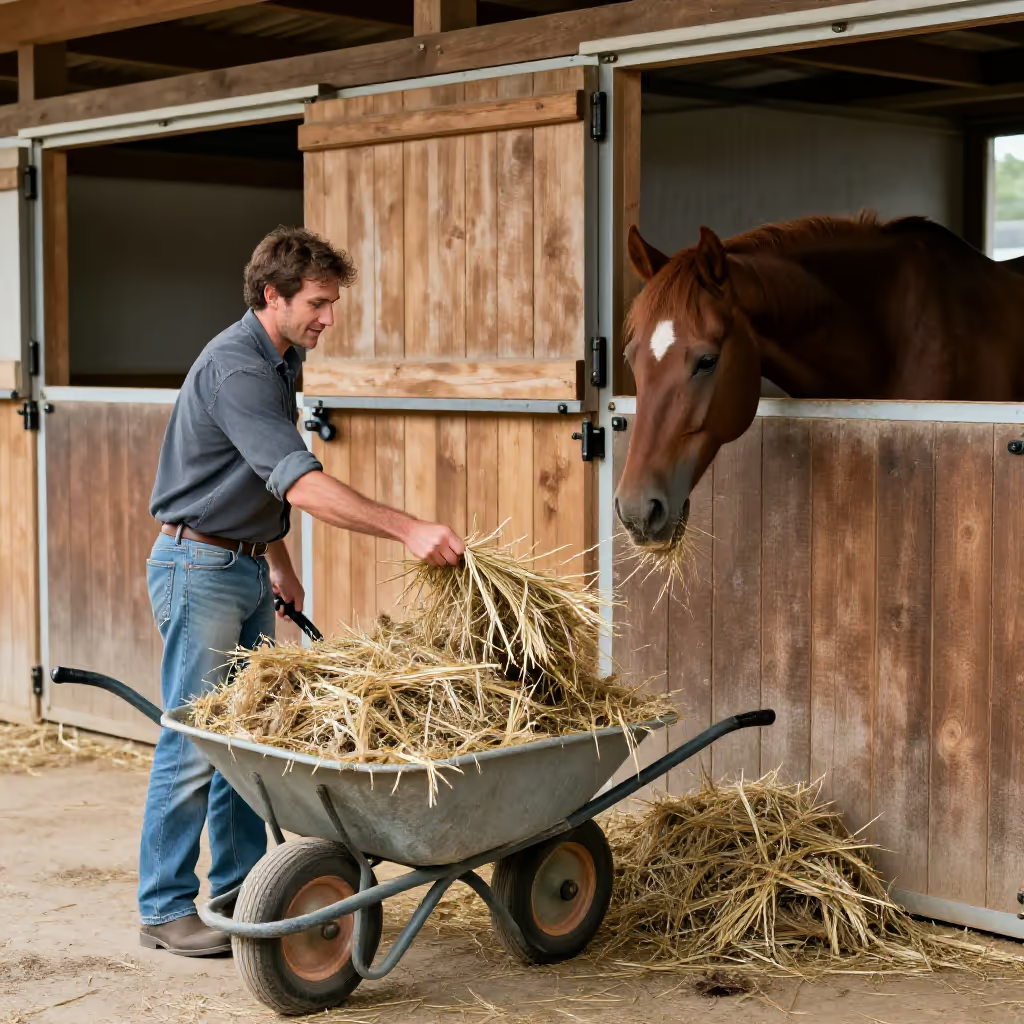
das Heu
hay
Dried grass and herbs used as feed for animals such as horses, cows, or rabbits.
EXAMPLE
Im Winter füttert der Bauer die Kühe mit Heu aus der Scheune.
In winter, the farmer feeds the cows hay from the barn.
hay
Loading your saved state.
hay
Dried grass and herbs used as feed for animals such as horses, cows, or rabbits.
Im Winter füttert der Bauer die Kühe mit Heu aus der Scheune.
In winter, the farmer feeds the cows hay from the barn.

to have tons of money
An idiom meaning that someone has a very large amount of money.
Seit er im Lotto gewonnen hat, soll er Geld wie Heu haben.
Since he won the lottery, he is said to have tons of money.
The word 'Heu' (hay) is the first part of many useful compound nouns. Examples include 'der Heuschnupfen' (hay fever), 'der Heuballen' (hay bale), or 'die Heuernte' (hay harvest).
Im Frühling leiden viele Menschen unter Heuschnupfen.
In spring, many people suffer from hay fever.
A fixed collocation is 'Heu machen' (to make hay). It describes the whole process of mowing, drying, and storing grass as animal feed. 'Im Heu schlafen' (to sleep in the hay) is also a well-known phrase.
Die Bauern müssen das gute Wetter nutzen, um Heu zu machen.
The farmers have to take advantage of the good weather to make hay.
The expression 'Geld wie Heu haben' (to have money like hay) is fixed and means to be extremely rich. The structure is always the same. The idea behind it is that you have something in an uncountable amount.
Er arbeitet nicht mehr, denn seine Familie hat Geld wie Heu.
He no longer works because his family has tons of money.
straw
Stroh and Heu are dried plant material that may be found in a stable. Heu consists of dried grass and herbs and is used mainly as animal feed, while Stroh consists of grain stalks and is often used as bedding. Heu is usually the right word for feed, and Stroh for bedding.
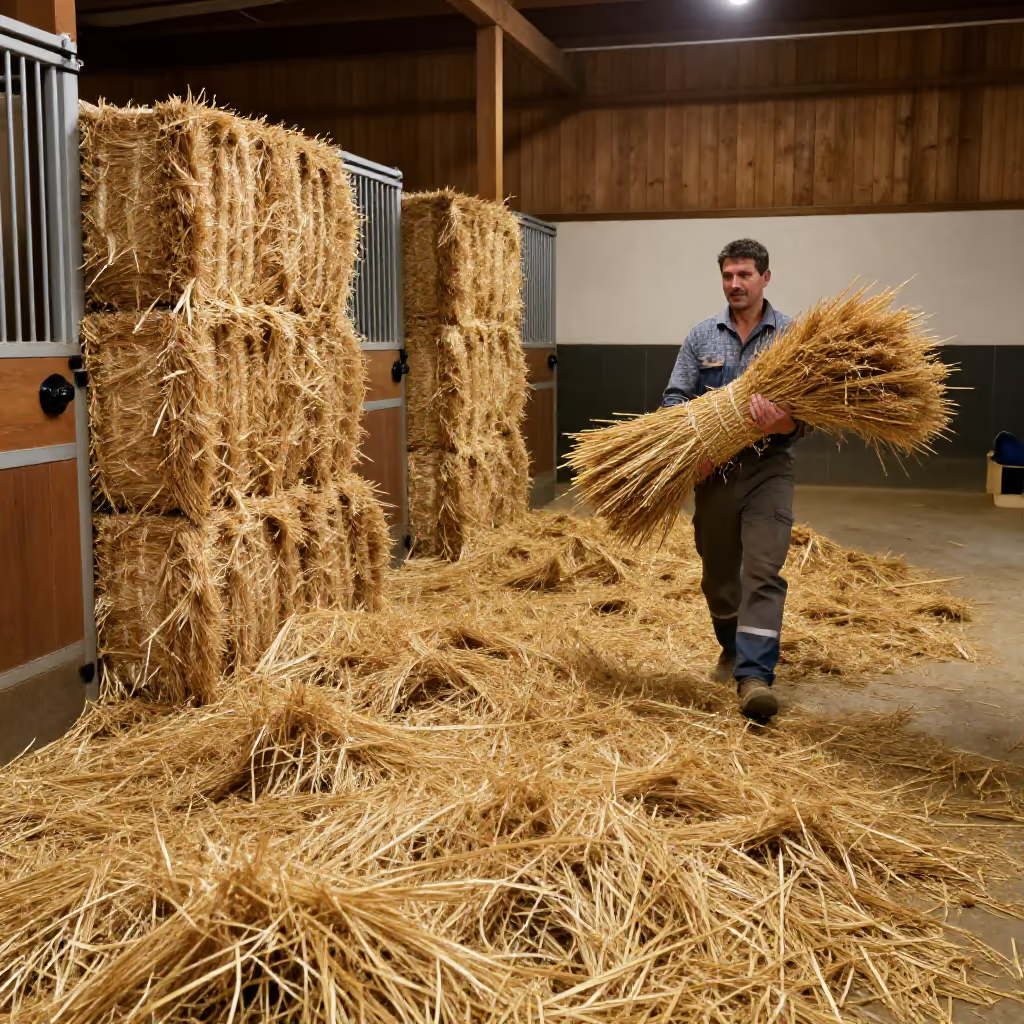
Der Bauer gab den Pferden frisches Heu als Futter.
The farmer gave the horses fresh hay as feed.
Der Bauer legte frisches Stroh in die Boxen der Pferde.
The farmer put fresh straw in the horses’ stalls.