

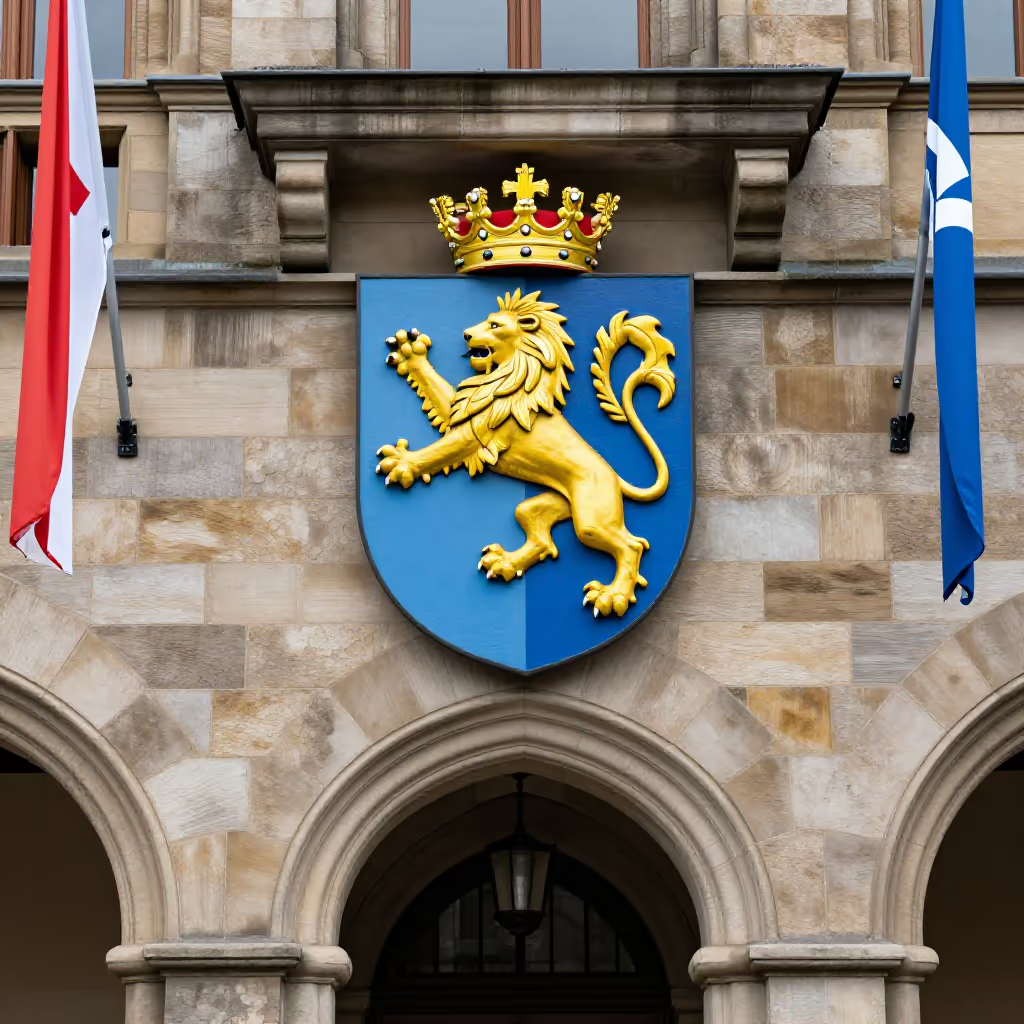
A permanent, colorful symbol in the shape of a shield that serves as an identifying mark for a person, family, city, or state.
example
Das Wappen von Berlin zeigt einen aufrecht stehenden Bären.
The coat of arms of Berlin shows an upright bear.
Usage tips
Origin of the word
The word 'Wappen' (coat of arms) is historically related to the word 'Waffen' (weapons). Originally, it referred to the painted armor or shield of a knight, which served as an identifying mark in battle.
EXAMPLE
Jede Adelsfamilie hatte ihr eigenes Wappen.
Every noble family had its own coat of arms.
Typical verbs
With 'Wappen' (coat of arms), the verbs 'führen' (to bear/use) or 'tragen' (to bear/carry) are often used to express that a family, city, or country has a particular coat of arms as its official symbol.
EXAMPLE
Die Stadt München führt ein Kind im Wappen.
The city of Munich bears a child in its coat of arms.
Typical collocations
'Wappen' (coat of arms) is frequently used with a genitive construction or the preposition 'von' (of) to show belonging. Typical formulations are 'das Wappen einer Stadt' (the coat of arms of a city) or 'das Wappen der Familie' (the family's coat of arms).
EXAMPLE
Das Wappen von Bayern zeigt blaue und weiße Rauten.
The coat of arms of Bavaria shows blue and white lozenges.
Compare with
confusable
Wappen vs Logo
logo
'das Logo' and 'das Wappen' are both symbols by which someone or something can be recognized. A logo usually belongs to a company, brand, organization, or product, and is often designed in a modern style. A coat of arms is a traditional symbol, often in the shape of a shield, for example for a city, a family, or a state. They can be confused because both serve as identifying symbols. For modern brands, 'Logo' is usually the right choice; for historical or official symbols, 'Wappen' is more appropriate.
Wappen
Das Wappen der Stadt hängt über dem Eingang des Rathauses.
The city's coat of arms hangs above the entrance to the town hall.
Logo
Auf den Eintrittskarten sieht man das Logo der Veranstaltung.