


platzieren
to place
To put, lay, or set something deliberately and purposefully in a specific place.
EXAMPLE
Er platzierte die Vase vorsichtig in der Mitte des Tisches.
He carefully placed the vase in the middle of the table.
to place
Loading your saved state.
to place
To put, lay, or set something deliberately and purposefully in a specific place.
Er platzierte die Vase vorsichtig in der Mitte des Tisches.
He carefully placed the vase in the middle of the table.

to place
To achieve a specific position in a competition or ranking.
Die Läuferin konnte sich auf dem dritten Platz platzieren.
The runner was able to place third.

to place / position
To invest money in a way that brings profit. Also: to successfully introduce and sell a product on the market.
Das Unternehmen konnte sein neues Produkt erfolgreich am Markt platzieren.
The company was able to successfully position its new product on the market.
The verb 'platzieren' (to place) is derived from the noun 'der Platz' (place/space). It literally means to bring something to a specific place. The word emphasizes that something is set in a place deliberately and carefully.
Die Werbeagentur platzierte die Anzeige auf der Titelseite der Zeitung.
The advertising agency placed the ad on the front page of the newspaper.
You can recognize the meaning of 'platzieren' (to place) from the context. If it is about an object and a place, the literal meaning is meant. In a sports or competition context, the reflexive form 'sich platzieren' (to place) is common. In a business or finance context, it is about products or money.
Der Künstler platzierte die Skulptur im Zentrum des Raumes.
The artist placed the sculpture in the center of the room.
When referring to a rank in a competition, the verb is always used reflexively: 'sich platzieren' (to place). The position often follows with the preposition 'auf' and the dative.
Unsere Mannschaft hat sich auf dem zweiten Platz platziert.
Our team placed second.
In a business context, 'platzieren' (to place/position) is often used with the nouns 'Produkt' (product), 'Marke' (brand), or 'Geld' (money). A typical phrase is 'ein Produkt am/auf dem Markt platzieren' (to position a product on the market).
Der Investor hat sein Geld geschickt in verschiedenen Aktien platziert.
The investor skillfully placed his money in various stocks.
to put / to set
Stellen and platzieren can both mean bringing an object to a specific place. Stellen is the neutral everyday form and here emphasizes the upright position; platzieren highlights deliberate, precise placement and often sounds more formal. Use stellen for a simple movement and platzieren for a planned arrangement.
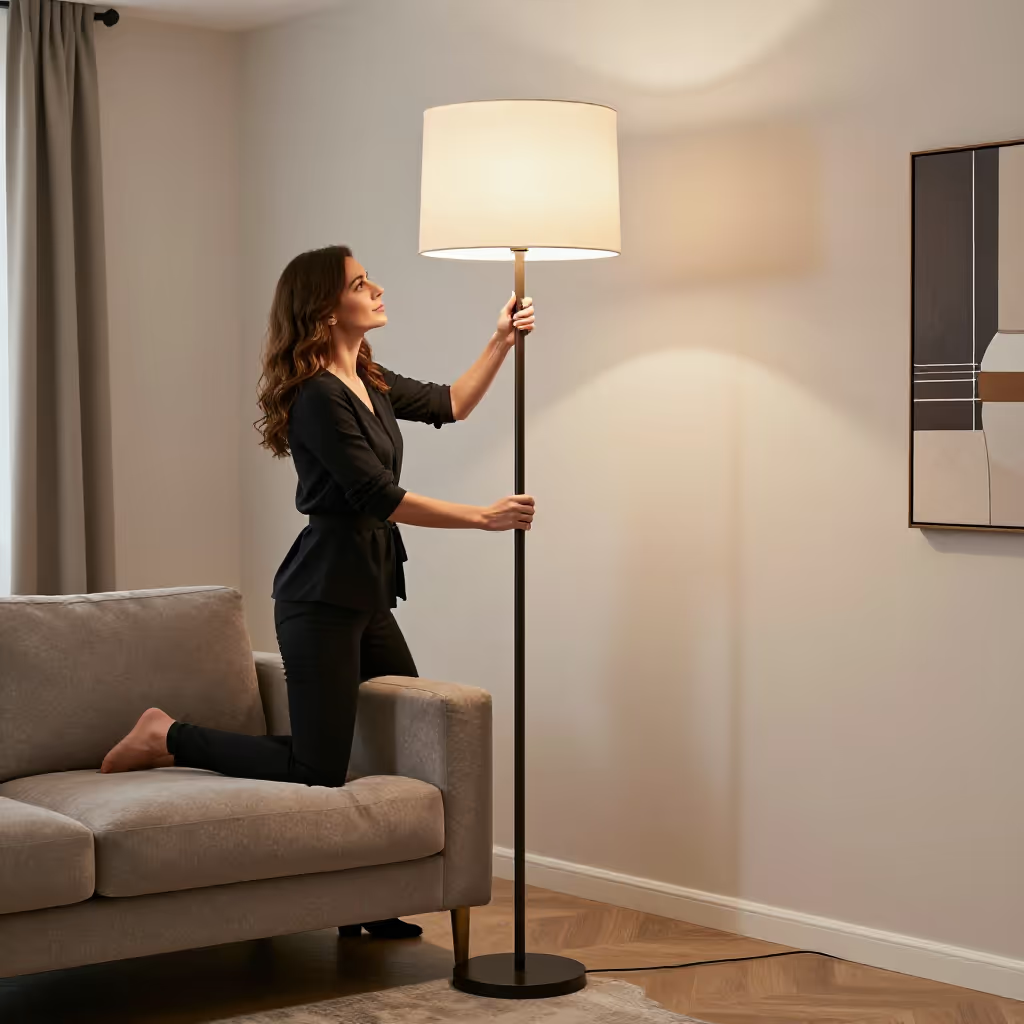
Für das Foto platzierte ich die Vase genau in die Mitte des Tisches.
For the photo, I placed the vase exactly in the center of the table.
Ich stelle die Vase auf den Tisch.
I put the vase on the table.