

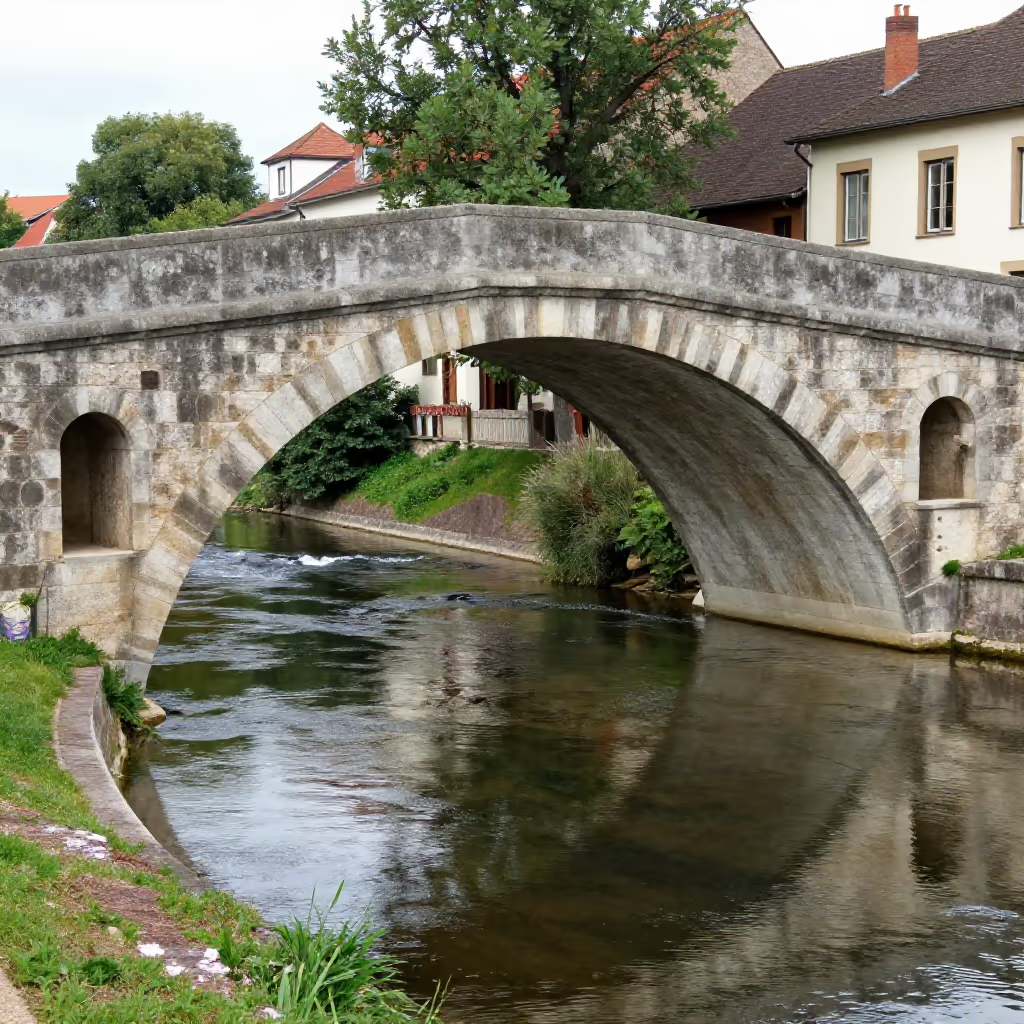
der Bogen
arch / curve
A curved line or shape; also an architectural element such as an archway or bridge arch.
EXAMPLE
Die alte Steinbrücke führt in einem weiten Bogen über den Fluss.
The old stone bridge crosses the river in a wide arch.
arch / sheet / bow
Loading your saved state.
arch / curve
A curved line or shape; also an architectural element such as an archway or bridge arch.
Die alte Steinbrücke führt in einem weiten Bogen über den Fluss.
The old stone bridge crosses the river in a wide arch.

sheet / form
A sheet of paper, often in a standardized format and usually used for forms or drawing.
Füllen Sie bitte den Fragebogen vollständig aus und geben Sie ihn am Schalter ab.
Please fill out the questionnaire completely and hand it in at the counter.

bow
A weapon used to shoot arrows.
Beim Bogenschießen braucht man viel Kraft und Konzentration, um mit Pfeil und Bogen das Ziel zu treffen.
In archery, you need a lot of strength and concentration to hit the target with a bow and arrow.
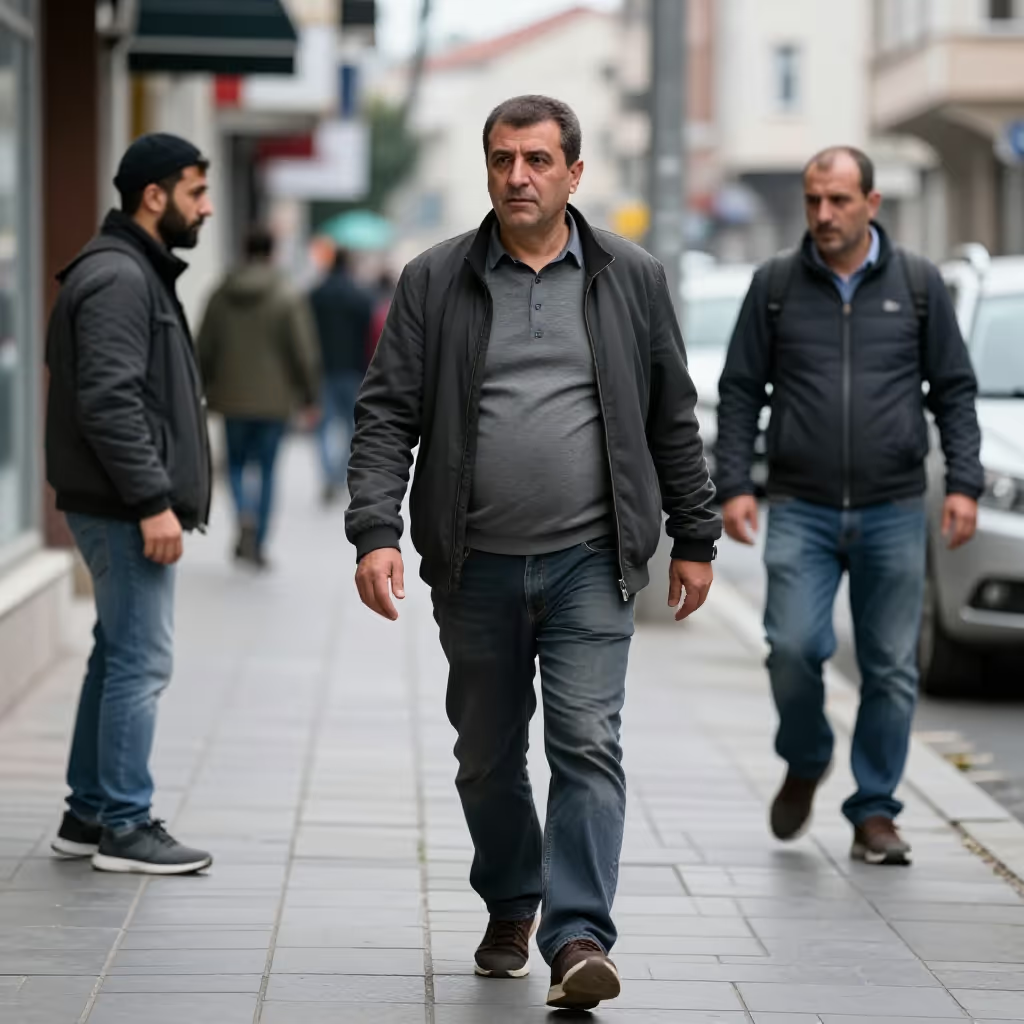
to steer clear of
To deliberately avoid someone or something or stay out of their way.
Seit ihrem Streit macht sie einen großen Bogen um ihre ehemalige beste Freundin.
Since their argument, she has been steering well clear of her former best friend.
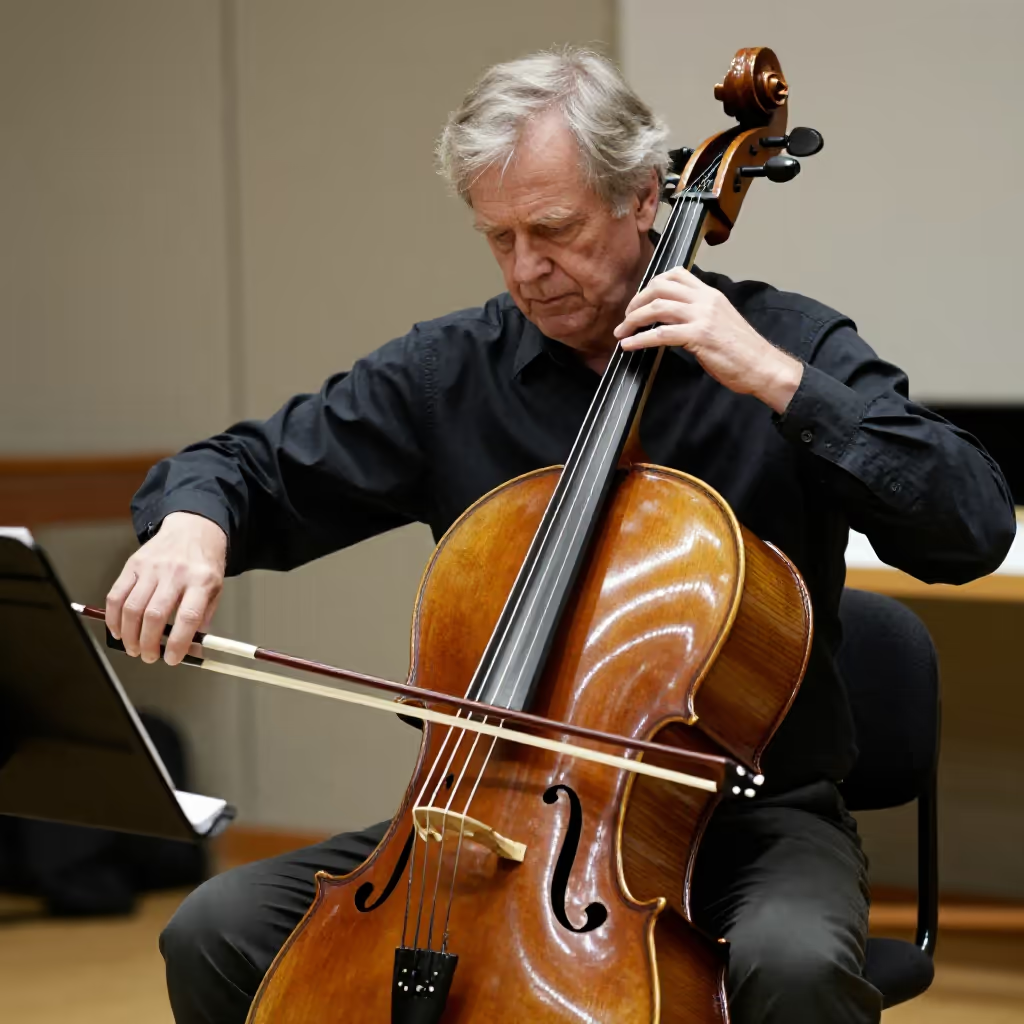
bow
A stick with stretched hairs that is used to play string instruments such as the violin or cello.
Die Geigerin strich mit dem Bogen sanft über die Saiten.
The violinist gently drew the bow across the strings.

to get the hang
To have understood how something works or how to do something correctly; to get the hang of it.
Am Anfang war das neue Computerprogramm kompliziert, aber jetzt habe ich den Bogen raus.
At first the new computer program was complicated, but now I've got the hang of it.
'Bogen' is a base word in many compounds that all refer to a curved shape or a sheet of paper. Examples are 'Regenbogen' (rainbow), 'Ellenbogen' (elbow), 'Torbogen' (archway), or 'Fragebogen' (questionnaire).
Nach dem Regen erschien ein wunderschöner Regenbogen am Himmel.
After the rain, a beautiful rainbow appeared in the sky.
You can easily recognize the many meanings of 'Bogen' from context: 'Pfeil' (arrow) points to the weapon (m03), 'Geige' (violin) to the musical instrument bow (m05), 'ausfüllen' (to fill out) to the paper/form (m02), and 'Brücke' (bridge) to architecture (m01).
Er spannte den Bogen und zielte mit dem Pfeil.
He drew the bow and aimed with the arrow.
When 'Bogen' means a sheet of paper, it rarely stands alone. It is usually part of a compound that describes the purpose more precisely, e.g. 'Fragebogen' (questionnaire), 'Antwortbogen' (answer sheet), or 'Notenbogen' (sheet music).
Der Lehrer verteilte die Antwortbögen für den Test.
The teacher handed out the answer sheets for the test.
As a weapon, 'Bogen' almost always appears in the fixed combination 'Pfeil und Bogen' (bow and arrow). These two words belong together.
Im Mittelalter jagte man mit Pfeil und Bogen.
In the Middle Ages, people hunted with a bow and arrow.
The idiom 'einen Bogen um jemanden/etwas machen' means to deliberately avoid a person or thing. The object that one avoids is in the accusative.
Ich mache einen großen Bogen um das Thema Politik, wenn ich mit ihm spreche.
I steer well clear of the topic of politics when I talk to him.
The idiom 'den Bogen raushaben' is colloquial and means that you have understood how something works. It is often used after a learning phase.
Nach ein paar Versuchen hatte ich den Bogen raus und konnte endlich Fahrrad fahren.
After a few tries, I got the hang of it and could finally ride a bike.
leaf / sheet
Blatt and Bogen can both refer to a single sheet of paper. Blatt is the neutral, general term. Bogen often emphasizes a specific or standardized format and is used especially for forms or drawing paper.
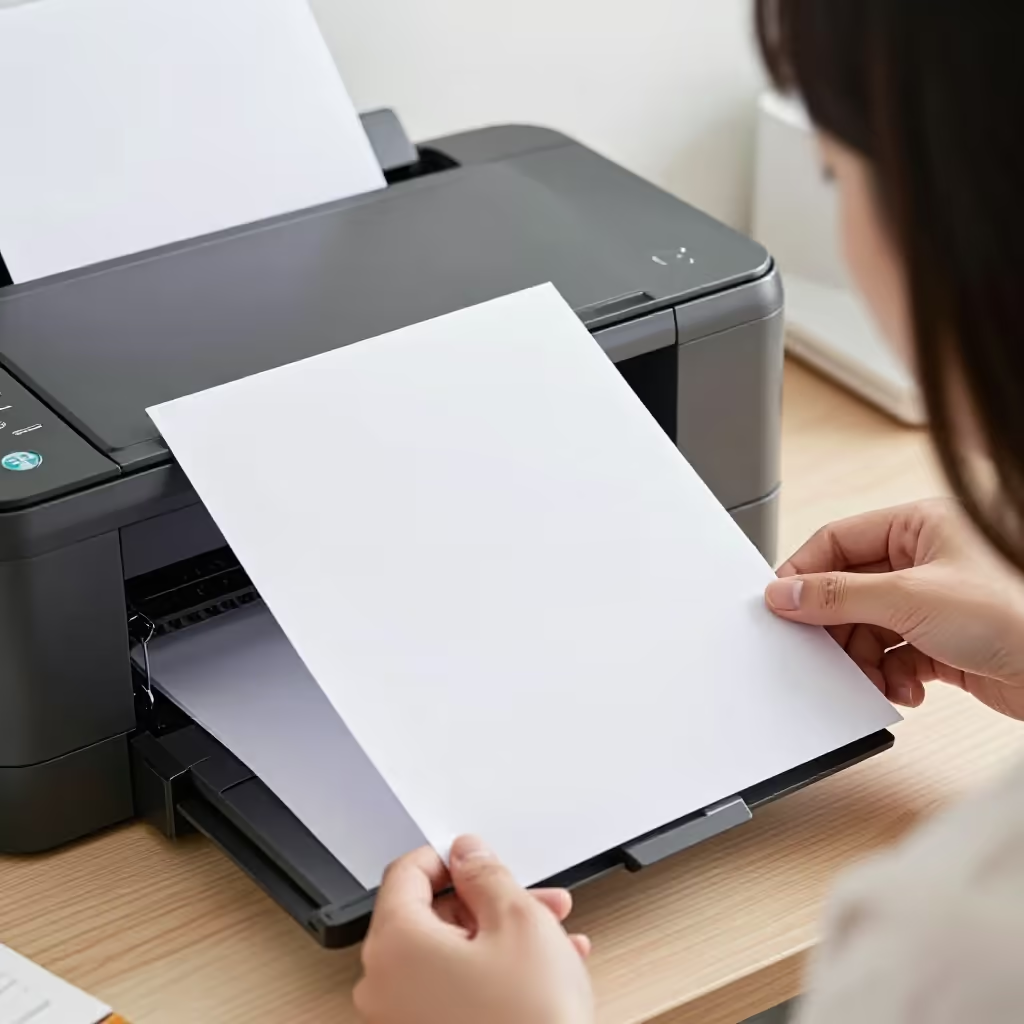
Für die Anmeldung füllt Mia den dafür vorgesehenen Bogen aus.
Mia fills out the designated form for the registration.
Für die kurze Notiz nimmt Mia ein leeres Blatt aus dem Drucker.
Mia takes a blank sheet from the printer for the short note.