

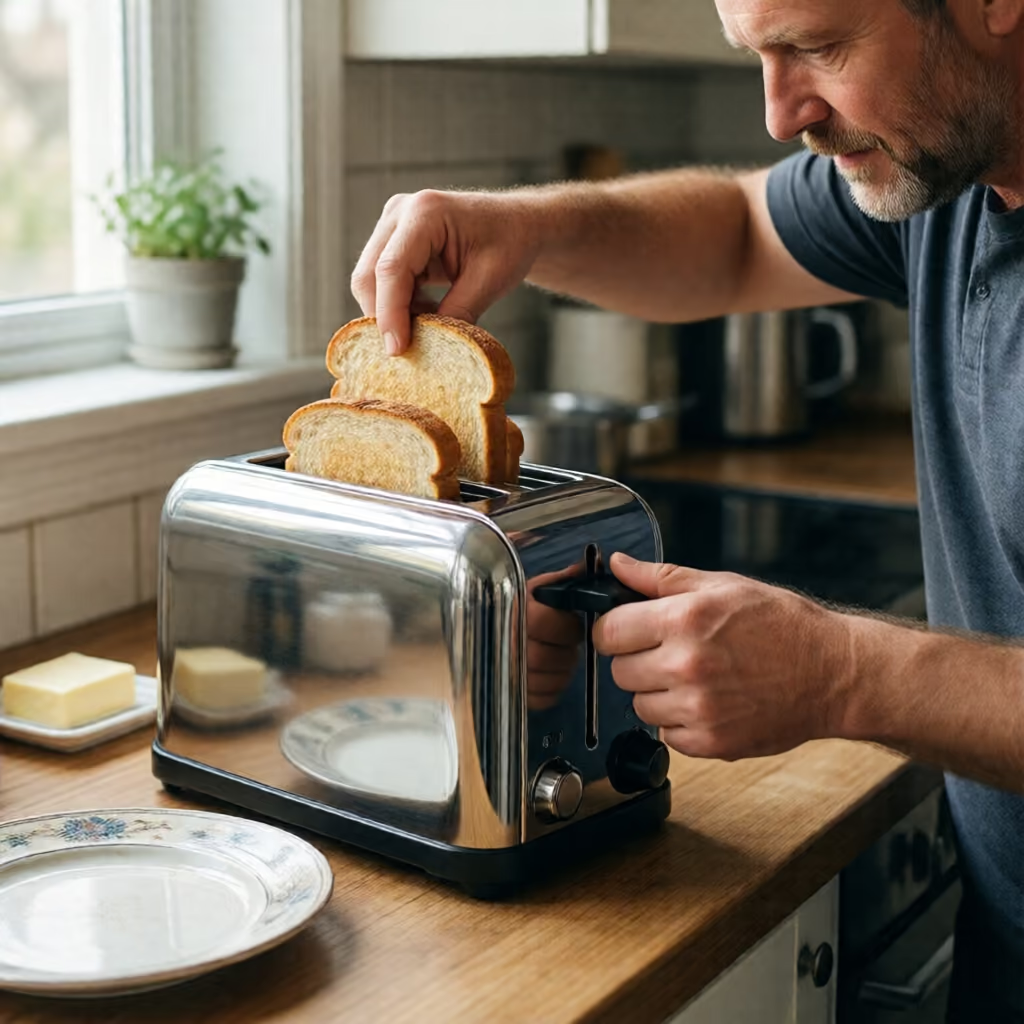
toasten
tostare
Tostare il pane, soprattutto il pane da toast, nel tostapane.
ESEMPIO
Ich toaste morgens zwei Scheiben Brot.
La mattina tosto due fette di pane.
tostare
toasten – toastete – hat getoastet
Caricamento dello stato salvato.
tostare
Tostare il pane, soprattutto il pane da toast, nel tostapane.
Ich toaste morgens zwei Scheiben Brot.
La mattina tosto due fette di pane.
| ich | toaste |
|---|---|
| du | toastest |
| er/sie/es | toastet |
| wir | toasten |
| ihr | toastet |
| sie | toasten |
| ich | toastete |
|---|---|
| du | toastetest |
| er/sie/es | toastete |
| wir | toasteten |
| ihr | toastetet |
| sie | toasteten |
| ich | habe getoastet |
|---|---|
| du | hast getoastet |
| er/sie/es | hat getoastet |
| wir | haben getoastet |
| ihr | habt getoastet |
| sie | haben getoastet |
| du | toast! toaste! |
|---|---|
| ihr | toastet! |
| Sie | toasten Sie! |
| ich | hatte getoastet |
|---|---|
| du | hattest getoastet |
| er/sie/es | hatte getoastet |
| wir | hatten getoastet |
| ihr | hattet getoastet |
| sie | hatten getoastet |
| ich | werde toasten |
|---|---|
| du | wirst toasten |
| er/sie/es | wird toasten |
| wir | werden toasten |
| ihr | werdet toasten |
| sie | werden toasten |
| ich | toaste |
|---|---|
| du | toastest |
| er/sie/es | toaste |
| wir | toasten |
| ihr | toastet |
| sie | toasten |
Si usa per il discorso indiretto.
| ich | toastete |
|---|---|
| du | toastetest |
| er/sie/es | toastete |
| wir | toasteten |
| ihr | toastetet |
| sie | toasteten |
Si usa per i desideri e per il “würde”.
| infinito | toasten |
|---|---|
| con zu | zu toasten |
| Partizip I | toastend |
| Partizip II | getoastet |
«Toasten» (tostare) è formato dal sostantivo «Toast» (toast) e dalla desinenza verbale «-en». La parola indica quindi un'azione che si compie con il toast o con altro pane.
Am Wochenende toastet mein Vater für alle das Weißbrot.
Nel fine settimana mio padre tosta il pane bianco per tutti.
«Toasten» (tostare) si usa normalmente con un complemento oggetto diretto in Akkusativ. Questo complemento indica il pane o le fette di pane che vengono riscaldati nel tostapane.
Bitte toaste die Brötchen noch eine Minute.
Per favore, tosta i panini ancora per un minuto.
Espressioni frequenti sono «Brot toasten» (tostare il pane), «zwei Scheiben toasten» (tostare due fette) e «etwas goldbraun toasten» (tostare qualcosa fino a farlo dorare). Un'indicazione di tempo o un avverbio descrive spesso per quanto tempo o quanto intensamente viene riscaldato il pane.
Sie toastet das Brot goldbraun und serviert es mit Butter.
Tosta il pane fino a farlo dorare e lo serve con il burro.
tostare / abbronzarsi / arrostire
«Rösten» (tostare) e «toasten» (tostare) possono entrambi indicare il rendere il pane dorato e croccante riscaldandolo. «Toasten» si riferisce nello specifico alla tostatura del pane nel tostapane, mentre «rösten» è il procedimento più generale e comprende anche altri apparecchi o alimenti. Quando si usa un tostapane, quindi, è particolarmente adatto «toasten».
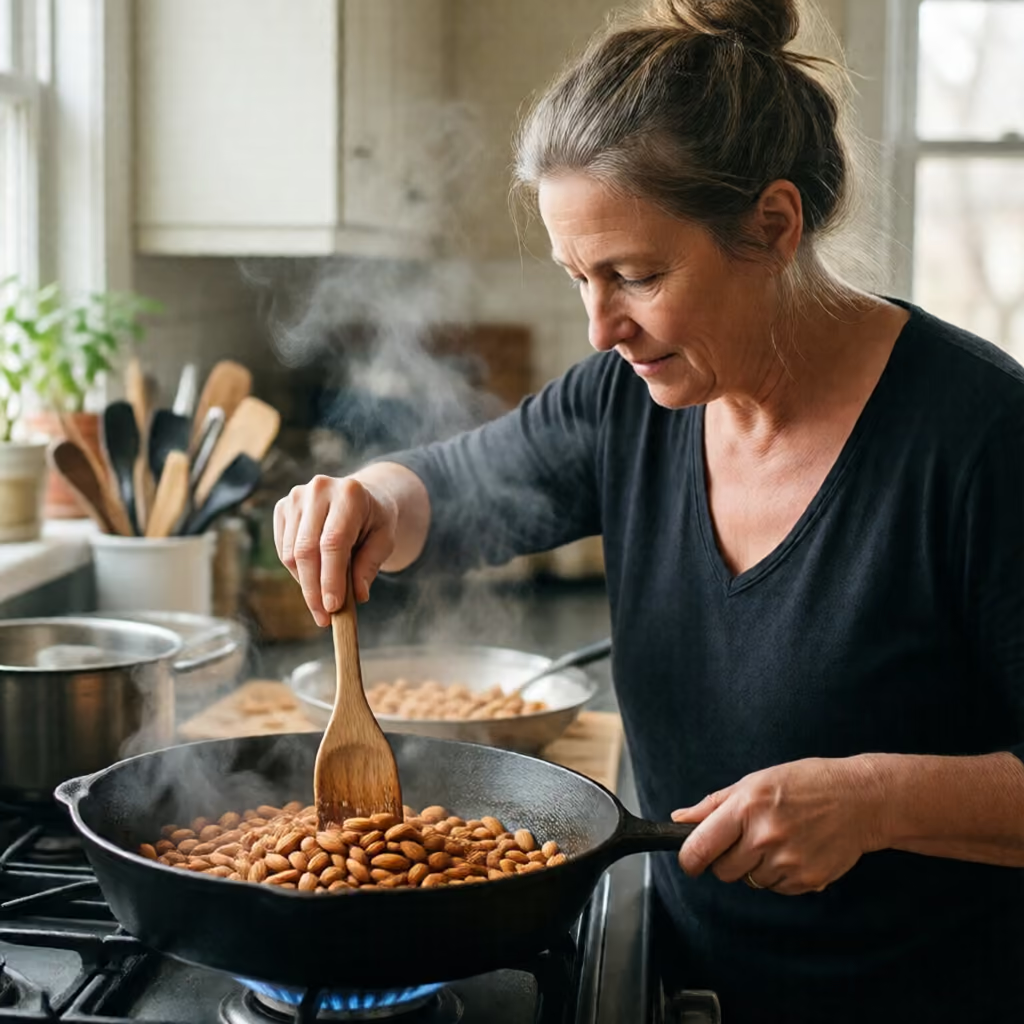
Ich toaste das Brot im Toaster, bis es knusprig ist.
Tosto il pane nel tostapane finché diventa croccante.
Ich röste das Brot in der Pfanne, bis es knusprig ist.
Tosto il pane in padella finché diventa croccante.