


der Japaner
Japanese man
A male person who comes from Japan or has Japanese citizenship.
EXAMPLE
Der neue Austauschstudent in unserer Klasse ist Japaner.
The new exchange student in our class is Japanese.
Japanese man / adjustable wrench
Loading your saved state.
Japanese man
A male person who comes from Japan or has Japanese citizenship.
Der neue Austauschstudent in unserer Klasse ist Japaner.
The new exchange student in our class is Japanese.
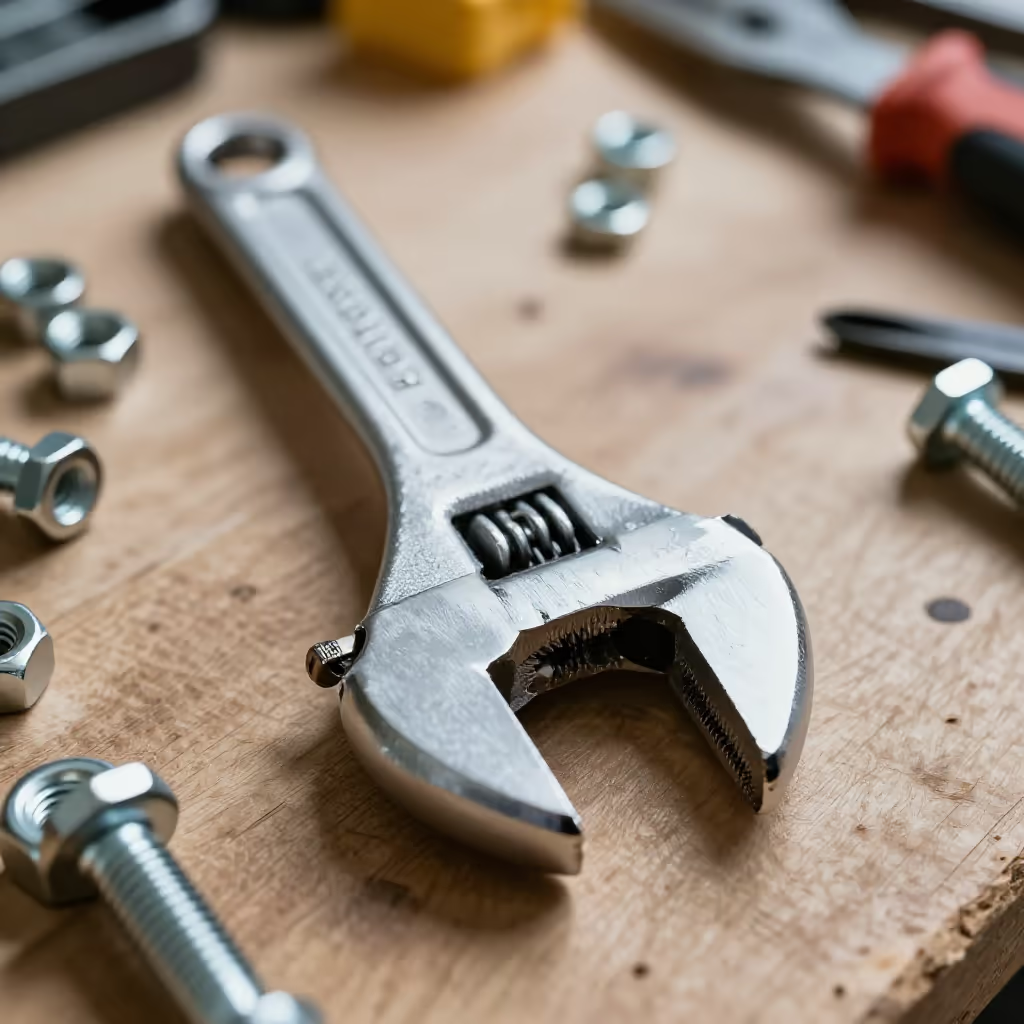
adjustable wrench
A colloquial but outdated term for an adjustable wrench, also called a 'Rollgabelschlüssel' in German.
Reich mir mal den Japaner rüber, diese Schraube sitzt bombenfest.
Pass me the adjustable wrench, this screw is stuck tight.
The ending '-er' is a typical way to form the masculine term for an inhabitant (e.g. from the country 'Japan' comes 'der Japaner' (the Japanese man)). The corresponding adjective is 'japanisch' (Japanese).
Mein neuer Kollege ist Japaner und spricht perfekt Deutsch.
My new colleague is Japanese and speaks perfect German.
To distinguish the two meanings, pay attention to the context. If it is about people, travel, or culture, it refers to the person. If it is about tools or repairs, it could refer to the wrench.
Der Japaner, den ich gestern kennengelernt habe, studiert in Berlin.
The Japanese man I met yesterday is studying in Berlin.
The term 'Japaner' (adjustable wrench) for a wrench is colloquial and is considered outdated today. You might still hear it from older people in a workshop.
Mein Opa hat in seiner Werkzeugkiste noch einen alten Japaner.
My grandpa still has an old adjustable wrench in his toolbox.