

aufmalen
pintar
Colocar algo em uma superfície por meio de pintura ou desenho.
EXEMPLO
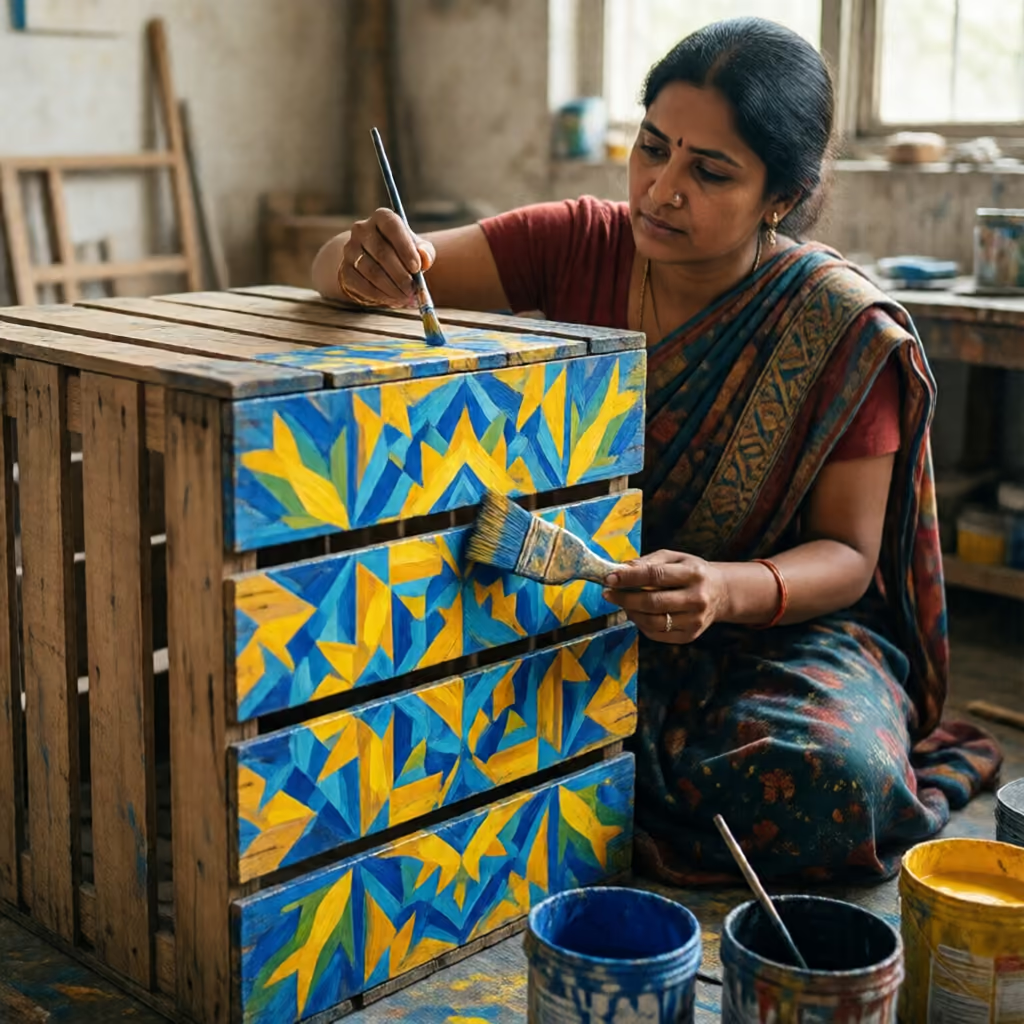
Sie malte ein buntes Muster auf die Holzkiste auf.
Ela pintou um padrão colorido na caixa de madeira.
pintar
aufmalen – malte auf – hat aufgemalt
Carregando seu estado salvo.
pintar
Colocar algo em uma superfície por meio de pintura ou desenho.
Sie malte ein buntes Muster auf die Holzkiste auf.
Ela pintou um padrão colorido na caixa de madeira.
| ich | male auf |
|---|---|
| du | malst auf |
| er/sie/es | malt auf |
| wir | malen auf |
| ihr | malt auf |
| sie | malen auf |
| ich | malte auf |
|---|---|
| du | maltest auf |
| er/sie/es | malte auf |
| wir | malten auf |
| ihr | maltet auf |
| sie | malten auf |
| ich | habe aufgemalt |
|---|---|
| du | hast aufgemalt |
| er/sie/es | hat aufgemalt |
| wir | haben aufgemalt |
| ihr | habt aufgemalt |
| sie | haben aufgemalt |
| du | male auf! |
|---|---|
| ihr | malt auf! |
| Sie | malen Sie auf! |
| ich | hatte aufgemalt |
|---|---|
| du | hattest aufgemalt |
| er/sie/es | hatte aufgemalt |
| wir | hatten aufgemalt |
| ihr | hattet aufgemalt |
| sie | hatten aufgemalt |
| ich | werde aufmalen |
|---|---|
| du | wirst aufmalen |
| er/sie/es | wird aufmalen |
| wir | werden aufmalen |
| ihr | werdet aufmalen |
| sie | werden aufmalen |
| ich | male auf |
|---|---|
| du | malest auf |
| er/sie/es | male auf |
| wir | malen auf |
| ihr | malet auf |
| sie | malen auf |
Usado no discurso indireto.
| ich | malte auf |
|---|---|
| du | maltest auf |
| er/sie/es | malte auf |
| wir | malten auf |
| ihr | maltet auf |
| sie | malten auf |
Usado para desejos e para “würde”.
| infinitivo | aufmalen |
|---|---|
| com zu | aufzumalen |
| Partizip I | aufmalend |
| Partizip II | aufgemalt |
“Aufmalen” (pintar em uma superfície) é um verbo separável. Na oração principal, “auf” (partícula separável) fica no fim da oração; na oração subordinada, o verbo permanece junto. No infinitivo com “zu” (marcador de infinitivo), “zu” (marcador de infinitivo) fica entre “auf” (partícula separável) e “malen” (pintar).
Die Kinder malen Sterne auf die Wand auf.
As crianças pintam estrelas na parede.
Sie wartet, weil ihr Bruder das Muster noch aufmalt.
Ela está esperando porque o irmão ainda pinta o padrão.
Es macht Spaß, bunte Figuren auf Steine aufzumalen.
É divertido pintar figuras coloridas em pedras.
“Aufmalen” (pintar em uma superfície) é formado pelo prefixo “auf” (em uma superfície) e pelo verbo “malen” (pintar). O prefixo indica que aquilo que é pintado fica em uma superfície específica.
Der Künstler malt einen roten Streifen auf das Schild auf.
O artista pinta uma faixa vermelha na placa.
Um padrão típico é “etwas auf etwas aufmalen” (pintar algo em uma superfície): aquilo que é pintado fica no Akkusativ, e a superfície também vem depois de “auf” (em direção a) no Akkusativ quando há movimento em direção à superfície.
Sie malte ein Gesicht auf den Kürbis auf.
Ela pintou um rosto na abóbora.
pintar
“bemalen” (pintar) e “aufmalen” (pintar algo em uma superfície) podem descrever a mesma atividade. Com “bemalen”, o foco está no objeto que é decorado com tinta. Com “aufmalen”, o foco está na imagem ou no padrão que é colocado sobre uma superfície.
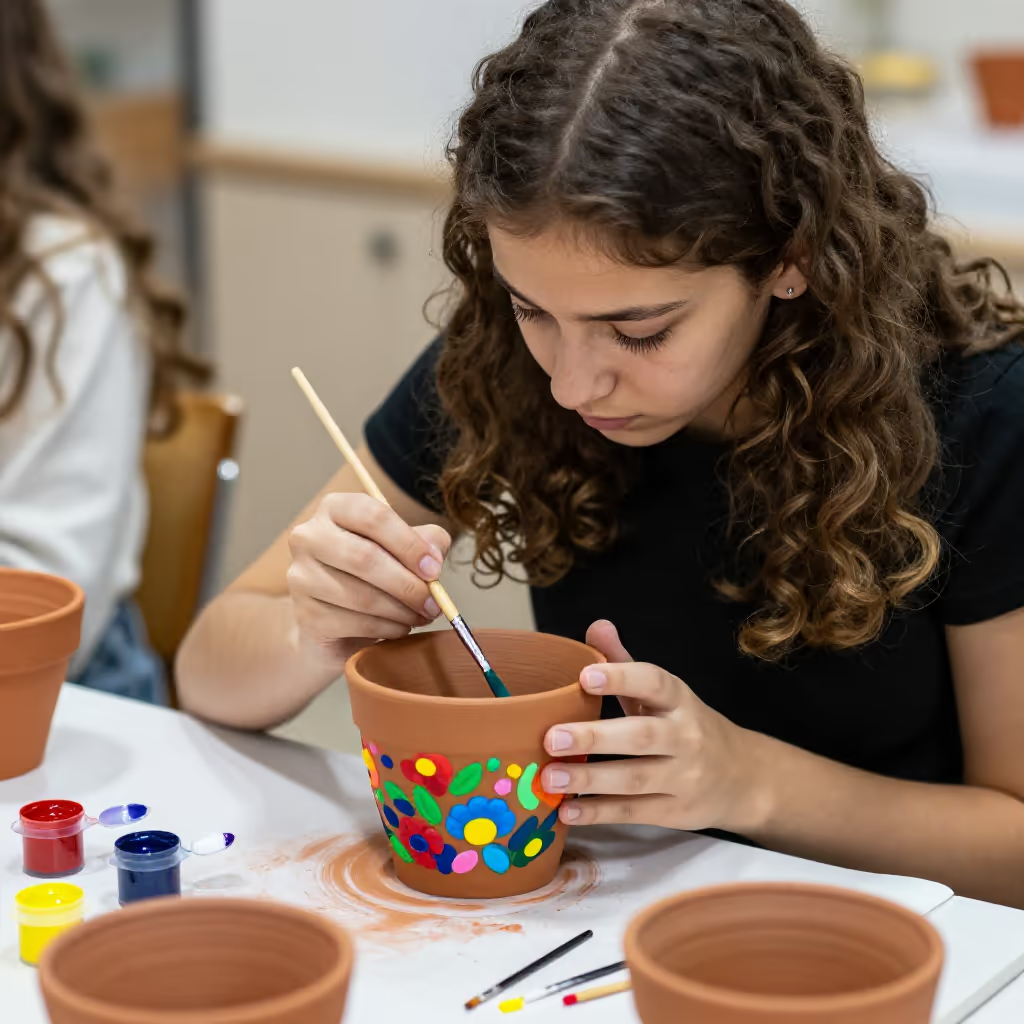
Wir malen bunte Blumen auf die Wand auf.
Estamos pintando flores coloridas na parede.
Wir bemalen die Wand mit bunten Blumen.
Estamos pintando flores coloridas na parede.