

schnippeln
picar
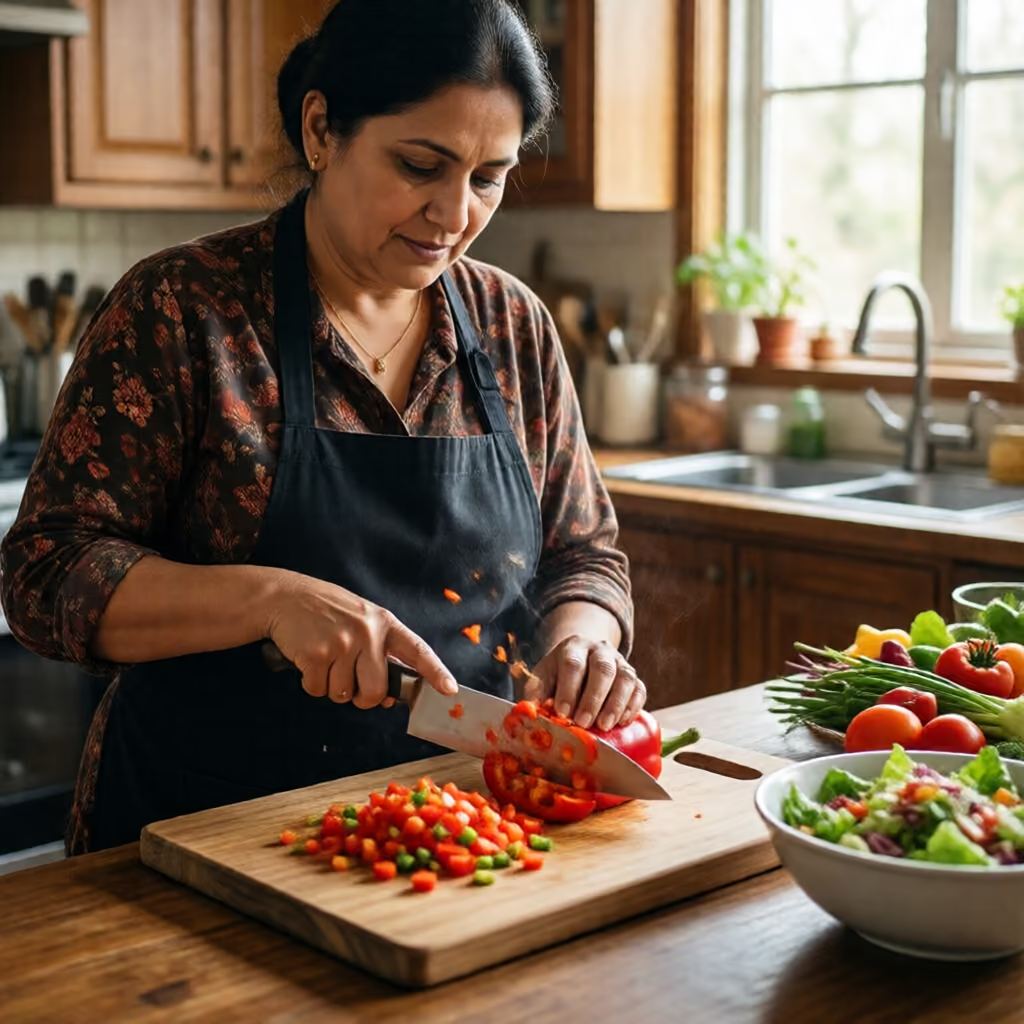
Cortar algo em pedaços pequenos com uma faca ou uma tesoura, geralmente durante o preparo de alimentos.
EXEMPLO
Ich schnipple die Zwiebeln für den Salat.
Estou picando as cebolas para a salada.
picar
schnippeln – schnippelte – hat geschnippelt
Carregando seu estado salvo.
picar
Cortar algo em pedaços pequenos com uma faca ou uma tesoura, geralmente durante o preparo de alimentos.
Ich schnipple die Zwiebeln für den Salat.
Estou picando as cebolas para a salada.
| ich | schnipple schnippele |
|---|---|
| du | schnippelst |
| er/sie/es | schnippelt |
| wir | schnippeln |
| ihr | schnippelt |
| sie | schnippeln |
| ich | schnippelte |
|---|---|
| du | schnippeltest |
| er/sie/es | schnippelte |
| wir | schnippelten |
| ihr | schnippeltet |
| sie | schnippelten |
| ich | habe geschnippelt |
|---|---|
| du | hast geschnippelt |
| er/sie/es | hat geschnippelt |
| wir | haben geschnippelt |
| ihr | habt geschnippelt |
| sie | haben geschnippelt |
| du | schnippel! schnipple!, schnippele! |
|---|---|
| ihr | schnippelt! |
| Sie | schnippeln Sie! |
| ich | hatte geschnippelt |
|---|---|
| du | hattest geschnippelt |
| er/sie/es | hatte geschnippelt |
| wir | hatten geschnippelt |
| ihr | hattet geschnippelt |
| sie | hatten geschnippelt |
| ich | werde schnippeln |
|---|---|
| du | wirst schnippeln |
| er/sie/es | wird schnippeln |
| wir | werden schnippeln |
| ihr | werdet schnippeln |
| sie | werden schnippeln |
| ich | schnippele schnipple |
|---|---|
| du | schnippelst schnipplest |
| er/sie/es | schnippele schnipple |
| wir | schnippeln |
| ihr | schnippelt schnipplet |
| sie | schnippeln |
Usado no discurso indireto.
| ich | schnippelte |
|---|---|
| du | schnippeltest |
| er/sie/es | schnippelte |
| wir | schnippelten |
| ihr | schnippeltet |
| sie | schnippelten |
Usado para desejos e para “würde”.
| infinitivo | schnippeln |
|---|---|
| com zu | zu schnippeln |
| Partizip I | schnippelnd |
| Partizip II | geschnippelt |
“Schnippeln” (picar) é uma palavra coloquial e combina especialmente com conversas sobre cozinhar ou tarefas na cozinha.
Am Wochenende schnippeln wir gemeinsam für das große Abendessen.
No fim de semana, vamos picar ingredientes juntos para o grande jantar.
“Schnippeln” (picar) é usado com frequência com ingredientes como legumes, cebolas, ervas ou frutas. A expressão “etwas klein schnippeln” (picar algo em pedaços pequenos) também é muito comum.
Für die Suppe schnippeln wir Karotten, Lauch und Sellerie klein.
Para a sopa, vamos picar cenouras, alho-poró e salsão em pedaços pequenos.
Em geral, o ingrediente picado aparece como objeto direto no Akkusativ, logo depois de “schnippeln” (picar). O verbo também pode ser usado sem objeto quando fica claro pelo contexto o que está sendo preparado.
Ich schnipple noch schnell die Kräuter für die Soße.
Vou picar rapidinho as ervas para o molho.
Während meine Schwester kocht, schnipple ich schon in der Küche.
Enquanto minha irmã cozinha, já estou picando na cozinha.
cortar
Ao dividir legumes, as duas palavras podem ser usadas. “Schneiden” (cortar) é neutro e também serve em uma receita objetiva. “Schnippeln” (picar) significa cortar algo em pedaços pequenos e soa coloquial; por isso, combina mais com uma conversa descontraída sobre cozinhar.
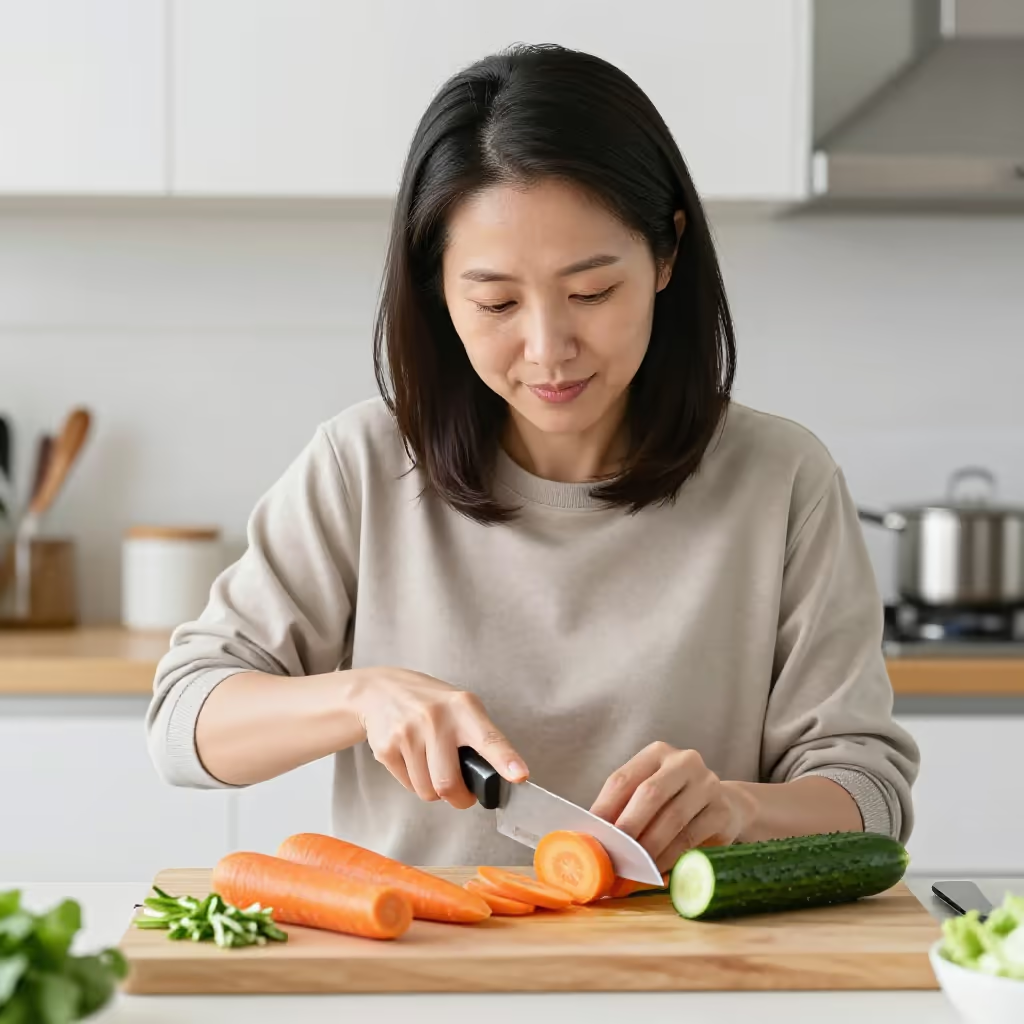
Beim Kochen sagt Mia: „Ich schnipple schon mal die Karotten für die Suppe.“
Enquanto cozinha, Mia diz: “Já vou picar as cenouras para a sopa.”
Im Rezept steht: „Schneiden Sie die Karotten in kleine Stücke.“
Na receita está escrito: “Corte as cenouras em pedaços pequenos.”