

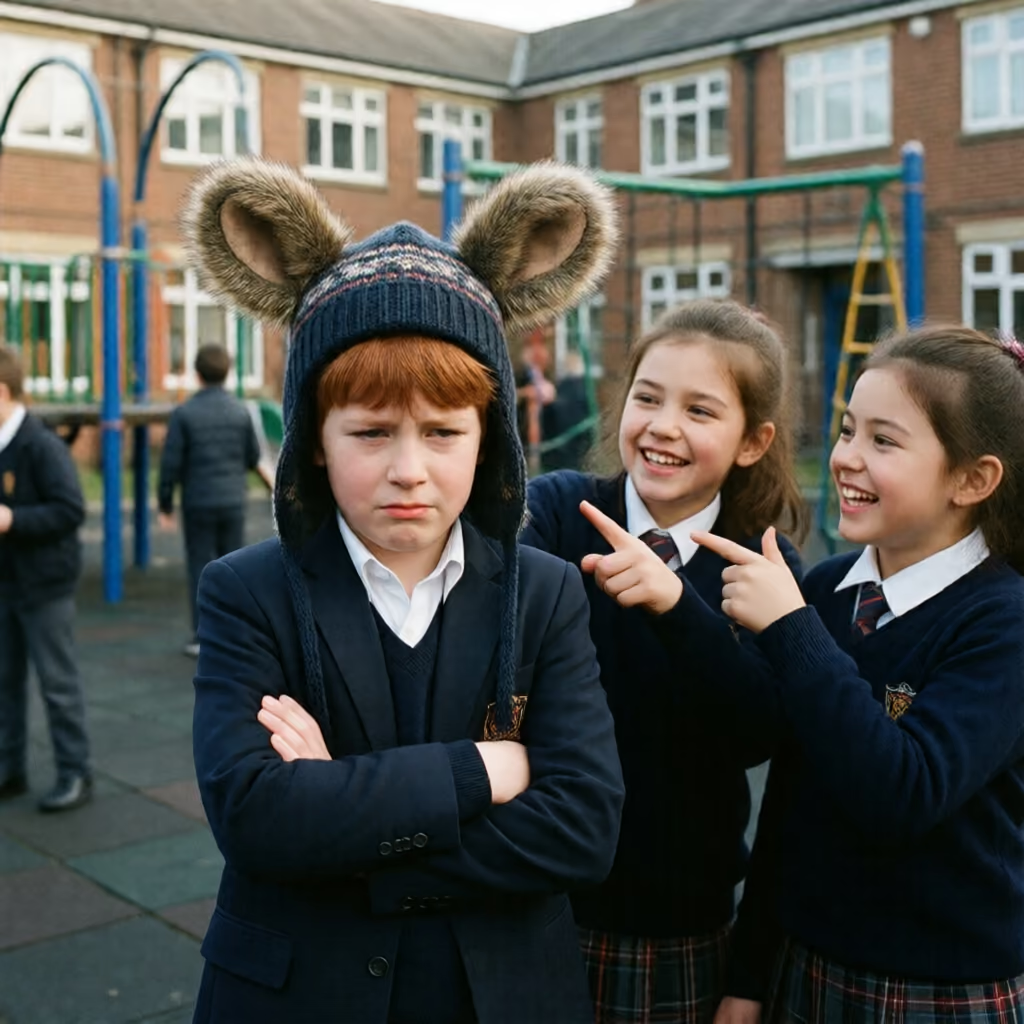
hänseln
burlarse
Burlarse de alguien con comentarios o bromas sarcásticas y molestarlo con ello.
EJEMPLO
Die anderen Kinder hänselten ihn wegen seiner großen Ohren.
Los otros niños se burlaban de él por sus orejas grandes.
burlarse
hänseln – hänselte – hat gehänselt
Cargando el estado guardado.
burlarse
Burlarse de alguien con comentarios o bromas sarcásticas y molestarlo con ello.
Die anderen Kinder hänselten ihn wegen seiner großen Ohren.
Los otros niños se burlaban de él por sus orejas grandes.
| ich | hänsle hänsele |
|---|---|
| du | hänselst |
| er/sie/es | hänselt |
| wir | hänseln |
| ihr | hänselt |
| sie | hänseln |
| ich | hänselte |
|---|---|
| du | hänseltest |
| er/sie/es | hänselte |
| wir | hänselten |
| ihr | hänseltet |
| sie | hänselten |
| ich | habe gehänselt |
|---|---|
| du | hast gehänselt |
| er/sie/es | hat gehänselt |
| wir | haben gehänselt |
| ihr | habt gehänselt |
| sie | haben gehänselt |
| du | hänsle! hänsele!, hänsel! |
|---|---|
| ihr | hänselt! |
| Sie | hänseln Sie! |
| ich | hatte gehänselt |
|---|---|
| du | hattest gehänselt |
| er/sie/es | hatte gehänselt |
| wir | hatten gehänselt |
| ihr | hattet gehänselt |
| sie | hatten gehänselt |
| ich | werde hänseln |
|---|---|
| du | wirst hänseln |
| er/sie/es | wird hänseln |
| wir | werden hänseln |
| ihr | werdet hänseln |
| sie | werden hänseln |
| ich | hänsele hänsle |
|---|---|
| du | hänselst hänslest |
| er/sie/es | hänsele hänsle |
| wir | hänseln |
| ihr | hänselt hänslet |
| sie | hänseln |
Se usa en el estilo indirecto.
| ich | hänselte |
|---|---|
| du | hänseltest |
| er/sie/es | hänselte |
| wir | hänselten |
| ihr | hänseltet |
| sie | hänselten |
Se usa para deseos y para “würde”.
| infinitivo | hänseln |
|---|---|
| con zu | zu hänseln |
| participio presente | hänselnd |
| participio pasado | gehänselt |
«Hänseln» (burlarse) normalmente se usa con una persona en Akkusativ. El patrón es: «jemanden hänseln» (burlarse de alguien).
Die älteren Schüler hänselten den neuen Mitschüler.
Los alumnos mayores se burlaron del nuevo compañero de clase.
«Hänseln» (burlarse) suele aparecer con un motivo introducido por «wegen» (por, debido a). Normalmente describe situaciones en las que se burlan de alguien por su aspecto, su nombre o su comportamiento.
Die Kinder hänselten Mia wegen ihrer ungewöhnlichen Brille.
Los niños se burlaron de Mia por sus gafas poco habituales.
«Hänseln» (burlarse) se usa especialmente en relación con niños y adolescentes, por ejemplo, en la escuela o en un grupo. También pueden burlarse de los adultos.
In der Pause hänselten einige Jungen den stillen Schüler.
Durante el recreo, algunos chicos se burlaron del alumno callado.
acosar
«Hänseln» (burlarse) describe comentarios o bromas sarcásticas con los que se molesta a alguien. «Mobben» (acosar) destaca los ataques o la exclusión sistemáticos y repetidos. Burlarse repetidamente puede formar parte del acoso: elige «hänseln» para describir el tipo de comentarios y «mobben» cuando quieras destacar la conducta sistemática.

Die Mitschüler hänseln Ben mit spöttischen Bemerkungen über seine Kleidung.
Los compañeros de clase de Ben se burlan de él con comentarios sarcásticos sobre su ropa.
Die Mitschüler mobben Ben seit Wochen gezielt mit spöttischen Bemerkungen über seine Kleidung.
Los compañeros de clase de Ben llevan semanas acosándolo deliberadamente con comentarios sarcásticos sobre su ropa.