

austrocknen
to dry out
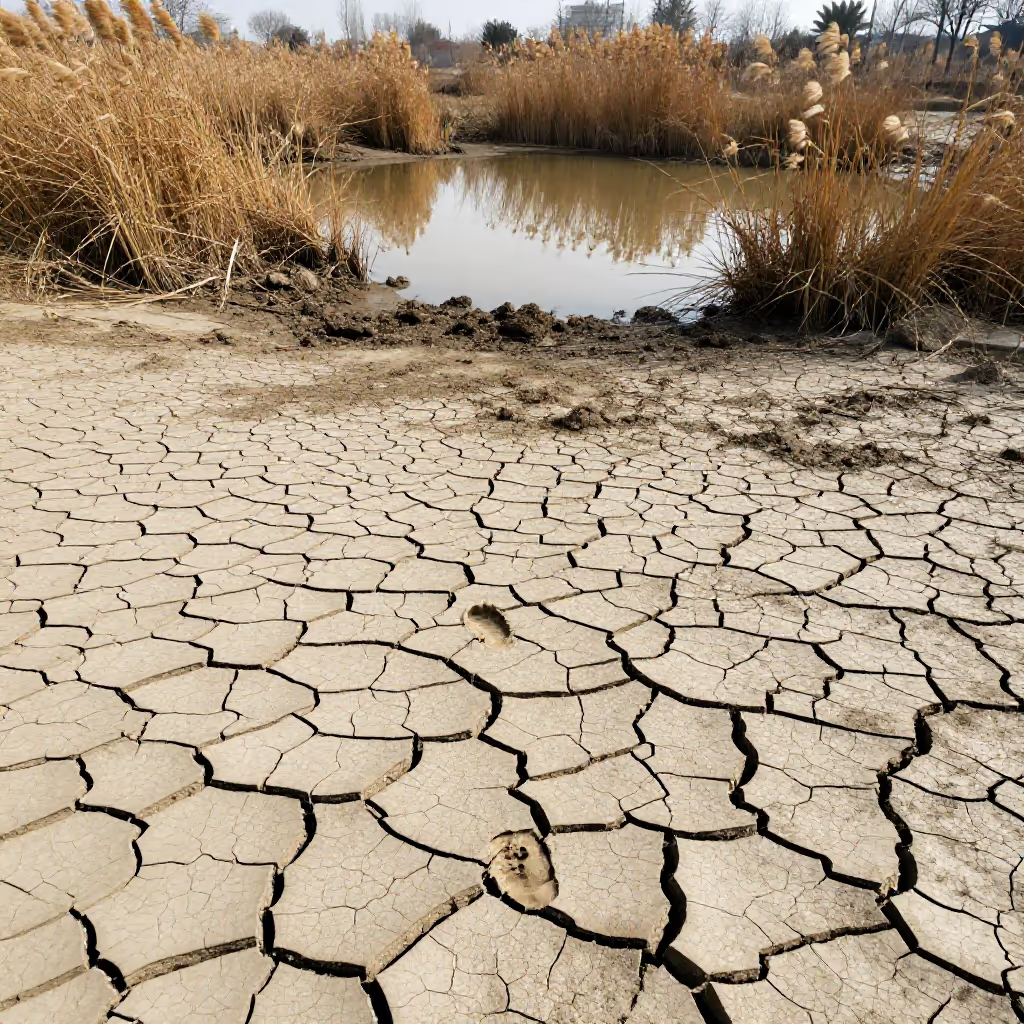
To become completely dry through the loss of water or moisture (intransitive).
EXAMPLE
Im heißen Sommer ist der kleine Bach komplett ausgetrocknet.
In the hot summer, the small stream completely dried out.
to dry out
Loading your saved state.
to dry out
To become completely dry through the loss of water or moisture (intransitive).
Im heißen Sommer ist der kleine Bach komplett ausgetrocknet.
In the hot summer, the small stream completely dried out.

to dry out
To make something completely dry, to remove all moisture from it (transitive).
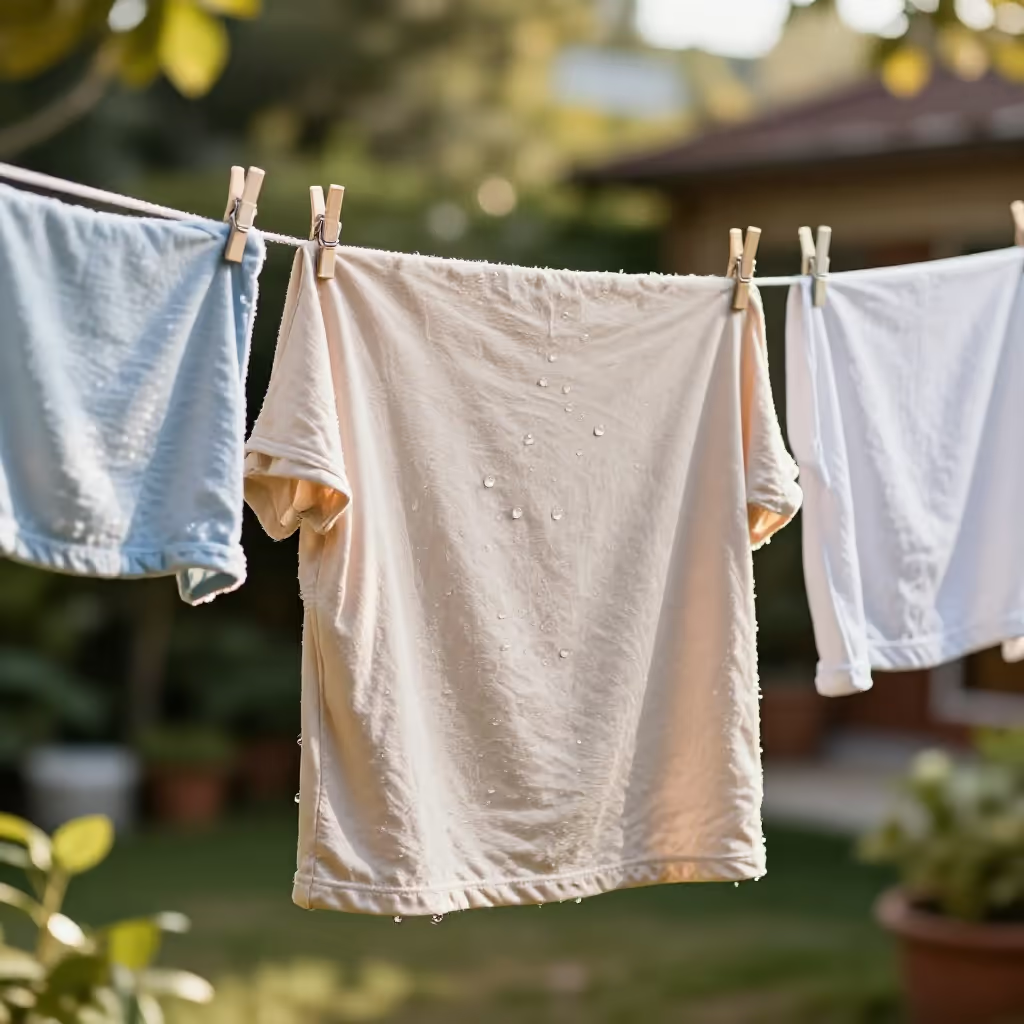
Die starke Sonne hat die frisch gewaschene Wäsche in einer Stunde ausgetrocknet.
The strong sun dried out the freshly washed laundry in an hour.

to dry up
In a figurative sense, the running out of financial means, creativity, or emotional resources.
Durch die Krise drohen die Geldquellen für soziale Projekte auszutrocknen.
Because of the crisis, the sources of money for social projects are in danger of drying up.
'Austrocknen' (to dry out) is a separable verb made up of 'aus-' and 'trocknen' (to dry). The prefix 'aus-' intensifies the verb and means that something becomes dry completely or to the end.
Lass die Kräuter an der Luft vollständig austrocknen.
Let the herbs dry out completely in the air.
The auxiliary verb in the perfect tense depends on the usage. When something dries out by itself (intransitive), you use 'sein' (to be). When someone or something actively dries out something else (transitive), you use 'haben' (to have).
Der Boden ist in der Hitze komplett ausgetrocknet.
The ground has completely dried out in the heat.
As a separable verb, the prefix 'aus' goes at the end in a main clause. In subordinate clauses and in the infinitive with 'zu', the verb stays together.
Meine Haut trocknet im Winter immer schnell aus.
My skin always dries out quickly in winter.
The verb is often used figuratively for resources that run dry. Typical examples are 'der Markt trocknet aus' (the market is drying up), 'die Kreativität trocknet aus' (creativity is drying up), or 'finanzielle Quellen trocknen aus' (financial sources are drying up).
Nach der Budgetkürzung droht das Projekt finanziell auszutrocknen.
After the budget cut, the project is in danger of drying up financially.
to dry
Trocknen and austrocknen both describe the loss of moisture. Trocknen is the neutral term for something becoming dry; austrocknen emphasizes a complete, often harmful loss of water. Use trocknen when something dries normally and austrocknen when little or no moisture remains.
Die Erde trocknet bei dieser langen Hitze vollständig aus.
The soil dries out completely in this prolonged heat.
Die Erde trocknet nach dem Regen in der warmen Sonne langsam.
The soil is slowly drying in the warm sun after the rain.