

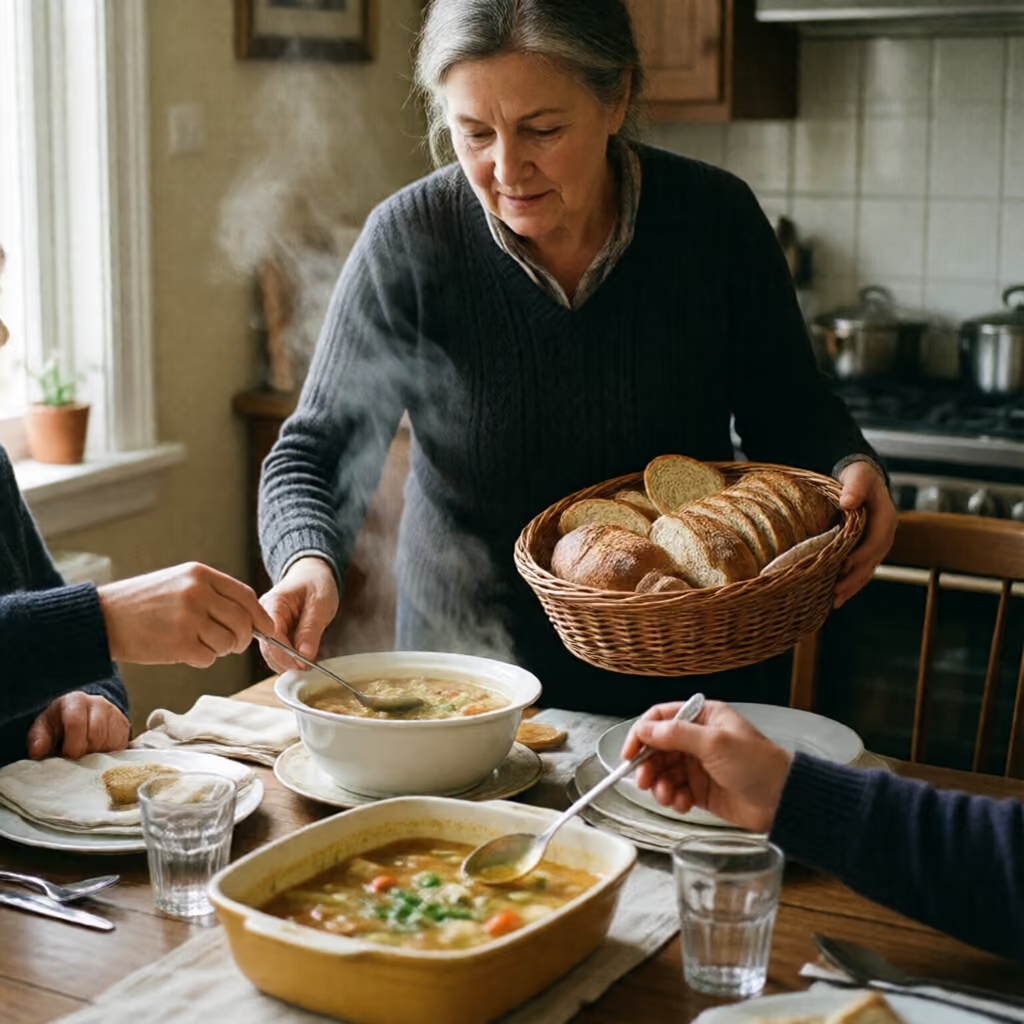
auftischen
servire
Portare in tavola e offrire cibi e bevande da mangiare o bere.
ESEMPIO
Zum Abendessen tischte sie eine warme Suppe und frisches Brot auf.
Per cena ha servito una zuppa calda e pane fresco.
servire / rifilare
auftischen – tischte auf – hat aufgetischt
Caricamento dello stato salvato.
servire
Portare in tavola e offrire cibi e bevande da mangiare o bere.
Zum Abendessen tischte sie eine warme Suppe und frisches Brot auf.
Per cena ha servito una zuppa calda e pane fresco.

rifilare
Colloquiale: raccontare a qualcuno una storia inventata o poco credibile, aspettandosi che la persona ci creda.
Er tischte uns eine haarsträubende Ausrede für seine Verspätung auf.
Ci ha rifilato una scusa assurda per giustificare il ritardo.
| ich | tische auf |
|---|---|
| du | tischst auf tischt auf |
| er/sie/es | tischt auf |
| wir | tischen auf |
| ihr | tischt auf |
| sie | tischen auf |
| ich | tischte auf |
|---|---|
| du | tischtest auf |
| er/sie/es | tischte auf |
| wir | tischten auf |
| ihr | tischtet auf |
| sie | tischten auf |
| ich | habe aufgetischt |
|---|---|
| du | hast aufgetischt |
| er/sie/es | hat aufgetischt |
| wir | haben aufgetischt |
| ihr | habt aufgetischt |
| sie | haben aufgetischt |
| du | tisch auf! tische auf! |
|---|---|
| ihr | tischt auf! |
| Sie | tischen Sie auf! |
| ich | hatte aufgetischt |
|---|---|
| du | hattest aufgetischt |
| er/sie/es | hatte aufgetischt |
| wir | hatten aufgetischt |
| ihr | hattet aufgetischt |
| sie | hatten aufgetischt |
| ich | werde auftischen |
|---|---|
| du | wirst auftischen |
| er/sie/es | wird auftischen |
| wir | werden auftischen |
| ihr | werdet auftischen |
| sie | werden auftischen |
| ich | tische auf |
|---|---|
| du | tischest auf |
| er/sie/es | tische auf |
| wir | tischen auf |
| ihr | tischet auf |
| sie | tischen auf |
Si usa per il discorso indiretto.
| ich | tischte auf |
|---|---|
| du | tischtest auf |
| er/sie/es | tischte auf |
| wir | tischten auf |
| ihr | tischtet auf |
| sie | tischten auf |
Si usa per i desideri e per il “würde”.
| infinito | auftischen |
|---|---|
| con zu | aufzutischen |
| Partizip I | auftischend |
| Partizip II | aufgetischt |
«Auftischen» (servire) è composto da «auf» (su, in alto) e «tischen» (servire in tavola) ed è separabile. Nella proposizione principale «auf» si trova alla fine della frase; nella subordinata il verbo rimane unito, mentre nell’infinito con «zu» «zu» si colloca tra il prefisso e la radice.
Sie tischte zum Fest ein großes Abendessen auf.
Per la festa ha servito una grande cena.
Alle staunten, weil er so viele Speisen auftischte.
Tutti sono rimasti stupiti perché ha servito così tante pietanze.
Die Gastgeberin begann, das Essen aufzutischen.
La padrona di casa ha cominciato a servire il cibo.
Nel significato legato al servire, «auftischen» (servire) si usa spesso con cibi, bevande o un pasto. Le combinazioni tipiche sono «ein Festmahl auftischen» (servire un banchetto), «ein reichhaltiges Essen auftischen» (servire un pasto abbondante) e «Speisen auftischen» (servire delle pietanze).
Nach der Wanderung tischte uns die Gastgeberin ein reichhaltiges Essen auf.
Dopo l’escursione, la padrona di casa ci ha servito un pasto abbondante.
Nel significato colloquiale, la persona che dovrebbe ascoltare una storia è al Dativ: «jemandem etwas auftischen» (rifilare qualcosa a qualcuno). La storia inventata o la scusa è all’Akkusativ.
Er tischte seiner Schwester eine unglaubwürdige Geschichte auf.
Ha rifilato a sua sorella una storia incredibile.
Questo significato è soprattutto colloquiale e si usa spesso con scuse, storie o affermazioni che qualcuno considera poco credibili.
Der Verkäufer tischte den Kunden eine seltsame Erklärung für den hohen Preis auf.
Il venditore ha rifilato ai clienti una spiegazione strana per il prezzo elevato.
servire
Servieren e auftischen possono entrambi significare portare il cibo a tavola e offrirlo. Servieren mette maggiormente in evidenza il servire agli ospiti. Auftischen concentra maggiormente l'attenzione sul cibo che arriva in tavola, spesso anche sulla sua abbondanza. Per lo stesso pasto, spesso sono possibili entrambe le parole.

Zum Abendessen tischt sie ihren Gästen Suppe, Braten und Salat auf.
Per cena porta in tavola ai suoi ospiti zuppa, arrosto e insalata.
Zum Abendessen serviert sie ihren Gästen Suppe, Braten und Salat.
Per cena serve ai suoi ospiti zuppa, arrosto e insalata.